The Enigmatic Giant Scops Owl: An Ornithological Marvel
The Giant Scops Owl (Otus gurneyi), also known as Gurney’s Scops Owl, is a captivating and enigmatic species that has intrigued ornithologists and bird enthusiasts for decades. This elusive bird is a member of the Strigidae family, which includes other notable owl species. Renowned for its distinctive calls and striking appearance, the Giant Scops Owl is found primarily in select regions of Southeast Asia, making it a species of particular interest to conservationists and researchers alike.
Taxonomy and Distribution
First described by the British ornithologist Richard Bowdler Sharpe in 1888, the Giant Scops Owl was named in honor of John Henry Gurney, an English ornithologist and collector. This species is classified under the genus Otus, which encompasses a variety of scops owls known for their small to medium size and characteristic ear tufts.
The Giant Scops Owl inhabits tropical and subtropical forests in the Philippines, with its presence confirmed in regions such as Mindanao, Basilan, and a few other islands in the archipelago. The owl’s preference for dense, lowland forests makes its habitat particularly vulnerable to deforestation and human encroachment, raising concerns about its conservation status.
Physical Characteristics
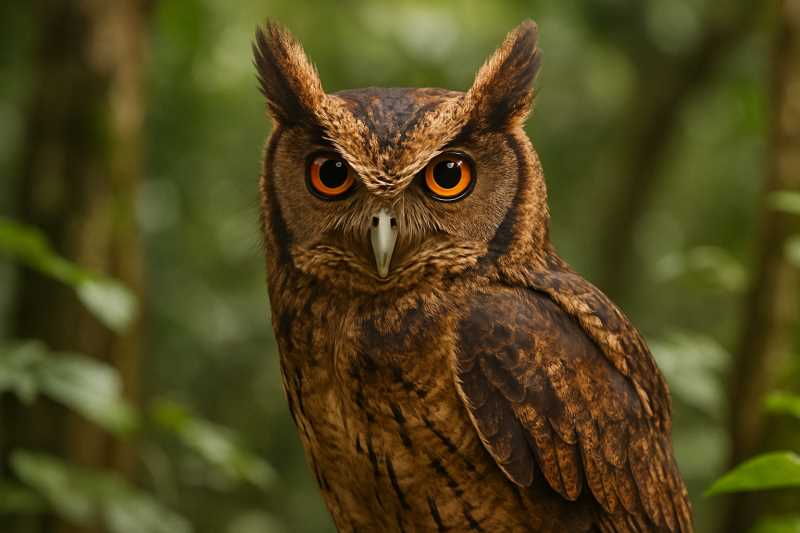
The Giant Scops Owl is larger than most scops owls, measuring around 25 to 30 centimeters in length. It boasts a wingspan of approximately 70 centimeters, which aids its silent flight through the dense forest canopy. The plumage of Otus gurneyi is primarily a mottled brown, providing excellent camouflage against the bark of trees and the forest floor. Its distinctive facial disk and prominent ear tufts enhance its ability to detect sound, a crucial adaptation for nocturnal hunting.
The owl’s eyes are large and forward-facing, characteristic of most owl species, providing binocular vision essential for depth perception in low-light conditions. This, coupled with the asymmetrical placement of its ears, allows for acute hearing, enabling the owl to pinpoint prey with remarkable accuracy.
Behavior and Diet
Giant Scops Owls are predominantly nocturnal, emerging from their daytime roosts at dusk to begin hunting. Their diet primarily consists of small mammals, insects, and occasionally small birds. They are opportunistic feeders, adapting their hunting techniques to the availability of prey within their habitat. The owl’s silent flight is a testament to its specialized feathers, which minimize noise and allow it to approach prey stealthily.
These owls are known for their distinctive calls, which vary from soft hoots to more complex vocalizations during mating season. The calls serve multiple purposes, from marking territory to attracting mates. During the breeding season, which typically occurs during the dry months, pairs can be observed engaging in elaborate courtship displays, including synchronized flights and mutual preening.
Conservation Status
The International Union for Conservation of Nature (IUCN) currently lists the Giant Scops Owl as Near Threatened. The primary threats to its survival are habitat loss due to logging, agriculture, and urban development. Conservation efforts are complicated by the owl’s elusive nature and the fragmented distribution of its population.
Various conservation organizations are working to mitigate these threats through habitat preservation and community engagement. Efforts include establishing protected areas and promoting sustainable land-use practices among local communities. Additionally, research initiatives aim to gather more comprehensive data on the owl’s population size, distribution, and ecological requirements.
Importance of Conservation
Preserving the Giant Scops Owl is not only crucial for maintaining biodiversity but also for the health of the forest ecosystems it inhabits. As a top predator, the owl plays a vital role in controlling the populations of its prey, thus maintaining a balanced ecosystem. The conservation of Otus gurneyi also highlights the broader challenges faced by many species in Southeast Asia, where rapid development often conflicts with environmental preservation.
Conclusion
The Giant Scops Owl remains a symbol of the rich biodiversity found in the Philippines, representing both the beauty and fragility of the region’s natural heritage. Continued research and conservation efforts are essential to ensure that future generations can appreciate this remarkable species. By fostering a deeper understanding and appreciation of the Giant Scops Owl, we can contribute to a more sustainable future for this and many other endangered species.
In an era where conservation is more critical than ever, the Giant Scops Owl stands as a testament to nature’s resilience and the ongoing challenge of balancing human progress with the preservation of our planet’s diverse ecosystems.
Related posts