The Black Crowned Crane: A Symbol of Grace and Conservation
The Black Crowned Crane (Balearica pavonina) is an avian marvel that stands as a testament to nature’s artistry. This majestic bird, native to the wetlands and savannas of sub-Saharan Africa, is not only an emblem of beauty and elegance but also a species of significant ecological importance. With its striking appearance and complex behaviors, the Black Crowned Crane has captured the fascination of ornithologists and bird enthusiasts alike.
Taxonomy and Physical Description
Belonging to the family Gruidae, the Black Crowned Crane is one of two species within the genus Balearica, the other being the Grey Crowned Crane (Balearica regulorum). The species is further divided into two subspecies: the West African Black Crowned Crane (B. p. pavonina) and the Sudan Black Crowned Crane (B. p. ceciliae). These subspecies primarily differ in geographical distribution and slight variations in plumage.
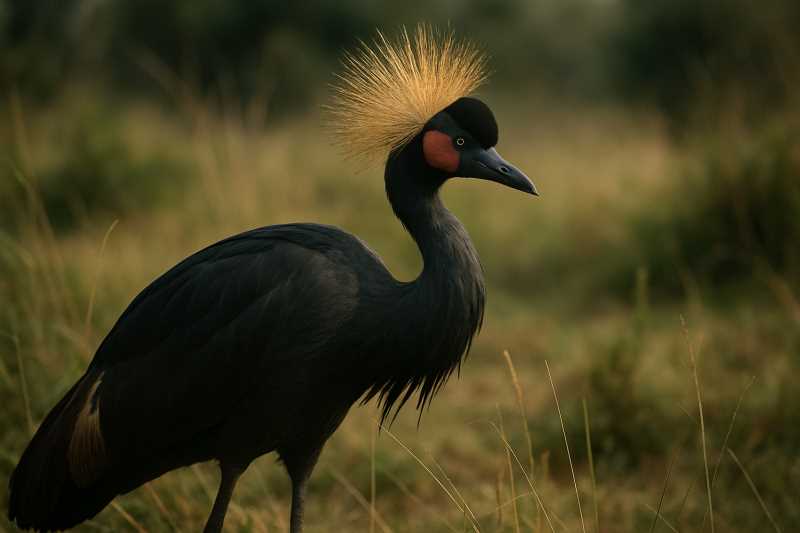
The Black Crowned Crane is distinguished by its vibrant plumage and regal bearing. It possesses a predominantly dark grey body, which contrasts with its stark white cheeks and striking golden crown of stiff feathers. This “crown” is not only a visual spectacle but also plays a role in communication and mating rituals. The crane’s long legs and neck provide it with a graceful silhouette, while its large wingspan, often exceeding 2 meters, facilitates powerful and elegant flight.
Habitat and Distribution
The Black Crowned Crane is predominantly found across West and Central Africa. The West African subspecies ranges from Senegal to Chad, while the Sudan subspecies is found from Sudan to Ethiopia and down to Uganda. These birds typically inhabit wetlands, including marshes, riverbanks, and floodplains, where they find ample food resources and suitable nesting sites.
Wetlands are crucial for their survival, providing a rich supply of insects, small vertebrates, and plant material. However, the encroachment of agriculture, urban development, and climate change poses significant threats to their habitats, leading to population declines in several regions.
Behavior and Ecology
Black Crowned Cranes are diurnal and highly social birds. They are often seen in pairs or small family groups, although larger flocks may form outside the breeding season. Their vocalizations are an integral part of their social interactions, featuring a range of calls from soft purrs to loud honks.
One of the most captivating behaviors of the Black Crowned Crane is its elaborate courtship display. During the breeding season, pairs engage in a series of synchronized dances involving bowing, jumping, and wing flapping. These displays not only strengthen pair bonds but also play a crucial role in territory establishment and mate selection.
Conservation Status
The International Union for Conservation of Nature (IUCN) currently lists the Black Crowned Crane as Vulnerable. The primary threats to their survival include habitat loss due to agricultural expansion, drainage of wetlands, and illegal capture for the pet trade. In some regions, cranes are also hunted for their feathers and meat.
Conservation efforts are underway to protect these elegant birds and their habitats. Initiatives include the establishment of protected areas, community-based conservation programs, and international cooperation to enforce laws against illegal trade. Educating local communities about the ecological benefits of preserving wetlands and the cultural significance of cranes is also a key component of conservation strategies.
Cultural Significance
In many African cultures, the Black Crowned Crane holds significant cultural value. It is often regarded as a symbol of peace, prosperity, and longevity. In some traditions, cranes are believed to bring good luck and are featured in local folklore and art.
Their presence in mythology and cultural practices underscores the need to preserve these birds, not only for ecological reasons but also to maintain the rich cultural heritage they represent.
Future Prospects
As global awareness of environmental issues grows, there is hope for the future of the Black Crowned Crane. Conservationists are increasingly focusing on habitat restoration and sustainable land management practices that benefit both wildlife and human communities. By fostering international collaboration and supporting grassroots initiatives, there is potential to halt the decline of crane populations and secure a future where these magnificent birds continue to thrive.
In conclusion, the Black Crowned Crane stands as a symbol of the intricate balance between nature and culture. Its survival is intertwined with the health of its wetland habitats and the cultural traditions that celebrate its beauty. Through concerted conservation efforts and a deepened understanding of its ecological role, humanity can ensure that the Black Crowned Crane graces the skies of Africa for generations to come.
This is one of the species covered in our book Cranes Of The World which is part of our Kings Birds of the world series, and one of the Kings Guides.

Related posts