The Enigmatic Flame-templed Babbler: A Closer Look at Dasycrotapha speciosa
In the lush, verdant forests of the Philippines, a small yet striking bird flits through the canopy, enchanting onlookers with its vibrant plumage and melodic calls. This avian jewel is none other than the Flame-templed Babbler (Dasycrotapha speciosa), a member of the Timaliidae family and an endemic species of the Philippines. Despite its allure, the Flame-templed Babbler remains shrouded in mystery due to its limited range and the challenges it faces in the wild. This article delves into the fascinating world of this rare bird, exploring its habitat, behavior, conservation status, and the efforts underway to ensure its survival.
Habitat and Distribution
The Flame-templed Babbler is found exclusively on the islands of Panay and Negros in the central Philippines. This limited distribution makes it particularly vulnerable to habitat loss and environmental changes. The species thrives in primary and secondary lowland forests, often preferring areas with dense understory and abundant foliage, which provide both food sources and protection from predators.
These forests, however, are under constant threat from deforestation due to logging, agricultural expansion, and urban development. The loss of habitat poses a significant risk to the Flame-templed Babbler, which relies on these areas for nesting and foraging.
Physical Characteristics
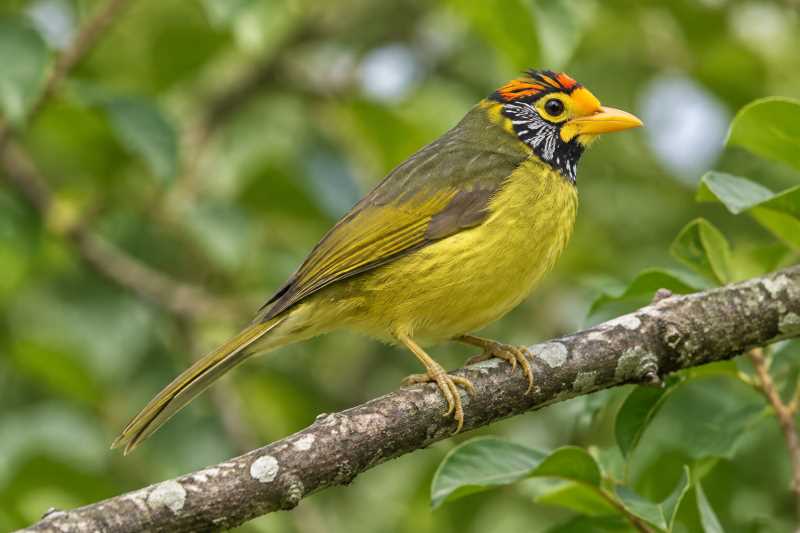
The Flame-templed Babbler is notable for its distinctive appearance. Measuring about 16 centimeters in length, it showcases a dazzling combination of colors that makes it easily recognizable. Its most striking feature is the flame-colored patch on its crown, which gives the bird its common name. The rest of its plumage is primarily olive-green, with subtle variations across its back and wings. Its underparts are paler, often tinged with a yellowish hue, while its eyes are a vivid red, adding to its captivating look.
The bird’s call is equally distinctive—a series of melodious notes that resonate through the forest, often serving as the first indication of its presence to birdwatchers and researchers alike.
Behavior and Diet
Flame-templed Babblers are social creatures, often found in small flocks as they forage for food. Their diet mainly consists of insects and small invertebrates, which they skillfully extract from the foliage using their slender beaks. They may also consume fruits and seeds, particularly during the breeding season when food demands are higher.
These birds are known for their active and agile movements, hopping through branches and leaves with ease. They communicate with each other through a complex system of calls, which not only helps maintain group cohesion but also serves as a warning mechanism against potential threats.
Breeding and Life Cycle
Breeding for the Flame-templed Babbler typically occurs during the rainy season when food is abundant. Nests are usually constructed in dense foliage, providing concealment from predators. The female lays a clutch of two to three eggs, which both parents incubate. Once hatched, the chicks are cared for by both parents until they are ready to fledge.
The Flame-templed Babbler’s life cycle, like many forest-dwelling birds, is closely tied to the health of its environment. Any disruption to its habitat can have cascading effects on its breeding success and survival.
Conservation Status
The International Union for Conservation of Nature (IUCN) currently lists the Flame-templed Babbler as "Vulnerable." This classification reflects the species’ restricted range and the ongoing threats to its habitat. Conservation efforts are critical to preventing further decline and ensuring the species’ long-term survival.
Key conservation strategies include habitat protection and restoration, particularly in areas identified as critical for the babbler’s survival. Efforts are also underway to establish protected areas and wildlife corridors that facilitate movement and genetic exchange between populations.
Conservation Initiatives and Community Involvement
Local and international organizations have been instrumental in raising awareness about the Flame-templed Babbler and its plight. Environmental education programs aim to engage local communities, emphasizing the importance of biodiversity and sustainable practices that benefit both people and wildlife.
Community involvement is crucial, as many conservation initiatives rely on the cooperation and support of local residents. By promoting sustainable land-use practices and providing alternative livelihoods, these programs help reduce the pressure on forest resources, creating a more favorable environment for the Flame-templed Babbler and other endemic species.
Conclusion
The Flame-templed Babbler is a symbol of the Philippines’ rich biodiversity and the unique challenges faced by endemic species. While its vibrant appearance and melodic calls captivate those fortunate enough to encounter it, the bird’s survival hinges on concerted conservation efforts and a commitment to preserving the natural heritage of the region. By safeguarding its habitat and fostering community involvement, we can hope to secure a future where the Flame-templed Babbler continues to thrive in its native forests, adding its song to the symphony of life in the Philippines.
References
- BirdLife International. "Dasycrotapha speciosa." IUCN Red List of Threatened Species.
- Collar, N.J., et al. "Birds of the Philippines." Lynx Edicions.
- Kennedy, R.S., et al. "A Guide to the Birds of the Philippines." Oxford University Press.
Related posts