
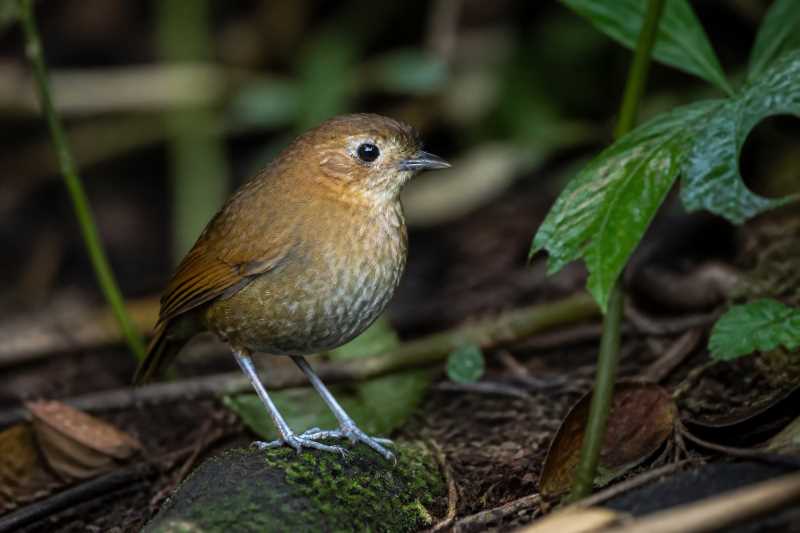
Elusive Antpitta: A Hidden Jewel of the Cloud Forests
The world of ornithology is replete with enigmatic and fascinating creatures, each with its own story to tell. Among these, the Elusive Antpitta (Grallaria eludens) stands out not only for its captivating behavior but also for its sheer mystery and the challenges it poses to researchers and birdwatchers alike. Nestled deep within the cloud forests of South America, this bird is as elusive as its name suggests, making it a prized sighting for those fortunate enough to encounter it.
Habitat and Distribution
The Elusive Antpitta is primarily found in the montane cloud forests of the Andes, spanning across countries like Colombia, Ecuador, and Peru. These forests, characterized by their high humidity and frequent mist, provide an ideal environment for the Antpitta. The dense undergrowth and abundant leaf litter offer both food and cover, allowing the bird to thrive. However, this habitat is not easily accessible, contributing to the bird’s elusiveness.
The elevation range of the Elusive Antpitta is typically between 1,500 and 2,500 meters above sea level, where temperatures are cooler, and biodiversity is remarkably high. The cloud forests are home to a plethora of plant and animal species, creating a complex web of interactions that sustain unique ecosystems.
Physical Characteristics
The Elusive Antpitta is not a bird that dazzles with vibrant colors. Instead, it is cloaked in subtle shades of brown and gray, with a distinctive white throat marking that sets it apart. Its plumage is perfectly adapted to its environment, providing excellent camouflage amidst the forest floor’s dappled light and shadow.
Measuring approximately 18 to 19 centimeters in length, the Antpitta has a robust body, short tail, and long legs. These adaptations are typical of ground-dwelling birds, enabling them to navigate the forest undergrowth with agility. Its large eyes are a testament to its reliance on visual cues in the dimly lit habitat.
Behavior and Diet
The Elusive Antpitta is a quintessential ground forager, often seen hopping on the forest floor in search of food. Its diet consists mainly of insects, small arthropods, and occasionally, small vertebrates. The bird uses its strong bill to probe the leaf litter and soil, uncovering hidden prey.
One of the most intriguing aspects of the Antpitta’s behavior is its vocalization. The bird’s call is a series of melodious whistles, often heard but rarely seen. These calls serve as communication tools, helping individuals maintain territory and attract mates. The Elusive Antpitta is often heard before it is seen, a trait that has contributed to its mythical status among bird enthusiasts.
Conservation Status
The Elusive Antpitta is currently classified as Near Threatened by the International Union for Conservation of Nature (IUCN). This status reflects the ongoing threats to its habitat, primarily due to deforestation and habitat fragmentation. The cloud forests are under pressure from agricultural expansion, logging, and infrastructure development, posing significant risks to the Antpitta’s survival.
Conservation efforts are crucial to protect these delicate ecosystems and the myriad species they support. Initiatives aimed at preserving large tracts of forest and promoting sustainable land use practices are vital to ensuring the future of the Elusive Antpitta.
Challenges in Study and Observation
Studying the Elusive Antpitta presents unique challenges. Its secretive nature and preference for dense undergrowth make direct observation difficult. Researchers often rely on indirect methods, such as camera traps and acoustic monitoring, to gather data on the bird’s behavior and population dynamics.
Furthermore, the rugged terrain and remote locations of its habitat add logistical complexities to field studies. Despite these challenges, advancements in technology and a growing network of citizen scientists are providing new opportunities to learn more about this enigmatic bird.
The Cultural Significance of the Antpitta
In regions where the Elusive Antpitta resides, it holds a special place in local folklore and culture. Often considered a symbol of the mysterious and unknown, the bird is revered for its ability to remain hidden. Its presence is sometimes associated with omens or myths, highlighting the deep connection between nature and human culture.
Conclusion
The Elusive Antpitta is a testament to the wonders of biodiversity and the intricate balance of ecosystems. Its story is a reminder of the importance of preserving our natural world and the intrinsic value of every species within it. As efforts continue to unravel the mysteries of this elusive bird, it serves as an inspiration for conservation and a symbol of the untamed beauty of the cloud forests.
For birdwatchers and researchers alike, the Elusive Antpitta remains a captivating challenge, a bird whose secrets are waiting to be uncovered, deep within the heart of the cloud forests.
Related posts


