Eastern Rosella: A Vibrant Jewel of the Avian World
The Eastern Rosella (Platycercus eximius) is a strikingly colorful parrot native to southeastern Australia and Tasmania. Known for their vibrant plumage and lively personality, these birds have captured the attention of avian enthusiasts and ornithologists alike. In this article, we delve into the fascinating world of Eastern Rosellas, exploring their habitat, behavior, diet, and the challenges they face in the wild.
Habitat and Distribution
Eastern Rosellas are primarily found in open woodlands, forests, and suburban areas. They thrive in environments that provide a mix of trees and open spaces, which are essential for foraging and nesting. These birds are particularly fond of eucalypt woodlands and can often be seen in city parks and gardens, making them a familiar sight to many Australians.
The range of the Eastern Rosella extends from the eastern part of South Australia, through Victoria, New South Wales, and into Queensland. The species has also been introduced to New Zealand, where it has established a stable population.
Physical Characteristics
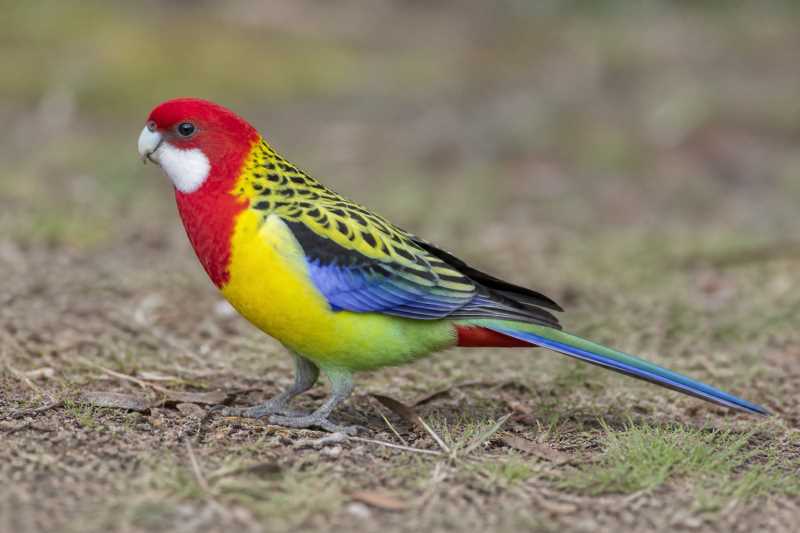
The Eastern Rosella is easily recognizable by its stunning plumage. Adult birds display a vibrant red head and breast, with bright yellow cheeks and a white patch on the chin. The back is a blend of black and yellow-green, creating a scalloped pattern, while the underparts are a mix of yellow and green. The wings are predominantly blue, with a strikingly deep blue tail.
Measuring about 30 cm in length, including the tail, Eastern Rosellas are medium-sized parrots. They have a robust build, with a strong, curved beak adapted for cracking seeds and nuts.
Behavior and Social Structure
Eastern Rosellas are known for their playful and social nature. They are often seen in pairs or small flocks, especially outside the breeding season. These birds are highly vocal and communicate through a series of melodious calls, which can vary depending on their mood and environment.
During the breeding season, which occurs from September to February, Eastern Rosellas become more territorial. Pairs will establish and defend nesting sites, which are typically located in tree hollows. The female lays between four to seven eggs, and both parents play a role in rearing the young.
Diet and Foraging
The diet of the Eastern Rosella is diverse and primarily consists of seeds, fruits, nuts, and flowers. They are also known to consume insects and larvae, which provide essential proteins, especially during the breeding season.
Foraging takes place both on the ground and in the trees. These birds have a preference for seeds of native grasses and eucalypts, but they also adapt well to cultivated environments, often feeding on grains and fruits from orchards.
Conservation Status and Threats
Currently, the Eastern Rosella is classified as a species of Least Concern by the International Union for Conservation of Nature (IUCN). However, like many bird species, they face threats from habitat loss due to urbanization and land clearing. Competition for nesting sites with invasive species, such as the Common Myna and European Starling, also poses a challenge.
Conservation efforts are focused on preserving natural habitats and monitoring population trends to ensure these vibrant birds remain a common sight in their native range.
Eastern Rosellas in Culture
The striking appearance and charming behavior of Eastern Rosellas have made them popular in aviculture. They are often kept as pets and are appreciated for their beauty and intelligence. However, they require spacious environments and mental stimulation to thrive in captivity.
In indigenous Australian culture, the Eastern Rosella holds a special place in various myths and stories, symbolizing beauty, vitality, and the vibrant spirit of the land.
Conclusion
The Eastern Rosella is a testament to the rich biodiversity of Australia. With their vivid colors and engaging personality, they serve as ambassadors for the conservation of avian species and their habitats. By fostering an appreciation for these magnificent birds, we can help ensure that future generations will continue to enjoy the beauty and joy that Eastern Rosellas bring to our world.
Related posts