The Curve-billed Scythebill: A Marvel of Adaptation and Evolution
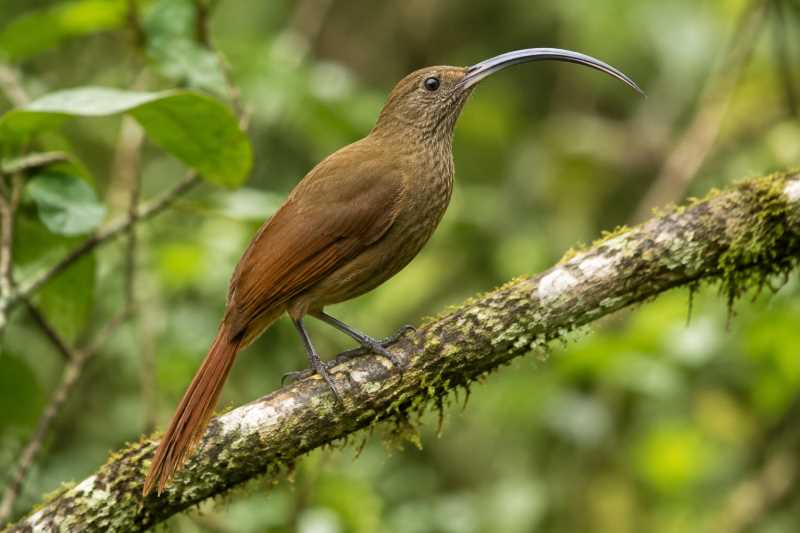
In the diverse and verdant expanses of the Neotropical regions, the Curve-billed Scythebill (Campylorhamphus procurvoides) stands out as a fascinating subject of evolutionary adaptation. This remarkable bird, with its distinctively curved bill, exemplifies nature’s ingenuity in shaping species to thrive within their ecological niches. As we delve into the world of the Curve-billed Scythebill, we uncover the unique characteristics and behaviors that make this bird a significant entity within its habitat.
Taxonomy and Distribution
The Curve-billed Scythebill belongs to the family Furnariidae, a diverse group of birds commonly known as ovenbirds and woodcreepers. Within this family, the genus Campylorhamphus is characterized by its members’ elongated, decurved bills. The species Campylorhamphus procurvoides is predominantly found in the lowland rainforests of the Amazon Basin, spanning countries such as Brazil, Peru, Ecuador, Colombia, and Bolivia. Its range highlights its preference for humid, dense forest environments where it can best employ its specialized feeding strategies.
Morphological Features
One of the most striking features of the Curve-billed Scythebill is its long, slender, and prominently curved bill. This adaptation is not merely for aesthetic purposes; it serves a crucial functional role in the bird’s foraging habits. The curvature of the bill allows the bird to probe deep into crevices of tree bark and foliage, extracting insects and other invertebrates that constitute its primary diet. Its plumage is typically a rich brown, speckled and streaked with lighter shades, providing excellent camouflage among the forest foliage.
Behavioral Adaptations
The Curve-billed Scythebill is an arboreal forager, spending much of its time navigating the intricate lattice of branches high within the forest canopy. Its feeding strategy is highly specialized; the bird uses its curved bill to pry insects from the bark and leaf litter, often employing a methodical and deliberate approach. This bird is primarily solitary or found in pairs, though it occasionally joins mixed-species foraging flocks, which can enhance its feeding efficiency and offer protection against predators.
Vocalizations play a significant role in the Curve-billed Scythebill’s life, serving as a means of communication within dense forest environments where visual contact might be limited. Its calls are typically sharp and high-pitched, allowing them to penetrate the thick forest canopy.
Reproductive Behavior
The breeding habits of the Curve-billed Scythebill are less documented than its feeding and foraging behaviors, largely due to the challenges of observing nesting activities in their dense, remote habitats. However, like many of its relatives in the Furnariidae family, it is believed to nest in tree cavities or construct nests in dense foliage, where it can lay its eggs in relative safety from predators.
Conservation Status
Currently, the Curve-billed Scythebill is classified as a species of Least Concern by the International Union for Conservation of Nature (IUCN). This status reflects its relatively stable population across its broad geographic range. However, ongoing threats such as deforestation and habitat fragmentation in the Amazon basin pose potential risks to its habitat. Conservation efforts aimed at preserving large tracts of rainforest are crucial to ensuring the long-term survival of this and many other species that rely on these ecosystems.
Ecological Importance
The Curve-billed Scythebill plays a vital role in its ecosystem as both a predator of insects and a participant in the complex food webs of the Amazon forest. By controlling insect populations, it contributes to the ecological balance within its habitat. Moreover, as a member of mixed-species flocks, it aids in the dissemination of seeds and nutrients across the forest, promoting biodiversity.
Conclusion
The Curve-billed Scythebill is a testament to the remarkable adaptability and evolutionary success of avian species in the Neotropics. Its unique morphological and behavioral adaptations allow it to thrive in one of the planet’s most challenging and diverse environments. Understanding and preserving its habitat is not only vital for the species itself but also for the countless other organisms that share its ecosystem. As we continue to explore and document the lives of such specialized birds, we gain valuable insights into the intricate tapestry of life within the world’s rainforests.
Related posts