The Majestic Black Sparrowhawk: A Comprehensive Overview
The Black Sparrowhawk (Astur melanoleucus) is a striking bird of prey known for its distinctive appearance and powerful hunting capabilities. Found predominantly in sub-Saharan Africa, this raptor has attracted significant interest from ornithologists and bird enthusiasts alike.
Physical Description
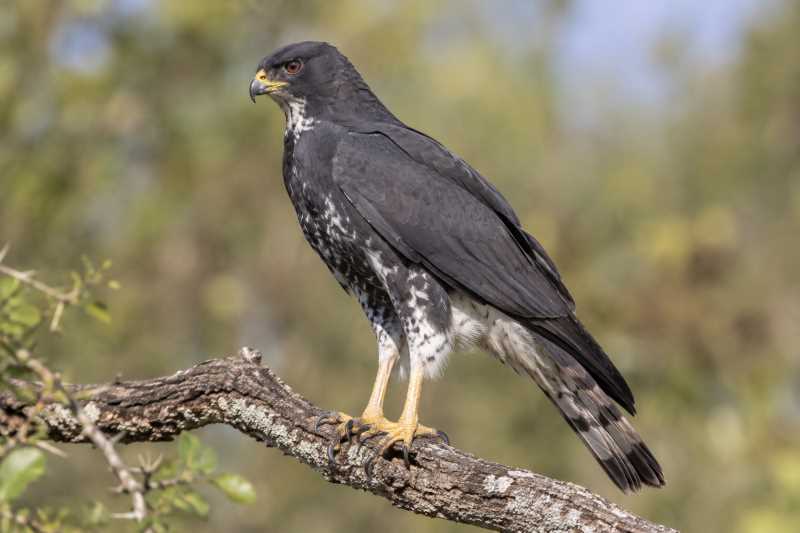
The Black Sparrowhawk is one of the largest hawks in its range, characterized by its striking plumage and formidable presence. Adult Black Sparrowhawks exhibit a stark contrast between their black upperparts and white underparts, a feature that gives them their name. Their wings are broad and rounded, providing agility and speed during flight. Juveniles, however, display a more mottled brown coloration, which gradually changes as they mature.
Their eyes are a vivid yellow, set against a dark facial mask that adds to their piercing gaze. The beak is curved and sharp, perfect for tearing into prey, while their talons are robust and adapted for gripping and killing.
Habitat and Distribution
The Black Sparrowhawk enjoys a broad distribution across sub-Saharan Africa, with a preference for forested regions and woodlands. They are particularly common in South Africa, where they thrive in both natural and urban environments. This adaptability has allowed them to colonize new areas as deforestation and urbanization change the landscape.
Interestingly, Black Sparrowhawks have been observed nesting in exotic tree species in urban areas, showing their remarkable adaptability to human-altered environments. This ability to adjust to various habitats is a significant factor in their widespread presence.
Diet and Hunting Techniques
As a formidable predator, the Black Sparrowhawk’s diet mainly consists of birds, with pigeons and doves being prime targets. However, they are opportunistic hunters and will prey on a variety of avian species. Their hunting technique is both strategic and efficient; they often perch silently before launching a swift ambush, taking advantage of their speed and agility.
These raptors have also been observed hunting in pairs, a rare behavior among birds of prey. This cooperative hunting increases their success rate, particularly in catching fast or evasive prey.
Breeding and Nesting
Black Sparrowhawks are monogamous, forming long-term pair bonds that often last for several breeding seasons. They typically nest in tall trees, constructing large stick nests lined with green leaves. The breeding season varies by region, often coinciding with the rainy season when food is more abundant.
A typical clutch consists of 2-4 eggs, with the female primarily responsible for incubation while the male provides food. Once the chicks hatch, both parents share the responsibility of feeding and protecting the young until they fledge.
Conservation Status and Threats
Currently, the Black Sparrowhawk is not considered threatened and is classified as Least Concern by the International Union for Conservation of Nature (IUCN). However, they face several threats, including habitat loss due to deforestation and urban expansion. Despite these challenges, their adaptability has enabled them to maintain stable populations in many areas.
Conservation efforts focus on monitoring populations and preserving suitable habitats, ensuring these magnificent birds continue to thrive.
Ecological Role and Significance
The Black Sparrowhawk plays a crucial role in its ecosystem as a top predator, helping to control the populations of prey species. This regulation is essential for maintaining ecological balance and biodiversity.
Moreover, their presence in urban areas highlights the importance of preserving green spaces and creating environments where wildlife can coexist with human development.
Conclusion
The Black Sparrowhawk is a testament to the beauty and resilience of avian life. Their adaptability, striking appearance, and crucial ecological role make them a fascinating subject of study and admiration. As we continue to alter landscapes and influence ecosystems, understanding and supporting such species becomes increasingly important for biodiversity conservation.
By appreciating and protecting the Black Sparrowhawk, we contribute to preserving the intricate web of life that sustains our planet.
Related posts