Kofiau Paradise Kingfisher: A Jewel of the Avian World
Nestled in the lush, remote landscapes of Indonesia’s Raja Ampat islands, the Kofiau Paradise Kingfisher (Tanysiptera ellioti) stands as a testament to nature’s artistry. This exquisite bird, endemic to the small island of Kofiau, captures the imagination with its vivid plumage and enigmatic presence. As a member of the family Alcedinidae, the Kofiau Paradise Kingfisher is a remarkable example of the biodiversity that thrives in this unique corner of the world.
A Stunning Display of Color and Form
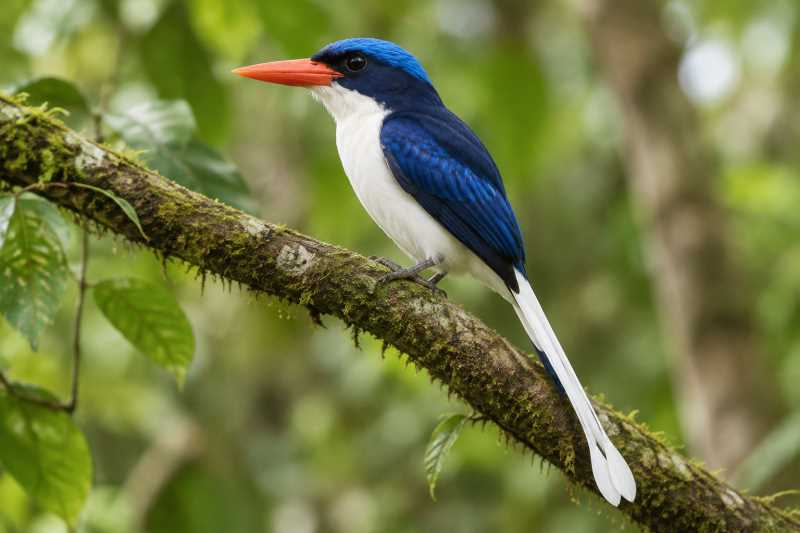
The Kofiau Paradise Kingfisher is renowned for its striking appearance, which serves not only as a visual delight but also as a key to its adaptability and survival. Measuring around 34 cm in length, this bird is adorned with a vibrant array of colors. Its head and nape are cloaked in a rich, iridescent blue, which contrasts beautifully with its white underparts. The back and wings are a deep shade of blue-green, adding to its allure. Perhaps most mesmerizing are its long, graceful tail feathers, which can make up nearly half of its total body length. These tail feathers are not just for show; they play a vital role in courtship displays, signaling health and vitality to potential mates.
Habitat and Distribution
The Kofiau Paradise Kingfisher is found exclusively on Kofiau Island, part of the Raja Ampat archipelago. This area is renowned for its extraordinary biodiversity, both terrestrial and marine. The island’s dense tropical forests provide the perfect habitat for this species, offering ample food resources and nesting sites. Despite its limited range, the bird has adapted well to its environment, thriving in the island’s humid climate and dense foliage.
Diet and Foraging Behavior
Primarily insectivorous, the Kofiau Paradise Kingfisher feeds on a diet of insects and small invertebrates. Its sharp bill is perfectly adapted for catching prey, which it often snatches mid-air or gleans from foliage. This feeding strategy requires keen eyesight and quick reflexes, traits that are well-developed in this species. The bird’s foraging behavior is typically solitary, although it may occasionally join mixed-species flocks to exploit abundant food resources.
Reproduction and Life Cycle
The breeding habits of the Kofiau Paradise Kingfisher are shrouded in some mystery, largely due to the bird’s elusive nature and the remote location of its habitat. However, it is known that like other kingfishers, this species nests in cavities. These are typically excavated in termite mounds or rotting wood, providing a secure environment for raising young. The female lays a clutch of two to three eggs, which are incubated by both parents. The cooperative efforts continue as both parents participate in feeding and caring for the chicks until they fledge.
Conservation Status and Challenges
The Kofiau Paradise Kingfisher is currently classified as Near Threatened on the IUCN Red List. This designation highlights the delicate balance of its existence, given its restricted range and the ongoing threats to its habitat. Deforestation, driven by logging and agricultural expansion, poses significant risks to the island’s forests. Additionally, climate change and the associated rise in sea levels could impact the bird’s habitat in the future.
Conservation efforts are crucial to ensure the survival of this species. Protecting the natural habitat of Kofiau Island through the establishment of reserves and sustainable land-use practices is essential. Moreover, raising awareness about the importance of preserving biodiversity in the Raja Ampat region can foster local and global support for conservation initiatives.
The Importance of Biodiversity and Conservation
The Kofiau Paradise Kingfisher serves as a symbol of the rich biodiversity found in the Raja Ampat islands. Its presence underscores the importance of preserving unique ecosystems that house countless species, many of which are yet to be studied. Biodiversity is not just about the variety of life but also about the complex interactions that sustain ecosystems and, ultimately, the planet.
In conclusion, the Kofiau Paradise Kingfisher is more than just a bird; it is a representative of the vibrant life that thrives in one of the world’s most biodiverse regions. Its beauty and ecological significance make it a priority for conservation efforts. By protecting this species and its habitat, we contribute to the broader goal of preserving the natural world for future generations.
Related posts