The Enigmatic Chestnut-eared Aracari: A Jewel of the Amazon
The Chestnut-eared Aracari (Pteroglossus castanotis) is a striking member of the toucan family, an avian jewel that inhabits the lush rainforests of South America. This medium-sized bird is renowned for its vibrant plumage, peculiar feeding habits, and its role in the ecosystem. In this article, we delve into the life of the Chestnut-eared Aracari, its habitat, behavior, and conservation status, unraveling the fascinating aspects of this extraordinary species.
Physical Characteristics
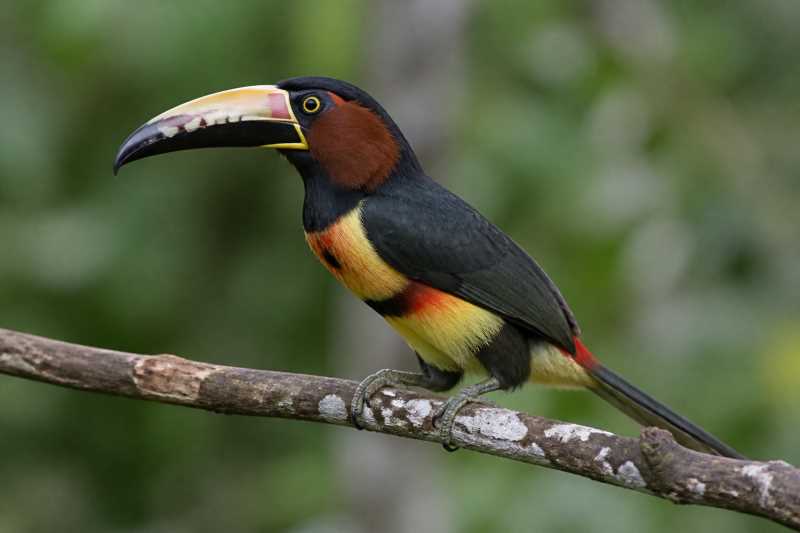
The Chestnut-eared Aracari is unmistakable with its vivid coloration and distinctive features. Typically measuring between 30 to 40 centimeters in length, it boasts a long, narrow bill that is proportionate to its body size. The bird’s plumage is a spectacular display of colors: a glossy black head, a bright yellow chest adorned with a horizontal red band, and its namesake chestnut-colored ear patches. Its back and wings are primarily green, blending seamlessly into the rainforest canopy, while its underparts are yellow, providing a striking contrast.
The bill, although not as large as some other toucan species, is equally colorful, with a mix of black, red, and yellow hues. This formidable tool is not only a visual marvel but also a crucial adaptation for its feeding habits.
Habitat and Distribution
The Chestnut-eared Aracari is native to the neotropical regions of South America, primarily found in the Amazon Basin. Its range extends across countries such as Brazil, Bolivia, Paraguay, and Argentina. The bird favors humid forests, including both lowland rainforests and subtropical forests. It is also known to inhabit forest edges and secondary growth areas, demonstrating some adaptability to changing environments.
These birds are arboreal, spending most of their lives in the forest canopy. They are often spotted in small flocks, flitting between trees in search of food, making them an integral part of the forest ecosystem.
Feeding Habits
The diet of the Chestnut-eared Aracari is predominantly frugivorous, with fruits constituting the bulk of their intake. However, they are also known to consume insects, small reptiles, and bird eggs, showcasing their opportunistic feeding behavior. Their long, curved bills are perfectly adapted for reaching and plucking fruits from branches, making them important seed dispersers in their habitat.
By consuming a variety of fruits, Aracaris play a crucial role in maintaining the health of the rainforest. They aid in seed dispersal by excreting seeds at different locations, facilitating forest regeneration and biodiversity.
Social Behavior and Reproduction
Chestnut-eared Aracaris are social birds, often seen in small groups or family units. These flocks engage in playful behavior and vocalizations, communicating through a series of high-pitched calls and whistles. Their social structure is not only vital for foraging but also for protection against predators.
During the breeding season, which typically coincides with the rainy season, these birds exhibit fascinating nesting behaviors. They nest in tree cavities, often in abandoned woodpecker holes. The female lays a clutch of 2 to 4 white eggs, and both parents share the responsibility of incubation and feeding the chicks. The cooperative breeding strategy, sometimes involving assistance from previous offspring, showcases their complex social dynamics.
Conservation Status
Currently, the Chestnut-eared Aracari is listed as a species of Least Concern by the International Union for Conservation of Nature (IUCN). However, like many rainforest species, they face ongoing threats from habitat destruction and fragmentation due to logging, agriculture, and urban expansion.
Efforts to conserve the rich biodiversity of the Amazon and surrounding regions are crucial for the preservation of the Chestnut-eared Aracari and other species that share its habitat. Conservation initiatives focusing on sustainable land use, reforestation, and the establishment of protected areas are vital to ensure the survival of these charismatic birds.
Importance in the Ecosystem
Beyond their aesthetic appeal, Chestnut-eared Aracaris play an essential role in their ecosystem. As seed dispersers, they contribute to the health and diversity of the rainforest. Their presence indicates a healthy, functioning ecosystem, and their decline could signify broader environmental issues.
In conclusion, the Chestnut-eared Aracari is a remarkable species that embodies the beauty and complexity of the Amazon rainforest. Its vibrant plumage, unique behaviors, and ecological importance make it a subject of fascination for ornithologists and nature enthusiasts alike. Protecting these birds and their habitat is not only crucial for their survival but also for the health of the global environment.
As we continue to explore and understand the natural world, the Chestnut-eared Aracari serves as a reminder of the intricate web of life and the need to preserve it for future generations.
Related posts