Radde’s Warbler: A Comprehensive Study of Phylloscopus schwarzi
Introduction
Radde’s Warbler, scientifically known as Phylloscopus schwarzi, is a fascinating species that captivates ornithologists and bird enthusiasts alike. Known for its subtle beauty and elusive nature, this small passerine bird belongs to the Phylloscopidae family. Although it may not boast the vibrant colors of some of its avian counterparts, Radde’s Warbler stands out with its unique behavioral patterns and migratory habits.
Taxonomy and Nomenclature
The nomenclature of Radde’s Warbler pays homage to the German naturalist Gustav Radde, who significantly contributed to the study of Central Asian wildlife. The species name, schwarzi, further honors the German ornithologist Bernard von Schwarz. First described in 1863, Radde’s Warbler has been a subject of interest due to its distinct characteristics and widespread geographical distribution.
Physical Characteristics
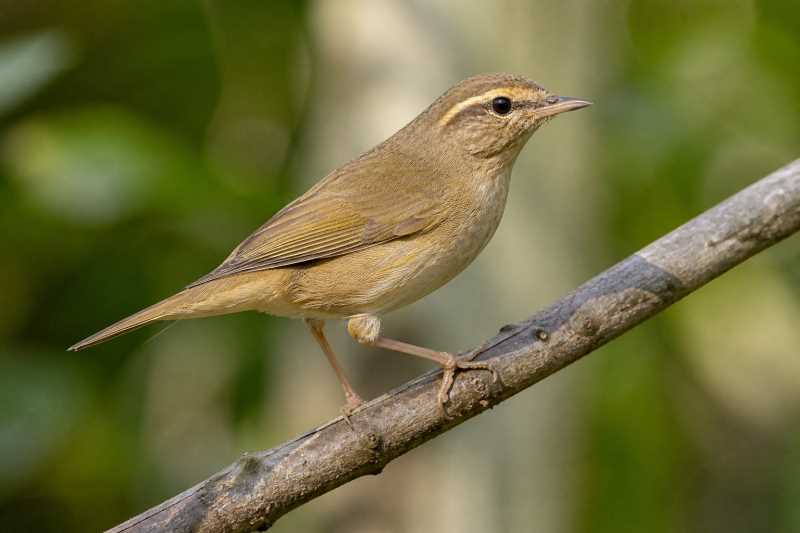
Radde’s Warbler is a small bird, measuring approximately 13-14 centimeters in length with a wingspan ranging from 18 to 21 centimeters. Its plumage is predominantly olive-brown with a slightly paler underside. One of the distinguishing features of this warbler is its supercilium, or ‘eyebrow,’ a pale stripe that runs above its eye, giving it a distinctive appearance. The bird’s beak is thin and pointed, well-suited for its insectivorous diet.
Habitat and Distribution
This warbler species primarily breeds in the taiga and temperate forests of Siberia, extending from the Ural Mountains to the Amur River basin. During the breeding season, it prefers dense undergrowth in coniferous and mixed forests. As a migratory bird, Radde’s Warbler travels remarkable distances, wintering in Southeast Asia, mainly in countries like India, Thailand, and Vietnam. This extensive migratory pattern highlights its adaptability to different environments.
Behavior and Diet
Radde’s Warbler is predominantly insectivorous, feeding on a diet of small insects and arthropods. It forages actively among leaves and branches, often flicking its wings and tail as it hunts for prey. Its feeding behavior is characterized by quick, deliberate movements, reflecting its agility and keen eyesight.
The bird’s song is a series of soft, high-pitched notes that can be challenging to detect amidst the chorus of other forest dwellers. Despite its soft song, Radde’s Warbler is an assertive defender of its territory during the breeding season, engaging in vocal and physical displays to ward off rivals.
Breeding and Reproduction
The breeding season for Radde’s Warbler typically occurs from May to July. It constructs a cup-shaped nest made from grass, moss, and leaves, usually hidden in dense foliage close to the ground. The female lays a clutch of 4 to 6 eggs, which are incubated for about two weeks. Both parents are involved in feeding the chicks, which fledge approximately 12-14 days after hatching. The species’ breeding success is closely linked to the availability of food resources and the suitability of nesting sites.
Conservation Status
Currently, Radde’s Warbler is listed as a species of "Least Concern" by the International Union for Conservation of Nature (IUCN). Despite its wide range and stable population, ongoing monitoring is essential to detect any potential threats early. Habitat loss due to deforestation and climate change could pose future risks to its breeding and wintering grounds.
Conclusion
Radde’s Warbler, with its understated elegance and remarkable adaptability, continues to intrigue bird watchers and researchers. Its extensive migratory journey and unique behavioral traits make it a valuable subject for studying avian ecology and the impacts of environmental changes on migratory patterns. Conservation efforts must focus on preserving its habitat and ensuring the ecological integrity of its migratory routes.
As we continue to explore and understand the complexities of avian life, Radde’s Warbler serves as a reminder of the intricate balance within ecosystems and the ongoing need to protect the biodiversity that enriches our planet.
Related posts