
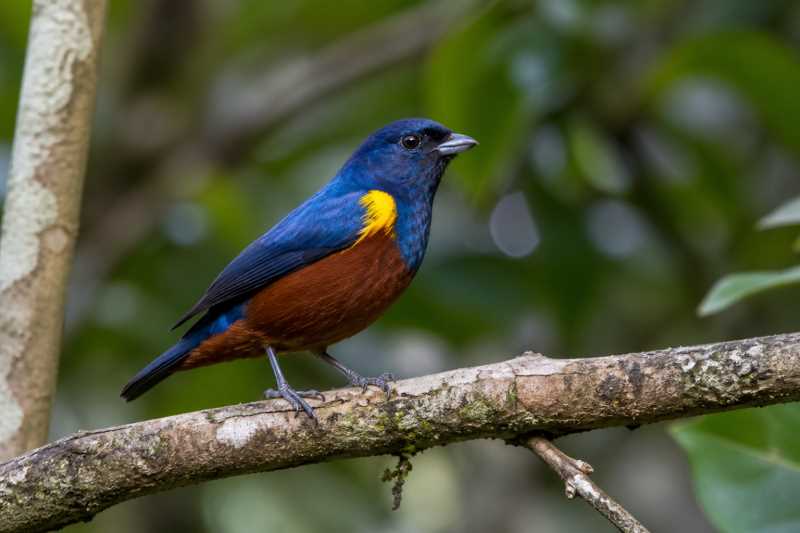
The Chestnut-bellied Euphonia: A Jewel of the Neotropical Avifauna
In the lush, verdant expanses of South America’s Atlantic Forest, a small, vibrantly colored bird flits through the canopy with the grace that has entranced ornithologists and birdwatchers alike. This avian jewel is the Chestnut-bellied Euphonia (Euphonia pectoralis), a member of the Fringillidae family, which is known for its striking plumage and melodious call.
Taxonomy and Distribution
The Chestnut-bellied Euphonia belongs to the genus Euphonia, which encompasses over 27 species within the Neotropics. Its range is predominantly concentrated in the southeastern regions of Brazil, extending into northeastern Argentina and eastern Paraguay. The bird’s habitat is primarily lowland and montane forests, but it is also commonly found in gardens and parks within its geographic range.
Physical Characteristics
The Chestnut-bellied Euphonia is a small passerine bird, measuring approximately 11 cm in length and weighing around 14 grams. The species is sexually dimorphic, with males and females exhibiting distinct plumage. The male boasts a striking contrast of deep chestnut on its underparts and a rich, glossy blue-black on the upper parts. In contrast, the female displays a more subdued olive-green plumage, with hints of yellow on the lower underparts. This dimorphism aids in camouflage, especially during nesting periods.
Behavior and Ecology
Euphonias are known for their social and gregarious nature, often seen foraging in pairs or small flocks. Their diet primarily consists of fruits, particularly berries and small figs, although they occasionally consume insects and spiders. This frugivorous diet makes them important seed dispersers, contributing significantly to the health and regeneration of their forest habitat.
The Chestnut-bellied Euphonia’s song is a delightful series of high-pitched notes, which it uses to communicate with other members of its species and establish territory. The male is particularly vocal during the breeding season, using its call to attract a mate and deter rivals.
Reproduction and Life Cycle
Breeding occurs during the onset of the rainy season when food resources are abundant. The Chestnut-bellied Euphonia is a monogamous species, with pairs often forming long-term bonds. The female is primarily responsible for nest construction, crafting a small, dome-shaped structure made of moss, leaves, and grasses, usually positioned in a concealed location within dense foliage.
Clutch size typically ranges from two to four eggs, which the female incubates for about 14 days. Both parents participate in feeding the chicks, which fledge approximately 18 days post-hatching. The parental investment is significant, with both male and female defending the nest vigorously against potential predators.
Conservation Status
The Chestnut-bellied Euphonia is currently classified as Least Concern by the International Union for Conservation of Nature (IUCN). However, its habitat, the Atlantic Forest, is one of the most endangered biomes in the world, with only an estimated 15% of its original cover remaining. Deforestation, urbanization, and agricultural expansion are the primary threats to this ecosystem.
Conservation efforts are crucial to ensure the survival of the Chestnut-bellied Euphonia and other endemic species. Protected areas and reserves play a pivotal role in preserving the biodiversity of the Atlantic Forest. Additionally, community-based conservation initiatives that promote sustainable land use practices are essential for mitigating habitat loss.
Conclusion
The Chestnut-bellied Euphonia is a testament to the rich biodiversity of the Neotropics, showcasing the intricate balance of ecosystems that support such vibrant life. Its presence is not only a delight to those fortunate enough to witness its beauty but also a critical indicator of the health of its environment. As conservation efforts continue, the Chestnut-bellied Euphonia serves as a symbol of the enduring resilience of the natural world and the ongoing need for human stewardship to protect it.
References
- BirdLife International. "Euphonia pectoralis." The IUCN Red List of Threatened Species 2023.
- Ridgely, R. S., & Tudor, G. (1994). The Birds of South America: Vol. II. The Suboscine Passerines. University of Texas Press.
- Sick, H. (1993). Birds in Brazil: A Natural History. Princeton University Press.
Related posts


