
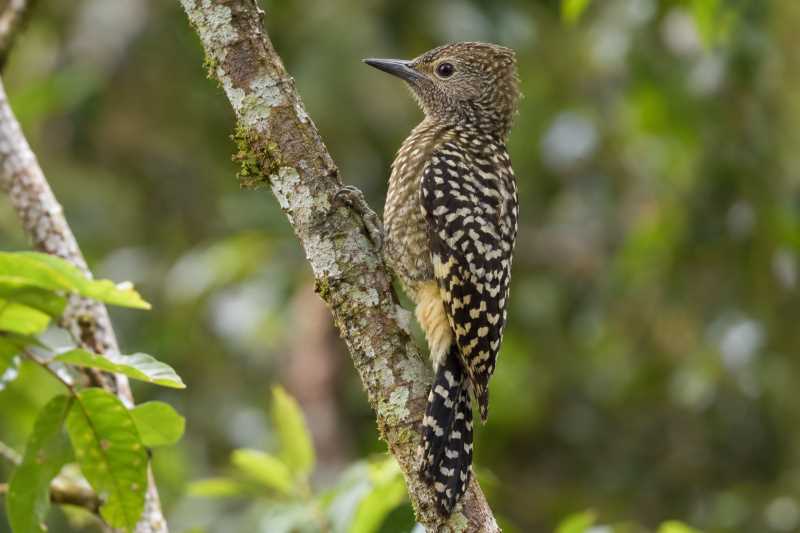
The Buff-rumped Woodpecker: A Glimpse into the Life of Meiglyptes grammithorax
The Buff-rumped Woodpecker, scientifically known as Meiglyptes grammithorax, is a fascinating bird species that belongs to the Picidae family. This elusive bird is native to the tropical forests of Southeast Asia, where it plays a vital role in maintaining the ecological balance. In this article, we delve into the unique characteristics, habitat preferences, behavior, and conservation status of this remarkable avian species.
Physical Characteristics
The Buff-rumped Woodpecker is a medium-sized bird, measuring approximately 23 to 25 centimeters in length. Its most distinguishing feature is the buff-colored rump, which contrasts sharply with its otherwise dark plumage. The bird’s back and wings are predominantly brown with black barring, while its underparts are paler with similar barred patterns. A closer look reveals a subtle blend of greenish and golden hues on its upperparts, adding to its allure.
The woodpecker’s head is adorned with a distinctive pattern that includes a dark cap and a contrasting white throat. It possesses a powerful, chisel-like bill that is ideal for excavating wood in search of insects. The zygodactyl feet, with two toes facing forward and two backward, provide excellent grip on tree trunks, facilitating its acrobatic maneuvers.
Habitat and Distribution
Meiglyptes grammithorax is primarily found in the lowland rainforests of Southeast Asia, with its range extending across countries such as Thailand, Malaysia, Indonesia, and Brunei. It thrives in dense, humid forests, where it occupies both primary and secondary growth areas. These birds are highly dependent on forested habitats, making them vulnerable to habitat loss due to deforestation and other human activities.
The Buff-rumped Woodpecker is typically observed at elevations ranging from sea level to about 1,200 meters. It prefers areas with abundant dead and decaying trees, which serve as crucial foraging sites and nesting locations. The presence of these woodpeckers is often an indicator of a healthy forest ecosystem.
Behavior and Diet
The Buff-rumped Woodpecker is known for its solitary or paired lifestyle, though small family groups may occasionally be seen. The bird is diurnal, spending most of its day foraging for food. Its diet primarily consists of insects and their larvae, which it extracts from tree bark using its specialized bill. Ants, termites, and beetle larvae form the staple food items in its diet.
This woodpecker employs a technique known as ‘drumming’ to communicate with others and to establish territory. The rapid, repetitive pecking on tree trunks serves both as a declaration of presence and as a means of attracting mates. Drumming is an essential aspect of their social behavior, often heard echoing through the forest.
Nesting occurs in tree cavities, which the birds excavate themselves. The female lays a clutch of 2 to 4 eggs, and both parents share the responsibility of incubation and feeding the hatchlings. The young woodpeckers fledge after about 3 weeks, gaining independence soon after.
Conservation Status
As of the latest assessments, the Buff-rumped Woodpecker is listed as Least Concern on the IUCN Red List. However, this status should not undermine the challenges faced by the species. Habitat destruction due to logging, agriculture, and urbanization poses a significant threat to their populations. Conservation efforts are crucial to ensure the survival of these birds and the maintenance of their natural habitats.
Efforts to protect the Buff-rumped Woodpecker include establishing protected areas and promoting sustainable forestry practices. Conservation organizations are working towards raising awareness about the importance of preserving forest ecosystems, not only for the woodpeckers but for countless other species that share their habitat.
Conclusion
The Buff-rumped Woodpecker is a testament to the rich biodiversity found within Southeast Asia’s forests. Its presence is a reminder of the intricate web of life that thrives in these habitats. Protecting the Buff-rumped Woodpecker and its environment is a responsibility that extends beyond borders, emphasizing the need for international cooperation in conservation efforts.
By understanding and appreciating the unique attributes of Meiglyptes grammithorax, we can contribute to the preservation of a species that plays a crucial role in maintaining the health and balance of tropical forest ecosystems.
Related posts


