The Grey-headed Lovebird: A Detailed Exploration
The Grey-headed Lovebird (Agapornis canus), also known as the Madagascar Lovebird, is a captivating species belonging to the Psittacidae family. Native to the lush landscapes of Madagascar, these birds have garnered attention for their endearing behaviors and striking appearance. This article delves into the life and habits of the Grey-headed Lovebird, offering a comprehensive look at their habitat, diet, breeding patterns, and conservation status.
Habitat and Distribution
The Grey-headed Lovebird is predominantly found in the forests, savannas, and shrublands of Madagascar. They thrive in a variety of habitats ranging from coastal forests to the interior woodlands of the island. The island’s subtropical climate provides an ideal environment for these lovebirds, with abundant food sources and nesting sites.
These birds are highly adaptable and have been observed in agricultural areas and even urban settings, showcasing their ability to coexist with human developments. Their ability to adapt to various environments is a testament to their resilience, a trait that has aided in their survival despite habitat changes.
Physical Characteristics
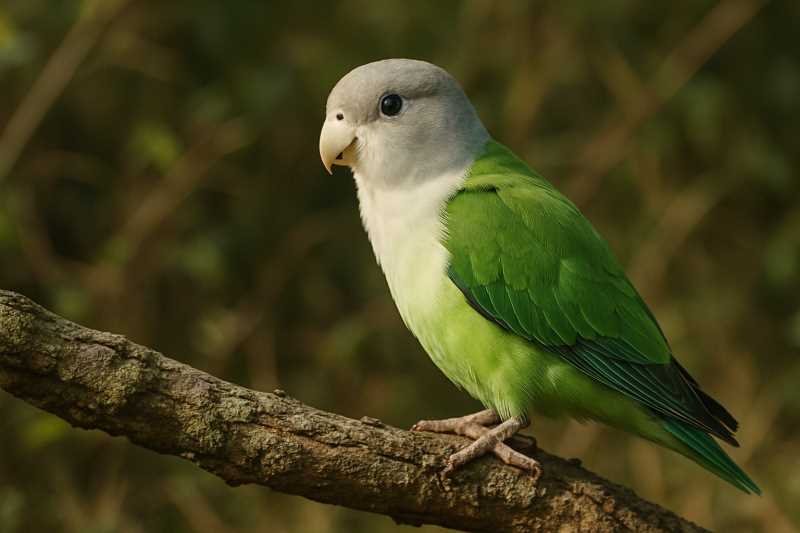
The Grey-headed Lovebird is relatively small, measuring about 13 to 14 cm in length. One of the most distinguishing features of the species is the sexual dimorphism displayed in their plumage. Males are characterized by their grey head, which contrasts sharply with their predominantly green bodies. Females, on the other hand, lack the grey coloring and are entirely green, making them slightly less conspicuous.
These birds possess a short, rounded tail and a strong, hooked beak adapted for cracking seeds and nuts. Their bright, expressive eyes and agile flight further add to their charm, making them a favorite among bird enthusiasts and pet owners alike.
Diet and Feeding Habits
Grey-headed Lovebirds are primarily granivorous, with a diet consisting mainly of seeds, nuts, and grains. They are also known to consume fruits, berries, and occasionally insects, particularly during the breeding season when protein requirements increase. In the wild, they forage in flocks, often seen fluttering from tree to tree in search of food.
Their strong beaks are perfectly adapted for their diet, capable of cracking open even the toughest seeds. This ability allows them to exploit a wide range of food resources, further contributing to their adaptability in diverse habitats.
Breeding and Social Behavior
Grey-headed Lovebirds are known for their strong social bonds, often forming monogamous pairs that last for life. Breeding typically occurs during the rainy season when food is plentiful. The female usually lays a clutch of 3 to 6 eggs in natural cavities or nests constructed in tree hollows.
Both parents take part in nurturing the young, with the female primarily incubating the eggs while the male forages for food. Once hatched, the chicks are fed regurgitated food until they are mature enough to venture out on their own. The strong family bonds and communal behavior are vital aspects of their survival strategy, offering protection and support within the flock.
Conservation Status
The Grey-headed Lovebird is currently listed as “Least Concern” by the International Union for Conservation of Nature (IUCN). Despite this relatively secure status, habitat destruction and the illegal pet trade pose potential threats. Madagascar’s unique biodiversity is under constant pressure from deforestation and land conversion, which could impact the natural habitats of these birds.
Efforts to conserve the island’s ecosystems are crucial, not just for the Grey-headed Lovebird but for the myriad of endemic species that call Madagascar home. Conservation initiatives focusing on sustainable land use and habitat preservation are vital to ensuring the continued survival of this charming species.
Conclusion
The Grey-headed Lovebird is a remarkable example of nature’s adaptability and resilience. Their ability to thrive in a range of habitats, coupled with their charming social behaviors, makes them a fascinating subject of study. As ambassadors of Madagascar’s rich avian diversity, they highlight the importance of conservation efforts in preserving the island’s unique wildlife.
For bird enthusiasts and conservationists alike, the Grey-headed Lovebird serves as both a source of inspiration and a reminder of the delicate balance required to maintain biodiversity in our changing world.
Related posts