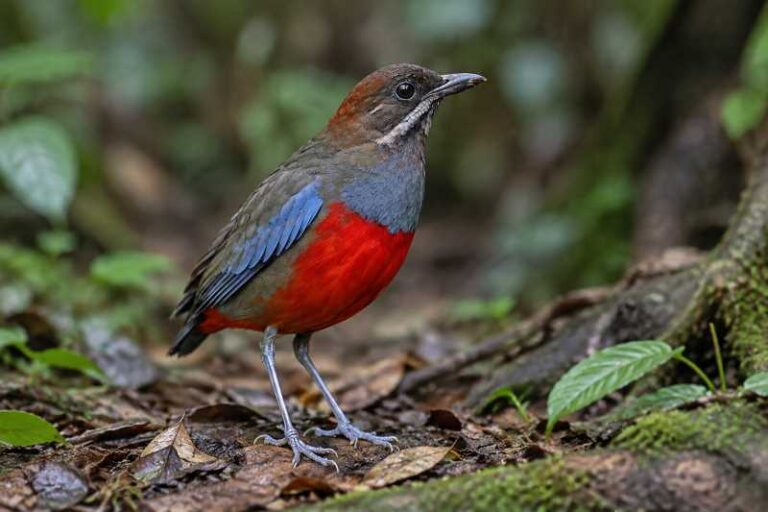
The Blue-gray Noddy (Anous cerulea), a diminutive seabird of remarkable grace, is a species that captivates ornithologists and birdwatchers alike. Found primarily across the tropical and subtropical regions of the Pacific and Indian Oceans, this bird is a member of the family Laridae, which also includes gulls and terns. Its understated beauty, characterized by a soft blue-grey plumage and sleek silhouette, makes it a subtle yet striking presence in its maritime habitats.
Habitat and Distribution
The Blue-gray Noddy thrives in coastal environments, often favoring remote islands and coral atolls. These birds are highly adapted to life at sea, where they spend a significant portion of their lives. They are known for their affinity for nesting on rocky ledges, cliffs, and occasionally in the crevices of trees. Their geographic distribution is wide, spanning from the eastern coasts of Africa to the islands of Hawaii. Notably, they are prevalent in the Galápagos Islands, the Seychelles, and parts of Micronesia, where their populations are most robust.
Physical Characteristics
The Blue-gray Noddy is relatively small, with a body length of around 25 to 30 centimeters and a wingspan ranging between 50 to 60 centimeters. Its plumage is a soft, uniform blue-gray, which provides excellent camouflage against the open ocean and coastal rocks. This bird possesses a slender, sharp beak, perfectly adapted for catching small fish and marine invertebrates, which make up the bulk of its diet. The eyes of the Blue-gray Noddy are dark, providing a stark contrast to its pale plumage, and are equipped with a special nictitating membrane that protects them when diving for food.
Behavior and Diet
Blue-gray Noddies are social creatures, often seen in flocks that can number in the hundreds. They are known for their acrobatic flight patterns and can often be observed hovering and diving skillfully to catch prey just below the ocean surface. Their diet primarily consists of small fish and squid, which they catch while in flight. They rarely drink freshwater, instead deriving hydration from their prey and occasionally from rainwater collected on leaves or rocks.
During the breeding season, these birds exhibit fascinating nesting behaviors. They often return to the same nesting sites year after year, demonstrating strong site fidelity. Nests are typically constructed from seaweed, twigs, and other available materials, and are often reused and refurbished annually. The female typically lays a single egg, which both parents incubate. The role of both parents in feeding and protecting the chick is crucial for the fledgling’s survival.
Conservation Status
Currently, the Blue-gray Noddy is classified as Least Concern by the International Union for Conservation of Nature (IUCN). However, like many seabirds, they face threats from habitat destruction, climate change, and predation by invasive species such as rats and cats, which have been introduced to many of their nesting islands. Conservation efforts are focused on habitat protection and the eradication of invasive species to ensure the survival of this elegant seabird.
Cultural Significance
The Blue-gray Noddy holds cultural significance for many indigenous communities in the Pacific Islands, where it is often regarded as a symbol of navigation and guidance due to its extensive travels across the ocean. Historically, sailors and islanders have used the presence and behavior of these birds to locate land and predict weather patterns.
Conclusion
The Blue-gray Noddy is a testament to the adaptability and resilience of seabirds. Its serene presence and ecological role highlight the interconnectedness of oceanic ecosystems. By understanding and protecting this species, we not only safeguard a unique avian marvel but also contribute to the broader conservation of marine biodiversity. As stewards of the natural world, it is imperative that we continue to support efforts that ensure the survival of the Blue-gray Noddy and its habitat for future generations.
Related posts