The Black-breasted Mannikin: A Jewel of the Avian World
The Black-breasted Mannikin (Lonchura teerinki), a small and captivating bird, is a member of the Estrildidae family, known for its vibrant plumage and intricate social behaviors. This species, though not as widely recognized as some of its avian counterparts, plays a vital role in its ecosystem and offers fascinating insights into avian diversity and adaptation.
Taxonomy and Distribution
The Black-breasted Mannikin is endemic to New Guinea, a region renowned for its rich biodiversity. Its scientific classification places it within the genus Lonchura, which consists of small seed-eating birds known as mannikins or munias. The species was first described by the ornithologist Ernst Mayr in 1944, highlighting its distinct morphological characteristics and habitat preferences.
Primarily found in the lowland and montane forests of New Guinea, the Black-breasted Mannikin thrives in tropical environments. Its preferred habitats include grasslands, savannas, and agricultural areas, where it can find abundant food sources and nesting sites. The species’ adaptability to various habitats suggests a level of ecological flexibility that aids its survival in changing environments.
Physical Characteristics
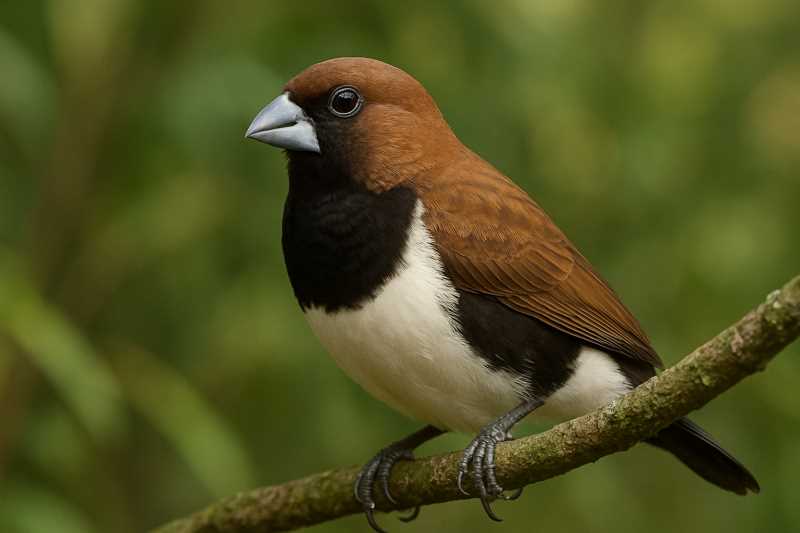
The Black-breasted Mannikin is a small bird, measuring approximately 11-12 cm in length. Its most distinctive feature is its striking plumage. The bird’s underparts are predominantly black, extending from the throat to the breast, giving the species its name. This black coloration contrasts sharply with the warm brown tones of its upperparts and wings.
The rest of its body is adorned with a mix of cream and brown hues, creating an intricate pattern that provides effective camouflage in its natural habitat. Its beak is short and conical, perfectly adapted for seed consumption, which constitutes the majority of its diet. Additionally, the bird’s eyes are dark and expressive, often reflecting the inquisitive and social nature typical of the Estrildidae family.
Behavior and Ecology
The Black-breasted Mannikin is a highly social species, often observed in small flocks. These flocks engage in elaborate social interactions that include mutual preening and synchronized movements. Such behaviors are not merely social but play a crucial role in maintaining group cohesion and communication.
One of the most intriguing aspects of the Black-breasted Mannikin’s behavior is its breeding system. The species is monogamous, forming long-term pair bonds. Courtship involves a series of displays and vocalizations, with males often showcasing their plumage to attract females. Nesting takes place in dense vegetation, where the pair constructs a spherical nest made of grass and other plant materials. The female typically lays 4-6 eggs, which both parents incubate. This shared parental investment is critical for the successful rearing of chicks in the unpredictable environments of New Guinea.
Diet and Feeding Habits
As granivores, Black-breasted Mannikins primarily feed on seeds. Their diet mainly consists of grass seeds, but they are also known to consume small insects and other invertebrates, especially during the breeding season when nutritional demands are higher. The bird’s short, robust beak is well-suited for cracking open seeds, allowing it to exploit a variety of food sources.
Feeding often occurs in flocks, which not only enhances foraging efficiency but also offers protection against predators. The bird’s keen eyesight and alert behavior further aid in predator detection, ensuring the safety of the flock.
Conservation Status
Currently, the Black-breasted Mannikin is not considered globally threatened. Its population is stable, and the species is classified as Least Concern by the International Union for Conservation of Nature (IUCN). However, habitat destruction due to agricultural expansion and logging poses potential threats. Conservation efforts focused on habitat preservation are essential to ensure the long-term survival of this species.
The species’ adaptability to human-altered environments has, so far, mitigated some of these threats. However, continued monitoring is necessary to detect any future changes in population dynamics or habitat availability that could impact its conservation status.
Cultural and Scientific Significance
Beyond its ecological role, the Black-breasted Mannikin holds cultural significance for the indigenous communities of New Guinea, who often view these birds as symbols of beauty and harmony. Moreover, the species is a subject of interest for ornithologists and birdwatchers, contributing to local and international avian studies.
Research on the Black-breasted Mannikin provides valuable insights into avian social behavior, adaptation, and the effects of environmental changes on bird populations. This knowledge is crucial for formulating effective conservation strategies and enhancing our understanding of avian biodiversity.
Conclusion
The Black-breasted Mannikin, with its striking appearance and complex social behavior, remains an enchanting subject for bird enthusiasts and researchers alike. Its presence in the lush landscapes of New Guinea underscores the importance of conserving biodiversity hotspots and the intricate web of life they support. As we continue to study and appreciate this remarkable bird, it serves as a reminder of the natural world’s beauty and resilience.
Preserving the Black-breasted Mannikin’s habitat and promoting awareness of its ecological significance will ensure that future generations can enjoy and learn from this avian gem.
Related posts