The Majestic Sandhill Crane: A Symbol of Grace and Resilience
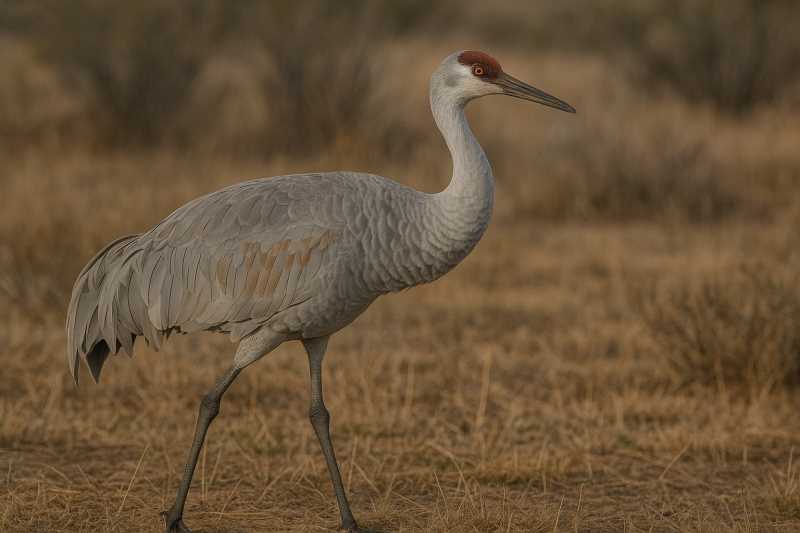
The Sandhill Crane, with its prehistoric lineage and distinctive appearance, is one of North America’s most captivating avian species. Known for their long legs, elongated necks, and striking red foreheads, these birds have fascinated ornithologists, conservationists, and bird enthusiasts alike. This article delves into the life, habitat, and conservation status of the Sandhill Crane, highlighting its significance in the ecological and cultural landscapes of the regions it inhabits.
Physical Characteristics and Behavior
Standing at an average height of four to five feet, with a wingspan that can extend over six feet, the Sandhill Crane (Grus canadensis) is an impressive figure in the avian world. Its plumage is predominantly gray, often tinged with a rusty hue acquired from preening with iron-rich mud. The crane’s long, pointed bill and robust legs are adapted to a diverse diet and varied habitats.
Sandhill Cranes are known for their elaborate courtship dances, a spectacle of leaping, bowing, and wing flapping that strengthens pair bonds and displays fitness. These dances are not restricted to the breeding season alone; they are a common sight throughout the year, underscoring the cranes’ social nature and complex communication.
Habitat and Migration Patterns
Sandhill Cranes are remarkably adaptable, occupying a range of habitats from wetlands and grasslands to agricultural fields. They are found across North America, with populations ranging from the Arctic tundra to the southeastern United States and Mexico. The cranes’ adaptability to different environments is a testament to their resilience and evolutionary success.
Migration is a significant aspect of the Sandhill Crane’s life cycle. Some populations, like those in the Midwest, undertake long migrations from breeding grounds in Canada and the northern United States to wintering sites in the southern U.S. and Mexico. Along the way, cranes gather in large flocks at traditional stopover sites, such as Nebraska’s Platte River, creating one of the continent’s most awe-inspiring natural spectacles.
Conservation Status and Challenges
While the Sandhill Crane is not currently listed as threatened or endangered, it faces numerous challenges that could impact its survival. Habitat loss due to agricultural expansion, urban development, and climate change poses significant threats to its traditional breeding and stopover sites. Additionally, human disturbances and hunting in some regions further exacerbate these challenges.
Conservation efforts are crucial to ensuring the Sandhill Crane’s future. Organizations like the International Crane Foundation and various governmental and non-governmental bodies have implemented measures to protect critical habitats and promote sustainable land use practices. Public awareness and community involvement are also vital in supporting conservation initiatives and reducing human-wildlife conflicts.
Cultural Significance
The Sandhill Crane holds a special place in the cultural heritage of many Indigenous peoples across North America. Often symbolizing longevity, fidelity, and transformation, cranes appear in myths, legends, and artistic representations. In modern times, they have become a symbol of conservation success and a reminder of the intricate connections between species and their environments.
Conclusion
The Sandhill Crane, with its elegant presence and remarkable adaptability, continues to inspire admiration and respect. Preserving its habitats and addressing the challenges it faces are not only crucial for the crane’s survival but also for the health of the broader ecosystems it inhabits. As we strive to balance human activities with the needs of wildlife, the Sandhill Crane stands as a poignant emblem of ecological harmony and the enduring beauty of the natural world.
This is one of the species covered in our book Cranes Of The World which is part of our Kings Birds of the world series, and one of the Kings Guides.

Related posts