The Bismarck Hanging Parrot: A Jewel of the Avian World
The Bismarck Hanging Parrot (Loriculus tener) is a small, vibrant parrot species native to the Bismarck Archipelago, a group of islands located off the northeastern coast of Papua New Guinea. This remarkable bird is not only known for its stunning appearance but also for its intriguing behaviors and ecological significance. As a species, the Bismarck Hanging Parrot represents both the beauty and complexity of avian biodiversity in this unique region.
Habitat and Distribution
The Bismarck Archipelago, comprising major islands like New Britain, New Ireland, and several smaller islands, provides the natural habitat for the Bismarck Hanging Parrot. These islands boast rich biodiversity, with dense tropical rainforests that offer an ideal environment for this parrot species. The parrots thrive in lowland and montane forests, often seen in the mid to upper canopy layers. Their range is largely confined to these islands, making them an important part of the local ecosystem.
Physical Characteristics
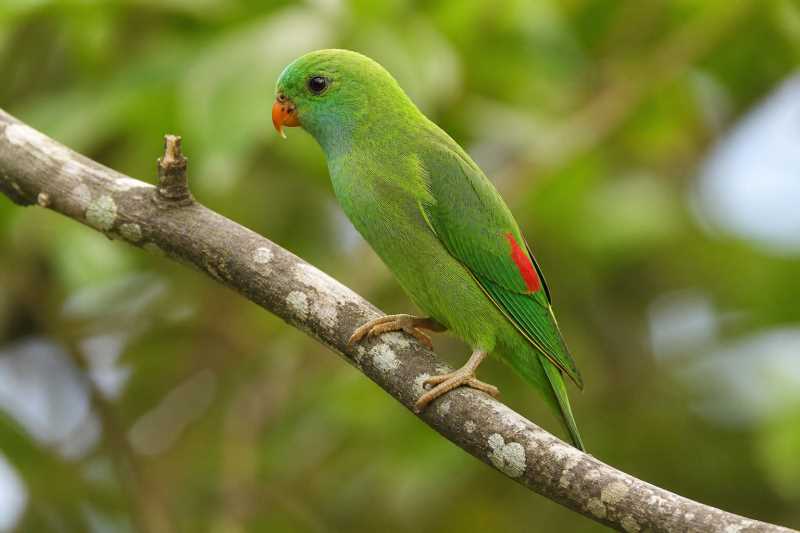
The Bismarck Hanging Parrot is relatively small, measuring approximately 10 to 12 cm in length. It is renowned for its striking plumage, which is predominantly green, providing excellent camouflage amid the lush foliage of its rainforest habitat. The parrot’s tail feathers are tipped with blue, adding a splash of color that is particularly noticeable during flight. One of the most distinctive features of this species is its red throat and forehead, which contrast vividly with its green body.
These parrots have a short, rounded tail and a stout, curved beak, adapted for their fruit and nectar-based diet. Their zygodactyl feet, with two toes facing forward and two backward, allow them to grip branches securely as they move through the forest canopy.
Behavior and Diet
Bismarck Hanging Parrots are known for their acrobatic behavior, often seen hanging upside down as they forage for food. This unique feeding posture is not only a spectacle to behold but also an adaptation that allows them to access fruit and nectar from various angles. Their diet primarily consists of fruits, seeds, nectar, and blossoms, making them important pollinators and seed dispersers within their ecosystem.
These parrots are typically observed in small flocks or pairs, exhibiting a social structure that facilitates cooperative feeding and protection from predators. Their calls are high-pitched and melodic, contributing to the vibrant soundscape of the Bismarckian forests.
Reproduction and Lifespan
The breeding habits of the Bismarck Hanging Parrot are relatively under-researched, but like many parrot species, they are believed to nest in tree cavities. The female typically lays a clutch of two to four eggs, which she incubates for about 20 days. After hatching, both parents participate in feeding and caring for the chicks until they are ready to fledge.
In captivity, Bismarck Hanging Parrots can live for 10 to 15 years, though their lifespan in the wild is not well-documented. Factors such as predation and habitat disturbance likely influence their longevity.
Conservation Status
The Bismarck Hanging Parrot is currently classified as Least Concern by the International Union for Conservation of Nature (IUCN). However, like many species endemic to island habitats, they face potential threats from habitat loss due to logging and agricultural expansion. Invasive species introduced to the islands also pose a risk to their population stability.
Conservation efforts in the Bismarck Archipelago focus on preserving the natural forests and promoting sustainable land-use practices. Continued research and monitoring are essential to ensure that this vibrant species continues to thrive in its natural habitat.
Cultural and Ecological Significance
The Bismarck Hanging Parrot holds cultural significance for indigenous communities, often featured in local folklore and traditional practices. Their presence in the forests is a symbol of a healthy ecosystem, indicating rich biodiversity and ecological balance.
Ecologically, these parrots play a crucial role in seed dispersal and pollination, contributing to forest regeneration and plant diversity. Their interactions with various plant species highlight the interconnectedness of the ecosystem, underscoring the importance of conserving such keystone species.
Conclusion
The Bismarck Hanging Parrot, with its vibrant plumage and intriguing behaviors, is a testament to the rich biodiversity of the Bismarck Archipelago. As a species, it embodies the delicate balance of nature and the intricate relationships within tropical ecosystems. Protecting this species and its habitat is not only vital for their survival but also for maintaining the ecological integrity of the region. Through continued research, conservation efforts, and community engagement, the future of the Bismarck Hanging Parrot can be secured, ensuring that this avian gem continues to grace the forests of Papua New Guinea for generations to come.
Related posts