The Majestic Barred Eagle-Owl: A Deep Dive into the Life of Ketupa sumatrana
The Barred Eagle-Owl (Ketupa sumatrana), an enigmatic and striking bird of prey, captivates ornithologists and birdwatchers alike with its majestic presence and distinctive features. Known for its remarkable appearance, powerful hunting skills, and elusive nature, this species plays a crucial role in the ecosystems of Southeast Asia. In this article, we explore the fascinating world of the Barred Eagle-Owl, delving into its habitat, behavior, and conservation status.
Physical Characteristics
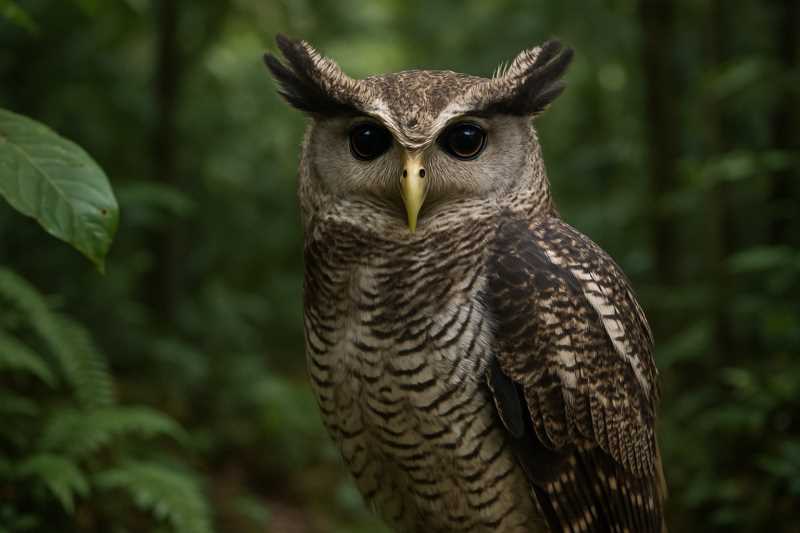
The Barred Eagle-Owl is a large owl, with a body length ranging from 45 to 50 centimeters and a wingspan that can extend up to 125 centimeters. Its plumage is predominantly dark brown with distinct white barring across the body, giving it a unique and striking appearance. The facial disc is conspicuously framed by a set of prominent ear tufts, which, contrary to popular belief, are not related to the bird’s hearing ability but serve as a means of communication and camouflage. The bright yellow eyes of the Barred Eagle-Owl are one of its most defining features, providing it with exceptional night vision essential for its nocturnal lifestyle.
Habitat and Distribution
The Barred Eagle-Owl is native to the tropical and subtropical forests of Southeast Asia, with its range extending from the Malay Peninsula to the islands of Sumatra and Borneo. It thrives in dense forests, often preferring lowland rainforest environments, although it can also be found in montane forests at altitudes of up to 1,600 meters. The species’ reliance on forested areas makes it particularly vulnerable to habitat destruction and deforestation, which are prevalent in its native regions.
Diet and Hunting Behavior
As a formidable nocturnal predator, the Barred Eagle-Owl primarily relies on its keen senses to hunt a diverse array of prey. Its diet consists mainly of small mammals, birds, reptiles, and large insects. The owl’s silent flight, enabled by its specialized feather structure, allows it to approach prey stealthily. Once in proximity, the owl uses its powerful talons to seize and subdue its quarry. The Barred Eagle-Owl’s adaptability in hunting and its wide dietary range are key factors in its survival across varied habitats.
Breeding and Reproduction
The breeding season of the Barred Eagle-Owl typically occurs between December and March, coinciding with the dry season in many parts of its range. These owls are monogamous and are known to form long-term pair bonds. Nests are usually located in large tree cavities or on cliff ledges, providing a safe haven for the eggs and ensuing chicks. A typical clutch comprises two eggs, which are incubated primarily by the female while the male provides food. The chicks hatch after about 30 to 35 days and fledge approximately six weeks later. Both parents are involved in feeding and protecting the young, ensuring a higher survival rate for the offspring.
Vocalizations and Communication
The Barred Eagle-Owl’s vocalizations are an essential aspect of its behavior, used for communication between mates and territorial displays. Its call is a deep, resonant hoot, often described as a “whoo-whoo-whoo” sound, which can be heard over long distances. During the breeding season, these vocalizations become more frequent as pairs communicate and defend their territory from intruders.
Conservation Status
Currently, the Barred Eagle-Owl is classified as Near Threatened on the IUCN Red List. The primary threats facing this species are habitat loss and degradation due to logging, agricultural expansion, and urban development. Conservation efforts are crucial to protect the remaining forest habitats and to ensure the survival of this magnificent bird. Initiatives such as protected area management, habitat restoration, and environmental education are vital components in the conservation strategy for the Barred Eagle-Owl.
Conclusion
The Barred Eagle-Owl, with its impressive stature and vital role in the ecosystem, is a symbol of the rich biodiversity found in Southeast Asia’s forests. Understanding and preserving this species is not only crucial for maintaining ecological balance but also for appreciating the natural heritage of the region. As conservation efforts continue, the hope is that future generations will have the opportunity to witness the awe-inspiring presence of the Barred Eagle-Owl in its natural habitat.
Related posts