Introduction
The Barred Dove (Geopelia maugeus) is a small member of the pigeon and dove family, Columbidae. It is native to the Lesser Sunda Islands of Indonesia and Timor-Leste, where it occupies open woodland, scrub, cultivated land and other lightly wooded habitats. The species is also known as Temminck’s Zebra Dove or the Lesser Sunda Dove in some references.
Physical Description
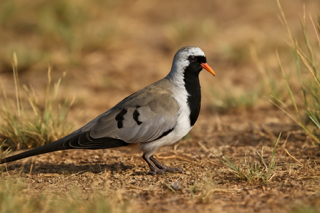
The Barred Dove is approximately 23–25 centimetres long. It has a compact, slender body, a relatively long tail and predominantly grey-brown plumage. Dark, fine barring is especially noticeable across the neck, breast and upperparts, giving the species its common name. The wings show contrasting darker markings, while the orbital skin around the eye is yellowish.
Both sexes are broadly similar in appearance. Juveniles are generally duller and less sharply marked than adults, with the barring and overall contrast becoming more distinct as the plumage matures. Its combination of small size, grey-brown colouration and extensive barring distinguishes it from many other doves in the region.
Range and Habitat
The Barred Dove is endemic to the Lesser Sunda region. Its range includes islands such as Sumbawa, Flores, Sumba, Timor and smaller nearby islands, with the species also occurring in Timor-Leste. Records from islands including Wetar and the Tanimbar group reflect the wider island distribution recognised in regional bird lists.
It is primarily a resident species rather than a long-distance migrant. The Barred Dove favours lowland and foothill environments, including dry woodland, woodland edges, scrub, savanna, cultivated land, village surroundings and gardens. It often uses areas with open ground, scattered trees and sufficient cover for nesting and shelter. The species appears able to tolerate some habitat modification, although local populations may still be affected by clearance and changes in land use.
The species is not regarded as an introduced bird of Australia. Reports that describe it as introduced outside its native range should therefore be treated with caution.
Where to See This Species
Komodo National Park, East Nusa Tenggara, Indonesia
Barred Doves have been recorded on Komodo Island and elsewhere within Komodo National Park. The park’s dry woodland, scrub, open forest and village-edge habitats are suitable for a ground-feeding dove. Look along quiet tracks, clearings and woodland margins, particularly during the cooler parts of the morning.
Nearby accommodation: Labuan Bajo is the main gateway, with hotels, guest houses, lodges, liveaboard boats and other visitor accommodation. Basic accommodation may also be available through permitted park facilities or island-based camps, depending on current access arrangements.
Mbeliling Protected Forest, Flores, East Nusa Tenggara, Indonesia
A government biodiversity inventory of the Mbeliling Protected Forest recorded Barred Dove at several survey locations. The protected forest contains dry forest, secondary woodland, scrub and forest-edge habitat, providing realistic conditions for finding the species on the ground or near open clearings.
Nearby accommodation: Labuan Bajo is the nearest practical visitor centre, offering hotels, guest houses, lodges and locally organised nature-tourism accommodation.
Behaviour and Diet
Barred Doves are mainly active during the day. They are commonly encountered singly, in pairs or in small groups, walking and feeding on the ground beneath trees and shrubs. When disturbed, they may fly rapidly into nearby cover before returning to forage.
The diet consists mainly of seeds, grains and other plant material collected from the ground. The species may also use cultivated areas and village gardens where fallen grain or other suitable food is available. Its relatively unobtrusive feeding behaviour means that it is often detected by movement on the ground or by its soft calls rather than by prolonged flight.
The call is a gentle series of cooing notes typical of small Geopelia doves. Vocalisations are used in pair contact, courtship and territorial communication. Courtship may include bowing movements and other displays between paired birds.
Breeding appears to be seasonal in parts of the species’ range, particularly where rainfall affects food availability. Like other small doves, the Barred Dove builds a simple platform nest from twigs and plant material, usually in a shrub or low tree. A clutch generally contains two eggs, and both adults are believed to contribute to incubation and the feeding of the young. Precise breeding information is not equally well documented across all islands.
Identification Tips
- Look for a small, slim dove measuring about 23–25 centimetres in length.
- Note the grey-brown plumage and fine dark barring across the neck, breast and upperparts.
- The yellowish orbital skin around the eye can be visible at close range.
- Search on the ground beneath open woodland, scrub and cultivated margins rather than only in the canopy.
- The species is closely related in appearance to the Zebra Dove, but the Barred Dove is associated with the Lesser Sunda Islands and generally shows heavier, more extensive barring and a more subdued overall colour pattern.
- Do not confuse it with the Barred Cuckoo-Dove, which is a larger, longer-tailed forest dove with different proportions and a different pattern of barring.
Conservation Status
The Barred Dove is currently classified as Least Concern on the IUCN Red List. No reliable global population estimate is required for the species’ present assessment, and a precise worldwide population total should not be inferred from local counts.
The species occurs across a relatively broad island range and can use modified habitats, including farmland, scrub and village surroundings. Nevertheless, habitat clearance, agricultural expansion, fire, development and other changes to dry woodland may affect local populations. Maintaining woodland edges, scrub, native vegetation and connected habitat is likely to benefit the species. Continued surveys are also useful because populations may vary considerably between islands and because the ecology of several island forms remains incompletely documented.
Frequently Asked Questions
Where is the Barred Dove found?
The Barred Dove is found in the Lesser Sunda Islands of Indonesia and in Timor-Leste. Its range includes islands such as Sumbawa, Flores, Sumba and Timor, as well as smaller nearby islands.
What does the Barred Dove look like?
It is a small grey-brown dove, about 23–25 centimetres long, with conspicuous dark barring across the neck, breast and upperparts. Yellowish skin around the eye is another useful identifying feature.
What does the Barred Dove eat?
Its diet consists mainly of seeds, grains and other plant material gathered from the ground. It may forage in woodland, scrub, cultivated land, gardens and village-edge habitats.
Is the Barred Dove migratory?
The species is generally considered resident. It remains within its island range rather than undertaking regular long-distance migration, although local movements may occur in response to food, rainfall and habitat conditions.
Where can I see a Barred Dove?
Good documented options include Komodo National Park and Mbeliling Protected Forest on Flores. Look in dry woodland, scrub, open forest and cultivated margins, especially during the morning.
Is the Barred Dove endangered?
No. The species is currently assessed as Least Concern. Local habitat loss and land-use change may still affect populations, particularly on smaller islands or where native woodland is heavily cleared.
References
- BirdLife International
- IUCN Red List of Threatened Species
- Indonesian Ministry of Environment and Forestry
Related posts