The Enigmatic African Grass Owl: A Closer Look at Tyto capensis
The African Grass Owl, scientifically known as *Tyto capensis*, is a captivating species that roams the open grasslands and savannas of sub-Saharan Africa. This intriguing bird, with its distinctive heart-shaped face and mottled plumage, is a member of the Tytonidae family. Known for its elusive nature and unique adaptations, the African Grass Owl plays a vital role in its ecosystem and serves as an indicator of environmental health.
Physical Characteristics
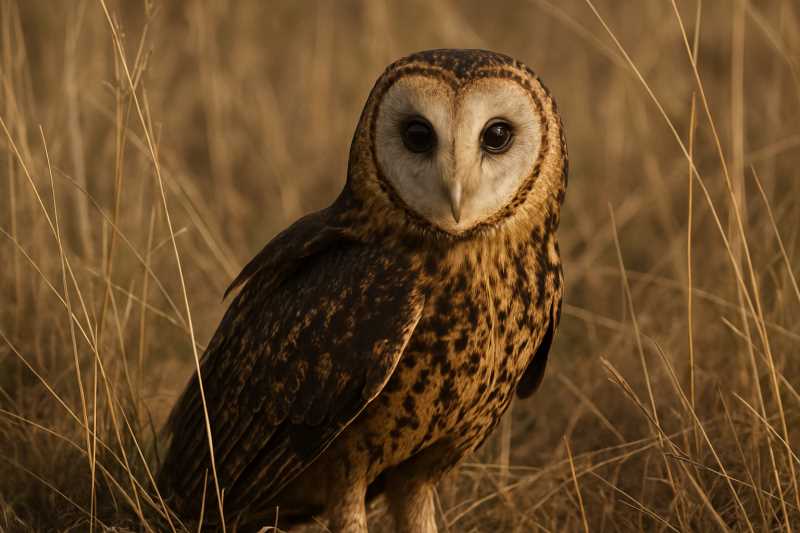
The African Grass Owl is a medium-sized owl, measuring approximately 32 to 38 centimeters in length, with a wingspan ranging from 85 to 95 centimeters. Its most striking feature is its facial disc, which is characteristic of the Tyto genus, providing excellent sound localization benefits. The facial disc is white, bordered with a darker rim, enhancing its facial expression. The owl’s upper parts are generally dark brown with intricate patterns of lighter spots and streaks, while the underparts are paler, ranging from white to light buff with subtle dark speckles.
Habitat and Distribution
*Tyto capensis* is primarily found in the grasslands and savannas of sub-Saharan Africa, including countries such as South Africa, Zambia, Zimbabwe, Botswana, and Mozambique. It prefers habitats with tall, dense grass or reed beds, often near wetlands, marshes, or riverbanks. This choice of habitat is strategic, providing ample cover for nesting and hunting, while also supporting a rich diversity of prey.
Behavior and Diet
The African Grass Owl is largely nocturnal, relying on its acute sense of hearing to hunt small mammals, birds, and insects in the dark. Its diet predominantly consists of rodents, particularly those found in grassland ecosystems. The owl’s silent flight, facilitated by specialized feather structures, allows it to approach prey stealthily. Observations suggest that the owl can adjust its hunting strategies based on availability, demonstrating remarkable adaptability.
During the breeding season, which typically occurs in the wet months when prey is abundant, the African Grass Owl constructs a simple nest on the ground, hidden among tall grasses. The female lays between two to four eggs, which are incubated for about 30 to 32 days. Both parents participate in feeding and caring for the chicks, which fledge approximately six to eight weeks after hatching.
Conservation Status and Threats
The African Grass Owl is currently classified as “Vulnerable” on the IUCN Red List of Threatened Species. Its population is declining due to habitat loss, degradation, and fragmentation, primarily driven by agricultural expansion, urban development, and inappropriate land management practices such as overgrazing and frequent burning of grasslands. Additionally, the owl faces threats from rodenticide use and collisions with vehicles and fences.
Conserving the African Grass Owl requires a multifaceted approach, focusing on habitat protection and restoration, raising public awareness, and fostering coexistence between human activities and wildlife. Conservation efforts are underway in several regions, aiming to secure critical habitats and mitigate human-wildlife conflicts.
Ecological Significance
The African Grass Owl plays an essential role in controlling rodent populations, which helps maintain the balance within grassland ecosystems. By keeping rodent numbers in check, the owl indirectly supports agricultural productivity and reduces the spread of diseases associated with rodent infestations. Furthermore, the presence and health of African Grass Owl populations serve as indicators of the ecological integrity of their habitats.
Conclusion
The African Grass Owl remains a symbol of the enigmatic beauty and complexity of Africa’s grassland ecosystems. Its survival is intrinsically linked to the health of these landscapes, making its conservation a priority for maintaining biodiversity and ecological balance. Through concerted efforts that address habitat preservation and sustainable land management, there is hope for securing a future where the African Grass Owl continues to thrive in its natural environment.
In appreciating the African Grass Owl, we are reminded of our responsibility to protect the natural world and the myriad of species that inhabit it. As we work towards a sustainable future, the conservation of such unique and fascinating creatures stands as a testament to our commitment to preserving the planet’s rich biological heritage.
Related posts