The Enigmatic Red-necked Phalarope: A Marvel of Avian Adaptation
The Red-necked Phalarope (Phalaropus lobatus) is a captivating bird species that has intrigued ornithologists and bird enthusiasts alike with its unique behaviors and remarkable migratory patterns. This small wader, known for its distinctive breeding plumage and unusual lifestyle, offers a fascinating glimpse into the wonders of avian adaptation and survival strategies.
A Distinctive Appearance
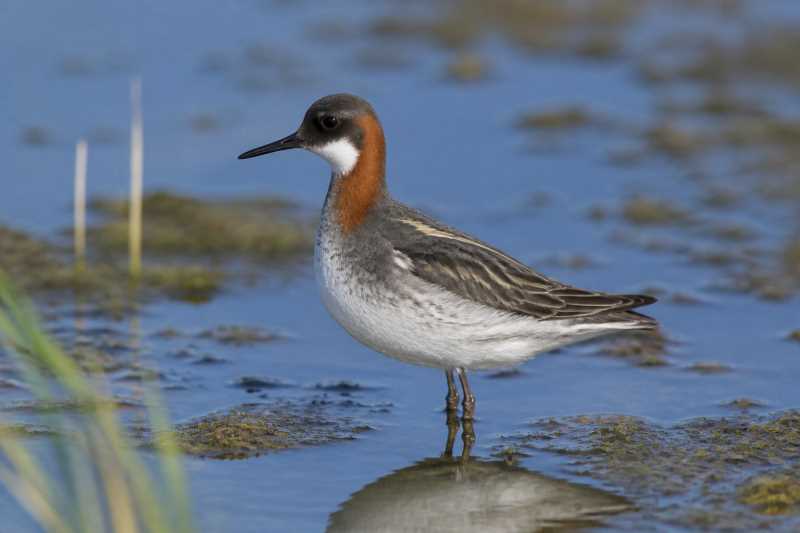
The Red-necked Phalarope is easily recognizable by its striking breeding plumage. During the breeding season, the female, which is more brightly colored than the male—an unusual trait among birds—displays a stunning reddish-brown neck, contrasting sharply with its grey upperparts and white underparts. This sexual dimorphism is part of the phalarope’s reversed sex role, where females are more dominant and colorful, leaving the males to take on the primary role of incubation and chick-rearing.
Outside of the breeding season, the Red-necked Phalarope undergoes a complete transformation. The bird molts into a non-breeding plumage, characterized by a more subdued grey and white coloration, which provides effective camouflage in its winter habitats.
Unique Breeding and Nesting Behaviors
The Red-necked Phalarope’s breeding behavior is as unique as its appearance. Unlike most bird species, the female actively competes for mates, and once a pair bond is formed, she lays eggs in a simple nest on the ground. The male then assumes responsibility for incubating the eggs and caring for the young. This role reversal is not only fascinating but also highlights the diverse strategies evolved by different species to ensure reproductive success.
Phalaropes typically breed in the Arctic tundra of North America, Europe, and Asia, favoring wetland areas with access to shallow water. The breeding season is short, coinciding with the brief Arctic summer, and the birds must maximize their reproductive output within this limited timeframe.
A Remarkable Migratory Journey
One of the most astonishing aspects of the Red-necked Phalarope’s life cycle is its migratory journey. After the breeding season, these birds embark on an epic migration, traveling thousands of miles to their wintering grounds. Unlike many other bird species that migrate overland, Red-necked Phalaropes are pelagic during the winter months, meaning they spend this time on the open ocean.
The birds migrate to tropical and subtropical oceanic regions, including the Arabian Sea, the central Pacific Ocean, and off the coast of South America. This pelagic lifestyle is supported by their ability to float on the water’s surface, where they feed on plankton and other small marine organisms by spinning in circles to create a vortex that brings their food to the surface—a behavior that is both efficient and mesmerizing to observe.
Conservation and Threats
Despite their adaptability, Red-necked Phalaropes face several conservation challenges. Habitat loss due to climate change, wetland drainage, and pollution are significant threats to their breeding and wintering habitats. Additionally, changes in oceanic conditions can affect the availability of their food sources during the winter months.
Efforts to conserve this species have focused on protecting critical breeding habitats and monitoring population trends. International cooperation is essential, as the migratory nature of Red-necked Phalaropes means they traverse multiple countries and international waters.
Conclusion
The Red-necked Phalarope is an extraordinary example of avian adaptation, with its unique breeding behavior, reversed sexual roles, and remarkable migratory journey. Understanding and protecting this species requires a concerted effort from the global community, as it navigates the challenges posed by environmental changes. By preserving the Red-necked Phalarope and its habitats, we not only safeguard a fascinating bird but also contribute to the health and diversity of our planet’s ecosystems.
Observing the Red-necked Phalarope
For birdwatchers, spotting a Red-necked Phalarope can be a thrilling experience. During the breeding season, these birds can be observed in the Arctic regions, where they are relatively approachable. Witnessing their feeding behavior at sea, however, is more challenging, requiring trips to their pelagic wintering grounds.
Regardless of where they are observed, the Red-necked Phalarope continues to captivate with its elegance and adaptability, offering a window into the complexity and resilience of the natural world.
Related posts