
Understanding the Bare-faced Go-away-bird (Crinifer personatus)
The Bare-faced Go-away-bird, scientifically known as Crinifer personatus, is a fascinating avian species belonging to the Musophagidae family. This bird is a part of the turaco order, prized for its unique appearance and intriguing behavior. Native to parts of Eastern Africa, particularly in countries like Tanzania, Kenya, and Ethiopia, the Bare-faced Go-away-bird thrives in a range of habitats, including savannas, woodlands, and areas with abundant acacia trees.
Physical Characteristics
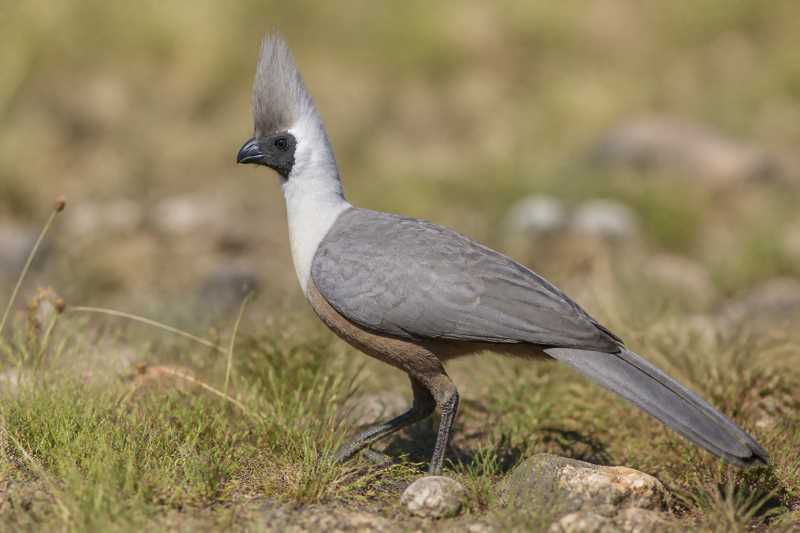
One of the most striking features of the Bare-faced Go-away-bird is its distinctive facial appearance. Unlike other members of the turaco family, this species lacks the vivid green or blue plumage often associated with its relatives. Instead, it has a rather subdued but equally captivating appearance. The bird’s name is derived from its bare, black face, which contrasts sharply with its predominantly gray plumage.
The bird sports a long tail and a prominent crest, adding to its striking silhouette. Both males and females exhibit similar physical characteristics, making them difficult to distinguish based solely on appearance. Adult Bare-faced Go-away-birds measure approximately 50 to 54 centimeters in length, with a wingspan ranging between 60 to 70 centimeters. Their weight typically ranges from 200 to 300 grams.
Behavioral Traits
The Bare-faced Go-away-bird is known for its social and gregarious nature. These birds often travel in small flocks, foraging for food and interacting with other birds. They are known for their loud and distinctive calls, which sound like the phrase "go away," hence their common name. This call serves as a warning to other birds and animals, alerting them to potential threats or disturbances in the area.
Their diet primarily consists of fruits, especially figs, but they are also known to consume flowers, leaves, and occasionally insects. The birds play a crucial role in their ecosystem as seed dispersers, aiding in the propagation of various plant species.
Habitat and Distribution
The Bare-faced Go-away-bird is primarily found in the eastern regions of Africa. Their habitat preferences include savannas, open woodlands, and areas with scattered trees, such as acacia groves. These environments provide the birds with ample opportunities to forage for food and find suitable nesting sites.
During the breeding season, which varies depending on the region, these birds build their nests in dense foliage to protect their eggs and young from predators. The nests are typically constructed from twigs and lined with softer materials like leaves and grass.
Conservation Status
Currently, the Bare-faced Go-away-bird is classified as a species of Least Concern by the International Union for Conservation of Nature (IUCN). Despite this favorable status, the species faces several threats, including habitat loss due to deforestation and agricultural expansion. Additionally, they are sometimes hunted for their feathers and meat, although this occurs on a relatively small scale.
Efforts to conserve their natural habitats are vital to ensuring the continued survival of the Bare-faced Go-away-bird. Conservation organizations and local governments are working to implement sustainable land-use practices and protect key habitats from further degradation.
The Cultural Significance of the Bare-faced Go-away-bird
In many African cultures, birds hold a special place, often associated with myths, folklore, and traditional beliefs. The Bare-faced Go-away-bird is no exception. Its distinctive call has inspired numerous stories and legends among local communities. Some cultures view the bird as a harbinger of change or a spiritual messenger.
These cultural associations highlight the importance of preserving not only the bird’s natural habitats but also the rich cultural heritage that surrounds them. By protecting the Bare-faced Go-away-bird, we are also safeguarding the intangible cultural assets that contribute to the diversity and richness of human history.
Observing the Bare-faced Go-away-bird
For bird enthusiasts and wildlife observers, spotting a Bare-faced Go-away-bird in its natural habitat can be a rewarding experience. These birds are relatively easy to observe due to their loud calls and social behavior. Birdwatchers are advised to visit known habitats during the early morning or late afternoon when the birds are most active.
Photography enthusiasts will find the bird’s unique appearance and behavior an interesting subject to capture. However, it’s crucial to maintain a respectful distance and avoid disturbing the birds, ensuring that their natural behaviors are not disrupted.
Conclusion
The Bare-faced Go-away-bird is a captivating species that exemplifies the beauty and complexity of the avian world. Its unique appearance, social behaviors, and ecological role make it a valuable component of the ecosystems it inhabits. Conservation efforts are essential to protect this species and its habitat, ensuring that future generations can continue to enjoy and learn from the Bare-faced Go-away-bird.
By fostering an appreciation for this remarkable bird, we can contribute to the broader conservation movement, promoting biodiversity and the sustainable coexistence of humans and wildlife. The Bare-faced Go-away-bird serves as a reminder of the intricate connections between nature, culture, and conservation, urging us to cherish and protect our planet’s natural wonders.
Related posts


