## The Arctic Warbler: A Comprehensive Insight into Phylloscopus borealis
The Arctic Warbler, scientifically known as Phylloscopus borealis, is a small passerine bird that belongs to the leaf warbler family, Phylloscopidae. This avian species is renowned for its remarkable migratory behavior, expansive breeding range, and distinctive vocalizations. In this article, we delve into the intricate details of the Arctic Warbler’s habitat, behavior, migration patterns, and conservation status, offering a thorough understanding of this fascinating bird.
Habitat and Distribution
The Arctic Warbler is primarily found across the northern parts of Europe and Asia, extending into the Arctic regions, which is the origin of its common name. The bird’s breeding range includes Scandinavia, Siberia, and parts of Alaska, where it thrives in boreal forests, scrublands, and wooded areas with abundant underbrush. These habitats provide the necessary shelter and food resources required for breeding and raising their young.
During the non-breeding season, the Arctic Warbler undertakes an impressive migratory journey to Southeast Asia, where it spends the winter months. Countries such as Thailand, Malaysia, and Indonesia become temporary homes for these birds, where they inhabit lowland forests and coastal mangroves. The warbler’s ability to adapt to diverse habitats underscores its ecological versatility.
Physical Characteristics
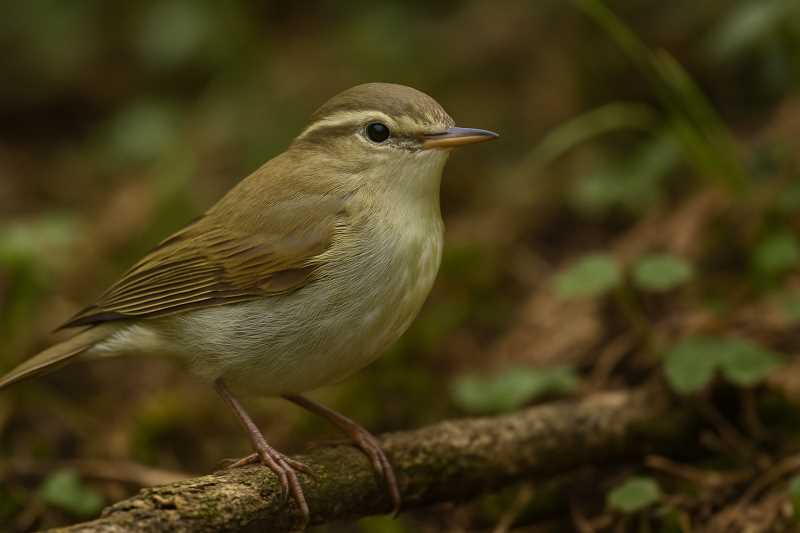
The Arctic Warbler is a small bird, measuring approximately 11 to 12 centimeters in length, with a wingspan of 18 to 21 centimeters. It has an olive-green upper body and a whitish underbelly, which provides effective camouflage among the foliage. The bird’s plumage is subtly patterned, with a distinct pale eyebrow stripe that aids in its identification.
The warbler’s wings are rounded, and its tail is relatively short, characteristics that are typical of leaf warblers. The bird’s bill is slender and pointed, adapted for gleaning insects from leaves and branches. Despite its unassuming appearance, the Arctic Warbler is a remarkable flyer, capable of covering long distances during migration.
Vocalizations and Behavior
One of the most distinguishing features of the Arctic Warbler is its vocal repertoire. During the breeding season, males produce a series of high-pitched, trilling songs that serve to attract females and establish territories. These songs are often delivered from elevated perches and are an integral part of the warbler’s courtship display.
In addition to their songs, Arctic Warblers communicate through a variety of calls, including soft ‘chit’ notes used for contact between individuals. Their vocalizations are not only crucial for mating but also play a role in maintaining social structures within their flocks.
The Arctic Warbler is primarily insectivorous, feeding on a diet of small insects and spiders. Its foraging behavior involves actively searching through foliage, gleaning prey from leaves, twigs, and bark. During migration and in their wintering grounds, these birds may also consume berries and other small fruits to supplement their diet.
Migration Patterns
Migration is a pivotal aspect of the Arctic Warbler’s life cycle, with these birds undertaking one of the most extensive migrations of any passerine. The journey from their breeding grounds in the Arctic to their wintering sites in Southeast Asia spans thousands of kilometers and involves navigating diverse landscapes and climates.
The timing of migration is closely linked to environmental cues, such as changes in daylight and temperature. Arctic Warblers typically begin their southward migration in late summer, arriving in their wintering areas by late September to early October. The return journey to their breeding grounds commences around April, allowing them to capitalize on the brief Arctic summer for breeding.
Conservation Status
The Arctic Warbler is currently classified as a species of “Least Concern” by the International Union for Conservation of Nature (IUCN). However, like many migratory birds, they face several conservation challenges. Habitat loss due to deforestation in their wintering grounds poses a significant threat, as does climate change, which can alter the availability of resources along their migratory routes.
Conservation efforts for the Arctic Warbler focus on preserving critical habitats and promoting sustainable land use practices in both breeding and wintering areas. International cooperation is essential, as these birds traverse multiple countries throughout their life cycle.
Conclusion
The Arctic Warbler, Phylloscopus borealis, is a testament to the resilience and adaptability of migratory birds. Despite their small size, these birds undertake incredible journeys, navigating vast distances to exploit seasonal resources. Understanding their biology, behavior, and conservation needs is crucial for ensuring their survival in a rapidly changing world.
References
– BirdLife International. (2021). “Phylloscopus borealis.” IUCN Red List of Threatened Species.
– Cramp, S., & Simmons, K.E.L. (1985). “The Birds of the Western Palearctic.” Oxford University Press.
– Helbig, A.J., & Seibold, I. (1999). “Molecular phylogeny of Palearctic-African Acrocephalus and Hippolais warblers.” Molecular Phylogenetics and Evolution.
By understanding and appreciating the Arctic Warbler, we contribute to the broader goals of avian conservation and ecological awareness.
Related posts