Cameron Highlands White-bellied Rat (Niviventer cameroni)
Introduction
The Cameron Highlands White-bellied Rat, scientifically known as Niviventer cameroni, is a fascinating yet under-explored rodent species that thrives in the lush montane forests of Malaysia’s Cameron Highlands. Named after its distinct white belly, this small mammal is an integral part of the biodiversity in the region. As a species endemic to a specific locality, understanding its ecological role is crucial for conservation efforts and to maintain the delicate balance of its natural habitat.
Physical Description
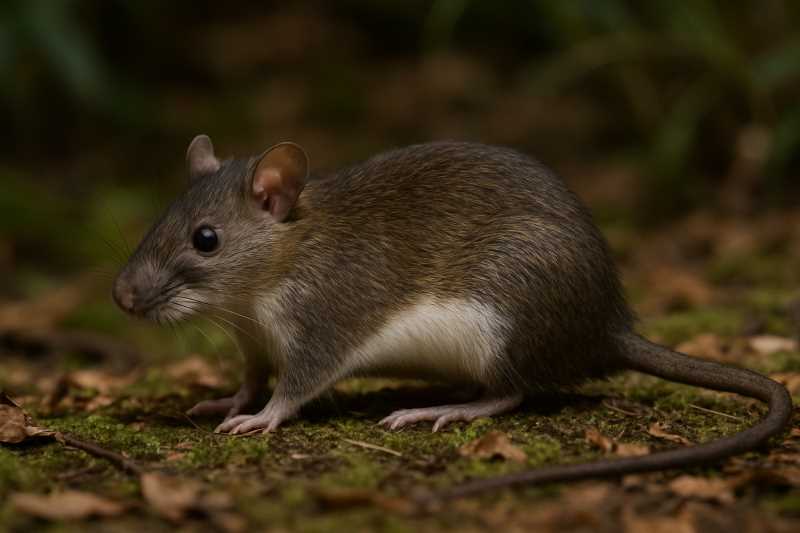
The Cameron Highlands White-bellied Rat is characterized by its medium-sized body, typically measuring between 14 to 18 centimeters in length, excluding the tail. The tail itself extends to a length almost equal to or slightly longer than the body, aiding in balance and mobility within its arboreal habitat. The fur of Niviventer cameroni is soft and dense, with a striking contrast between the grayish-brown dorsal side and its pristine white underbelly, from which it derives its name. The ears are rounded and prominent, enhancing its auditory senses, essential for survival in its densely vegetated environment.
Range and Habitat
Niviventer cameroni is endemic to the Cameron Highlands, a region renowned for its cool climate and rich biodiversity. This area, located in the Titiwangsa Mountains of Malaysia, provides an ideal habitat characterized by montane forests and highland ecosystems. These forests offer an abundance of food sources and shelter, with the dense canopy providing protection from predators. The rat’s range is limited to these highland areas, typically found at elevations above 1,000 meters. This specificity in habitat preference makes the species particularly vulnerable to environmental changes and habitat fragmentation.
Behavior and Diet
The Cameron Highlands White-bellied Rat is predominantly nocturnal, spending its nights foraging for food and its days resting in nests built from leaves and twigs. Its diet is omnivorous, consisting of a variety of seeds, fruits, insects, and occasionally small invertebrates. This diet reflects its adaptability to the seasonal availability of food resources in its montane environment. Socially, Niviventer cameroni is a solitary creature, with interactions primarily occurring during mating seasons. Communication is facilitated through vocalizations and scent markings, which play a crucial role in territory establishment and mate attraction.
Identification Tips (Field Recognition Cues)
Identifying the Cameron Highlands White-bellied Rat in the wild can be challenging due to its elusive nature and the densely forested habitat it occupies. However, there are several field recognition cues that can aid in its identification:
- Fur Coloration: Look for the distinctive white underbelly contrasted against a grayish-brown dorsal side.
- Tail Characteristics: The tail is long, often exceeding the length of the body, with a noticeable two-tone pattern, darker on top and lighter underneath.
- Size and Shape: Medium-sized with a sleek body adapted for climbing and navigating through the forest.
- Ear and Eye Features: Prominent rounded ears and large eyes, adapted for nocturnal activity.
Conservation Status (with threats and protections)
Currently, the Cameron Highlands White-bellied Rat is not classified as endangered, but it faces several threats that could impact its population. Habitat loss due to agricultural expansion, deforestation, and urban development poses significant risks. These activities lead to habitat fragmentation, reducing the available living space and resources for the species.
Conservation efforts are crucial to safeguard the future of Niviventer cameroni. Protecting the montane forests of the Cameron Highlands is essential, as these ecosystems not only support this rat species but also a myriad of other flora and fauna. National parks and protected areas play a pivotal role in conservation, but more comprehensive efforts involving local communities and sustainable land management practices are necessary to ensure the long-term survival of this unique species.
Frequently Asked Questions
What does the Cameron Highlands White-bellied Rat eat?
The diet of the Cameron Highlands White-bellied Rat is omnivorous, including seeds, fruits, insects, and small invertebrates. This diverse diet helps it adapt to the varying food availability in its montane forest habitat.
Where can the Cameron Highlands White-bellied Rat be found?
This species is endemic to Malaysia’s Cameron Highlands, particularly thriving in the montane forests of the Titiwangsa Mountains at elevations above 1,000 meters.
How can you identify a Cameron Highlands White-bellied Rat?
Key identification features include its white underbelly, grayish-brown dorsal fur, a long two-toned tail, and prominent ears and eyes, which are adaptations for its nocturnal and arboreal lifestyle.
Are Cameron Highlands White-bellied Rats endangered?
While not currently classified as endangered, the species faces threats from habitat loss and fragmentation due to human activities. Conservation efforts are important to mitigate these risks.
What conservation measures are in place for this species?
Conservation measures include protecting the montane forest habitats through national parks and reserves, along with promoting sustainable land management and engaging local communities in conservation efforts.
Related posts