The American Goldfinch, Spinus tristis, is one of North America’s most recognizable and beloved songbirds. With its vibrant yellow plumage, bouncing flight pattern, and melodious call, this small finch brings color and charm to gardens, fields, and meadows across the continent. Known by many as the “wild canary,” the American Goldfinch is a seasonal spectacle, especially in summer when the males don their brilliant golden feathers to attract mates.
Physical Characteristics
The American Goldfinch is a small bird, measuring about 11–13 cm (4.3–5.1 inches) in length and weighing approximately 11–20 grams (0.4–0.7 ounces). Males in breeding plumage are strikingly yellow with a black forehead, black wings marked with white bars, and a white rump. Their bright orange bill is short and conical, ideal for seed consumption. Females and non-breeding males have more subdued coloration, with olive-brown feathers replacing the yellow, which helps them blend more easily into their surroundings outside the breeding season.
The seasonal molt of the American Goldfinch is one of its most unique traits. Unlike many other species, goldfinches undergo a complete molt twice a year—once in late summer and again in late winter—allowing them to show off fresh, brilliant feathers for the warmer months.
Range and Habitat
American Goldfinches are found across most of the United States and southern Canada. They breed throughout the northern and central U.S. and southern Canada and migrate to the southern U.S. and northern Mexico for the winter. Some populations, especially in milder climates, are year-round residents.
Preferred habitats include weedy fields, open woodlands, orchards, and suburban gardens. Their adaptability to human-altered environments makes them a frequent visitor to backyard feeders, particularly when sunflower or nyjer seeds are offered.
Diet and Feeding Behavior
Goldfinches are strict vegetarians, an unusual trait among North American songbirds. Their diet consists almost entirely of seeds, especially from composite plants such as thistles, sunflowers, dandelions, and coneflowers. This dietary specialization influences many aspects of their life history, including their late breeding season.
They feed acrobatically, often hanging upside down from seed heads or feeder ports. At feeders, they are particularly fond of nyjer (thistle) seeds and sunflower kernels. Unlike many other songbirds, goldfinches rarely consume insects, even when raising young.
Breeding and Nesting
The American Goldfinch is a late breeder, typically nesting in mid to late summer—well after most other songbirds. This timing coincides with the peak abundance of seeds from native plants like thistles, which provide both nesting material and food for chicks.
The female constructs a neat, compact cup-shaped nest in shrubs or trees, often using plant down and spider silk. She lays 4 to 6 pale blue eggs and incubates them for about 12 to 14 days. During this time, the male may feed her but does not assist in incubation. Once hatched, the chicks fledge in another 11 to 17 days.
Goldfinches may raise one or two broods per season, depending on food availability and climate.
Vocalizations and Behavior
The American Goldfinch’s call is as cheerful as its appearance. Its flight call, often described as “per-chick-o-ree” or “po-ta-to-chip,” is a rhythmic, lilting phrase delivered during its undulating flight. Males sing complex, warbling songs during the breeding season to attract mates and defend territories.
Goldfinches are highly social birds and often form flocks, especially in fall and winter. Their agile, bouncing flight and continuous chattering make them a lively presence wherever they go.
Conservation Status
The American Goldfinch is listed as a species of least concern by the IUCN, and its populations are considered stable. The expansion of backyard feeding stations and the widespread planting of ornamental seed-bearing plants have actually helped increase its numbers in suburban and urban areas.
However, habitat loss and the widespread use of herbicides that reduce the availability of seed-producing wildflowers can pose long-term threats. Promoting native plant growth and reducing pesticide use are key to supporting healthy goldfinch populations.
Attracting Goldfinches to Your Yard
To attract American Goldfinches, plant native seed-bearing flowers such as purple coneflower, black-eyed Susan, sunflowers, and thistles. Providing feeders filled with nyjer seed or hulled sunflower seed can also draw flocks of these birds year-round. Ensure a nearby water source, such as a shallow birdbath, and avoid using pesticides in your garden to support a welcoming habitat.
The American Goldfinch continues to be a joyful symbol of nature’s resilience and beauty. Whether perched delicately on a sunflower or flitting through meadows in golden flight, this small finch offers birdwatchers a timeless spectacle and a reminder of the wonders of the natural world.
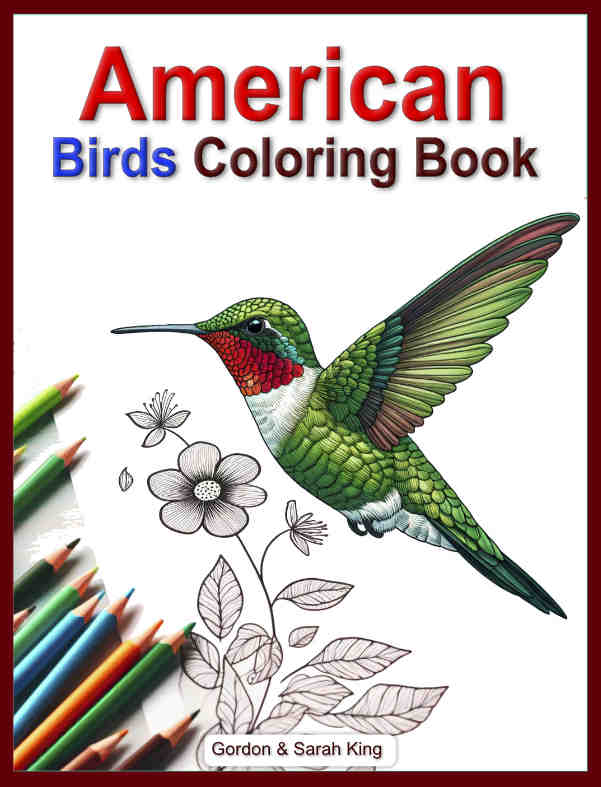
This bird is featured in our American Birds Coloring Book, available on Amazon.
Take a closer look at our American Birds Coloring Book.
Related posts