The Enigmatic Black-and-white Owl: Strix nigrolineata
The Black-and-white Owl, scientifically known as *Strix nigrolineata*, is one of the most captivating yet lesser-known species of owls in the world. Known for its striking appearance and elusive nature, this bird has captured the interest of ornithologists and bird enthusiasts alike.
Appearance and Identification
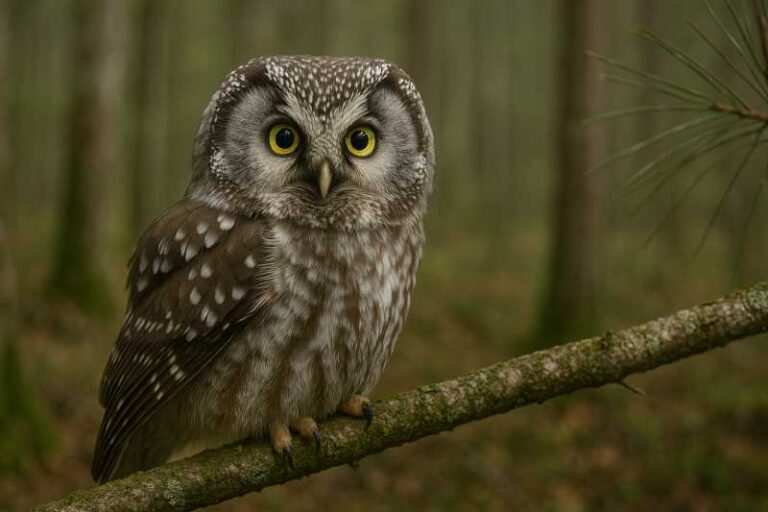
True to its name, the Black-and-white Owl is distinguished by its contrasting plumage. The upper parts of the bird are predominantly black, adorned with fine white lines that give it a unique, striped appearance. Its facial disk is framed in white, with a prominent black border that accentuates its large, dark eyes. The underparts are white, streaked with black, providing a stark contrast to its upper body. This visually striking bird typically measures between 35 to 40 centimeters in length, with a wingspan that extends up to 80 centimeters.
Habitat and Distribution
The Black-and-white Owl can be found across a wide range of tropical and subtropical regions in Central and South America. Its range extends from southern Mexico, through Central America, and into parts of northern South America, including Colombia and Ecuador. Preferring lowland forests and the edges of humid montane forests, this owl often inhabits areas close to water bodies, such as rivers and swamps. However, it has also been observed in plantations and secondary forests, showcasing its adaptability to different environments.
Behavior and Diet
Primarily nocturnal, the Black-and-white Owl is known for its stealthy hunting techniques. It preys on a diverse diet that includes insects, small mammals, birds, and reptiles. Its hunting method involves silently perching and waiting for prey to appear, then swooping down with precision. The owl’s acute hearing and excellent night vision make it an efficient predator in the dark.
During the day, the Black-and-white Owl is often found roosting in dense foliage, making it difficult to spot despite its distinctive appearance. Its call, a series of low, repetitive hoots, is more often heard than the bird is seen, especially during the breeding season.
Breeding and Lifecycle
Little is known about the specific breeding habits of the Black-and-white Owl due to its elusive nature. However, like many owl species, it is believed to nest in tree cavities or abandoned nests of other birds. During the breeding season, which varies depending on the geographical location, the male is known to perform a series of calls to attract a mate.
Once paired, the female typically lays two to three eggs, which she incubates while the male provides food. The chicks are born altricial, meaning they are dependent on their parents for food and protection until they are old enough to fend for themselves. The young owls fledge within a few weeks but may remain with their parents for several months.
Conservation Status
Currently, the Black-and-white Owl is classified as Least Concern by the International Union for Conservation of Nature (IUCN). Despite its relatively stable population, the owl faces threats from habitat destruction due to deforestation, agriculture, and urbanization. Conservation efforts are focused on preserving its natural habitat and raising awareness about the importance of biodiversity in tropical and subtropical ecosystems.
Importance in Ecosystem
As a predator, the Black-and-white Owl plays a crucial role in maintaining the balance of the ecosystems it inhabits. By controlling the population of small mammals and insects, it helps to prevent overpopulation and the potential spread of diseases. Its presence is an indicator of a healthy, functioning ecosystem, making it an essential species for biodiversity.
Conclusion
The Black-and-white Owl, with its distinctive appearance and mysterious lifestyle, continues to intrigue birdwatchers and researchers. While much remains to be learned about this elusive bird, its beauty and ecological importance are undeniable. Protecting its habitat and ensuring its survival is crucial, not only for the owl itself but for the health of the ecosystems it calls home. Through continued research and conservation efforts, we can hope to preserve this magnificent species for future generations to admire and study.
References
– “BirdLife International (2023). Species factsheet: Strix nigrolineata.” BirdLife International.
– “Raptors of the World” by James Ferguson-Lees and David A. Christie.
– “Owls of the World” by Claus König, Friedhelm Weick, and Jan-Hendrik Becking.
Related posts