The Chestnut-sided Warbler: A Vibrant Jewel of North America’s Forests
The Chestnut-sided Warbler (Setophaga pensylvanica) is a small, vibrantly colored songbird that enchants birdwatchers and nature enthusiasts across North America. Its striking appearance and melodious song make it a favorite among ornithologists and casual observers alike. This article explores the unique characteristics, habitat, behavior, and conservation status of the Chestnut-sided Warbler, offering a comprehensive look into the life of this captivating avian species.
Physical Characteristics
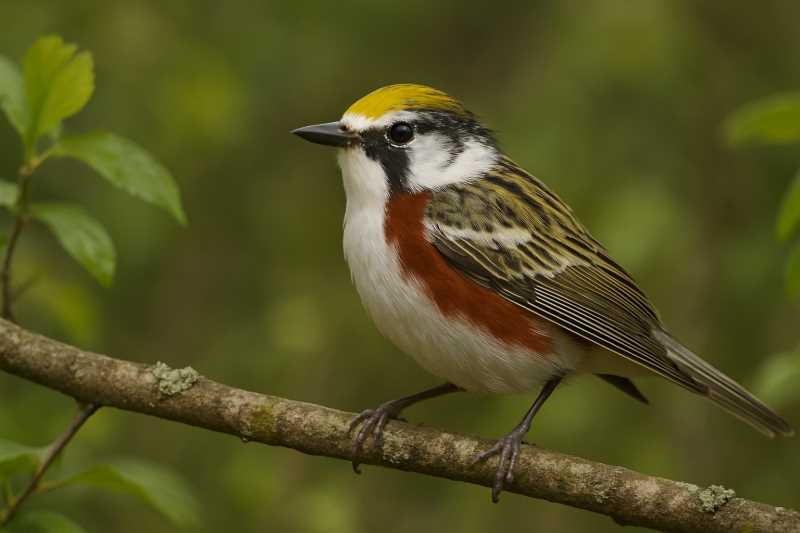
The Chestnut-sided Warbler is easily recognizable due to its distinct plumage. During the breeding season, males display a bright yellow crown, white underparts, and characteristic chestnut-colored flanks. Their back is adorned with a striking pattern of black, gray, and yellow, enhancing their vibrant appearance. Females and non-breeding males are more subdued in color but still retain the distinctive chestnut sides, albeit less pronounced. This coloration provides camouflage among the foliage, protecting them from predators.
Habitat and Distribution
Chestnut-sided Warblers are primarily found in deciduous forests across the eastern United States and southeastern Canada during the breeding season. They prefer second-growth forests, shrubby fields, and forest edges, where they can find ample insect prey and nesting sites. These birds are migratory, traveling to Central America and northern South America during the winter months. Their migratory patterns are influenced by seasonal changes in food availability and climate, showcasing their adaptability and resilience.
Behavior and Diet
The diet of the Chestnut-sided Warbler consists mainly of insects and spiders, which they forage for among the leaves and branches of trees and shrubs. Their feeding behavior is characterized by quick, agile movements and a keen eye for spotting prey. During migration and in winter, they may also consume small amounts of fruit and nectar to supplement their diet.
Chestnut-sided Warblers are known for their distinctive songs and calls, which play a crucial role in territory establishment and mate attraction. The male’s song is a series of high-pitched, buzzy notes that sound like “pleased, pleased, pleased to meetcha!” This melodic tune is a common sound in their breeding habitats during spring and early summer.
Breeding and Nesting
The breeding season for Chestnut-sided Warblers typically begins in late spring. Males arrive at the breeding grounds first, establishing territories through song and displays. Once females arrive, they select a mate based on the quality of the male’s territory and song.
Nesting occurs in dense shrubs or low trees, where females construct a cup-shaped nest using grass, bark strips, and plant fibers. The female lays 3-5 eggs, which she incubates for about 11-12 days. Both parents participate in feeding the young, which fledge approximately 10-12 days after hatching. This cooperative breeding behavior ensures high survival rates for the offspring.
Conservation Status
The Chestnut-sided Warbler is currently listed as a species of Least Concern by the International Union for Conservation of Nature (IUCN), thanks to its wide distribution and stable population numbers. However, habitat loss due to deforestation and land development poses a potential threat to their populations. Conservation efforts are focused on preserving forest habitats and promoting sustainable land use practices.
Climate change also presents a challenge to the Chestnut-sided Warbler, as shifting weather patterns may impact their migratory routes and breeding success. Continued research and monitoring are essential to understanding and mitigating these potential impacts.
The Role of Citizen Science
Citizen science initiatives, such as bird banding and population surveys, play a vital role in the conservation of the Chestnut-sided Warbler. By participating in these programs, birdwatchers and nature enthusiasts contribute valuable data that helps scientists track population trends and assess the health of ecosystems. Public awareness and education efforts are crucial in fostering a connection between people and nature, ultimately supporting conservation goals.
Conclusion
The Chestnut-sided Warbler is not only a beautiful and vibrant bird but also an important indicator of forest health and biodiversity. Its presence in North American forests is a testament to the resilience and adaptability of migratory bird species. By understanding and protecting their habitats, we can ensure that future generations will continue to enjoy the songs and sights of the Chestnut-sided Warbler.
Whether you’re an avid birder or a casual nature lover, the Chestnut-sided Warbler offers a fascinating glimpse into the wonders of avian life. Its striking appearance, melodious song, and ecological significance make it a true jewel of North America’s forests.
Related posts