Savile’s Bustard: A Hidden Gem of the African Savannah
Savile’s Bustard (Lophotis savilei), a remarkable avian species, is an emblematic creature of the African savannah. Despite its elusive nature, this bird plays a pivotal role in the ecosystem. This article delves deeper into the life and habitat of the Savile’s Bustard, encapsulating its essence and significance in the biodiversity of Africa.
Taxonomy and Distribution
Savile’s Bustard belongs to the family Otididae, which comprises various species known for their terrestrial lifestyles. The scientific name Lophotis savilei honors the British ornithologist Philip Savile Grey Reid, who contributed significantly to the understanding of African bird species.
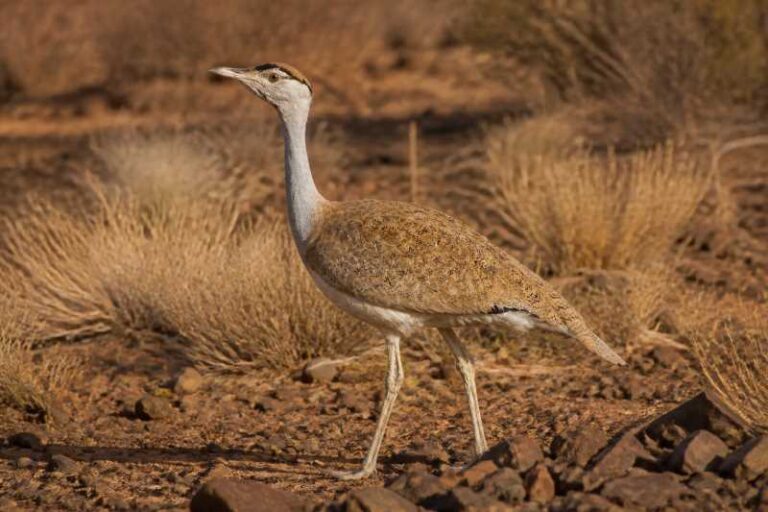
This bustard is native to the Sahel region, stretching across countries such as Mali, Niger, Chad, and Sudan. Its habitat primarily consists of semi-arid and arid grasslands, where it blends seamlessly into the dry, grassy environment. The bird’s preference for remote and less disturbed areas makes it a challenging subject for ornithologists and bird enthusiasts.
Physical Characteristics
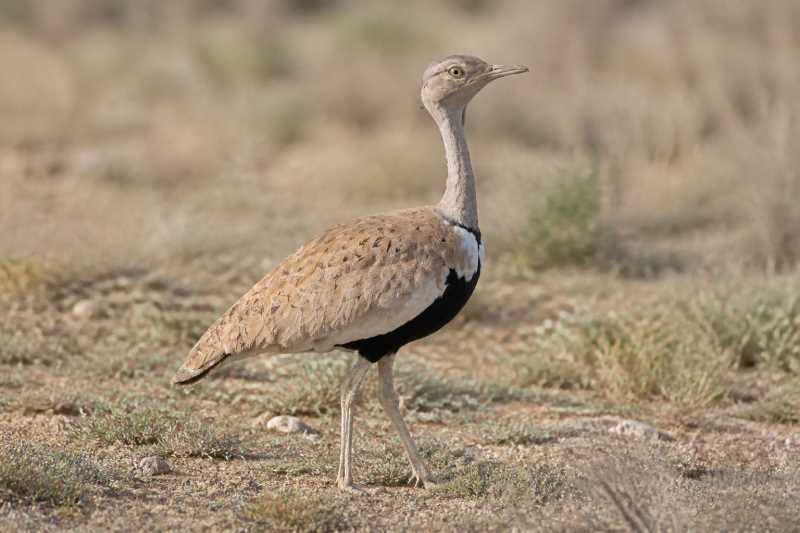
Savile’s Bustard is a medium-sized bird, with an average height of 40 to 50 centimeters and a wingspan of up to 90 centimeters. It exhibits a striking combination of colors and patterns that aid in camouflage. The plumage is primarily mottled brown, with intricate patterns that resemble the dry grasses of its habitat. This coloration provides excellent concealment from predators.
Males and females are similar in appearance, but males tend to be slightly larger and more robust. During the breeding season, males exhibit more vibrant plumage and engage in elaborate displays to attract females.
Behavioral Traits
The behavior of Savile’s Bustard is as intriguing as its appearance. These birds are predominantly ground-dwelling, foraging for insects, seeds, and small reptiles. Their diet is opportunistic, adapting to the seasonal availability of resources. They are known for their methodical and deliberate movements, which reflect their cautious nature.
Savile’s Bustard is a solitary creature, typically seen alone or in pairs. It is a non-migratory species, but some local movements may occur in response to seasonal changes in food availability. Despite their solitary tendencies, they communicate using a variety of calls, each serving different purposes such as mating, alarm, or territorial defense.
Breeding and Reproduction
The breeding season of Savile’s Bustard varies depending on geographical location and climatic conditions. During this period, males engage in captivating courtship displays, which involve puffing up their feathers, leaping into the air, and producing distinctive calls.
Nesting takes place on the ground, often in a shallow scrape lined with grass and leaves. Females typically lay one to three eggs, which are incubated for about three to four weeks. The chicks are precocial, meaning they are relatively mature and mobile shortly after hatching, allowing them to accompany their parents in search of food.
Conservation Status and Challenges
Currently, Savile’s Bustard is classified as Near Threatened on the IUCN Red List. The primary threats to its survival include habitat degradation, climate change, and human encroachment. Expansion of agricultural land, overgrazing by livestock, and infrastructure development have led to significant habitat loss.
Conservation efforts are crucial to preserve the natural habitats of Savile’s Bustard. Initiatives focusing on habitat restoration, sustainable land management, and community awareness can help mitigate these threats. Additionally, further research is needed to gather more comprehensive data on the species’ population dynamics and ecological requirements.
Importance in Ecosystem
Savile’s Bustard plays a significant role in maintaining the ecological balance of the savannah. As insectivores, they help control insect populations, thus contributing to pest management. Their foraging activities also aid in seed dispersal, promoting plant diversity and regeneration.
Moreover, as indicator species, their presence and abundance reflect the health of the ecosystem. Monitoring their populations provides valuable insights into the impacts of environmental changes and anthropogenic pressures.
Conclusion
Savile’s Bustard, with its unique adaptations and vital ecological role, is a testament to the rich biodiversity of the African savannah. While facing numerous challenges, the concerted efforts of conservationists and local communities can ensure the survival of this remarkable bird. Through understanding and protecting species like the Savile’s Bustard, we contribute to the preservation of our planet’s natural heritage.
By fostering awareness and promoting conservation, we can hope to witness the continued existence and thriving of Savile’s Bustard in its native habitat, enriching the tapestry of life in the African wilderness.
Related posts