Mountain Shrike: A Comprehensive Overview of Lanius validirostris
Introduction
The Mountain Shrike (Lanius validirostris) is a captivating bird species belonging to the family Laniidae, known for its distinctive predatory behavior and exceptional adaptability to high-altitude environments. Found primarily in the mountainous regions of Southeast Asia, this bird has captured the interest of ornithologists and bird watchers alike. This article delves into the various aspects of the Mountain Shrike, including its habitat, physical characteristics, behavior, diet, and conservation status.
Habitat and Distribution
Mountain Shrikes are predominantly found in the montane forests of the Philippines, specifically on the islands of Luzon and Mindanao. These birds favor high-altitude areas, generally residing in elevations ranging from 1,000 to 2,500 meters above sea level. The montane forests offer a rich ecosystem characterized by dense vegetation, a variety of tree species, and a diverse array of fauna, making it an ideal habitat for the Mountain Shrike.
Physical Characteristics
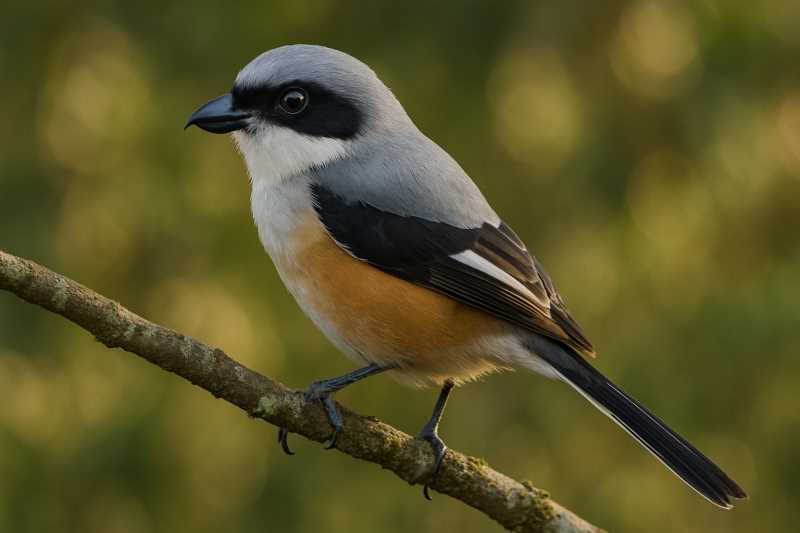
The Mountain Shrike is a medium-sized bird, measuring approximately 20 to 22 centimeters in length. It exhibits a striking appearance with a robust body and a slightly hooked beak, characteristic of the Laniidae family. The plumage of the Mountain Shrike is a blend of soft grays and browns, providing excellent camouflage against the forest backdrop. A distinctive black mask extends from its beak to the nape, giving it a fierce and alert expression. The wings are rounded, and the tail is relatively long with white outer feathers that are noticeable during flight.
Behavior and Social Structure
Mountain Shrikes are solitary and territorial creatures, often seen perched prominently on treetops or exposed branches. These vantage points allow them to survey their surroundings for potential prey or intruding rivals. The species is known for its aggressive behavior, particularly when defending its territory. Males are more conspicuous during the breeding season, showcasing vocal displays to attract mates and ward off competitors.
Despite their solitary nature, Mountain Shrikes exhibit a complex social structure during breeding periods. They form monogamous pairs that collaborate in nest building, incubation, and rearing of the young. The nest is usually constructed in dense foliage or thorny bushes, providing protection against predators.
Diet and Hunting Techniques
As a member of the shrike family, the Mountain Shrike is a carnivorous bird with a diet primarily consisting of insects, small mammals, and occasionally other birds. Its hunting technique is both fascinating and efficient. The Mountain Shrike employs a sit-and-wait strategy, patiently observing from its perch before swooping down to capture unsuspecting prey.
One of the most intriguing behaviors of the Mountain Shrike is its use of impaling. After capturing prey, the shrike often impales it on thorns or sharp branches, a behavior that serves multiple purposes. Impaling not only helps in securing the prey for easier consumption but also serves as a food cache, allowing the shrike to store excess food for later consumption.
Vocalizations
The vocalizations of the Mountain Shrike are varied and complex, consisting of a series of harsh calls and melodious whistles. These vocalizations play a crucial role in communication, particularly in territory defense and mate attraction. The shrike’s calls are often heard echoing through the montane forests, adding to the mystique of its natural habitat.
Conservation Status
The Mountain Shrike is currently classified as Near Threatened by the International Union for Conservation of Nature (IUCN). Although it is not immediately at risk of extinction, the species faces several challenges that could impact its population in the future. Habitat loss due to deforestation and agricultural expansion poses a significant threat to the Mountain Shrike’s natural environment.
Conservation efforts are essential to ensure the survival of this species. Protecting montane forest habitats and implementing sustainable land-use practices are vital steps in preserving the biodiversity of these regions. Additionally, raising awareness about the ecological importance of the Mountain Shrike can contribute to its conservation.
Conclusion
The Mountain Shrike (Lanius validirostris) is a remarkable avian species that embodies the beauty and complexity of montane ecosystems. Its unique behaviors, striking appearance, and adaptability to challenging environments make it a subject of great interest and importance in the world of ornithology. Conservation efforts must continue to ensure that this fascinating bird remains a part of the Earth’s biodiversity, thriving in its natural habitat for generations to come.
Related posts