The Golden-crowned Spadebill: A Jewel of the Neotropical Forests
In the lush and vibrant rainforests of Central and South America, a small yet striking bird captures the attention of ornithologists and bird enthusiasts alike—the Golden-crowned Spadebill (Platyrinchus coronatus). This diminutive bird, notable for its distinctive plumage and unique ecological niche, plays an integral role in the biodiversity of its habitat. This article delves into the biology, behavior, and conservation status of this fascinating species, shedding light on its significance within the ecosystem.
Taxonomy and Description
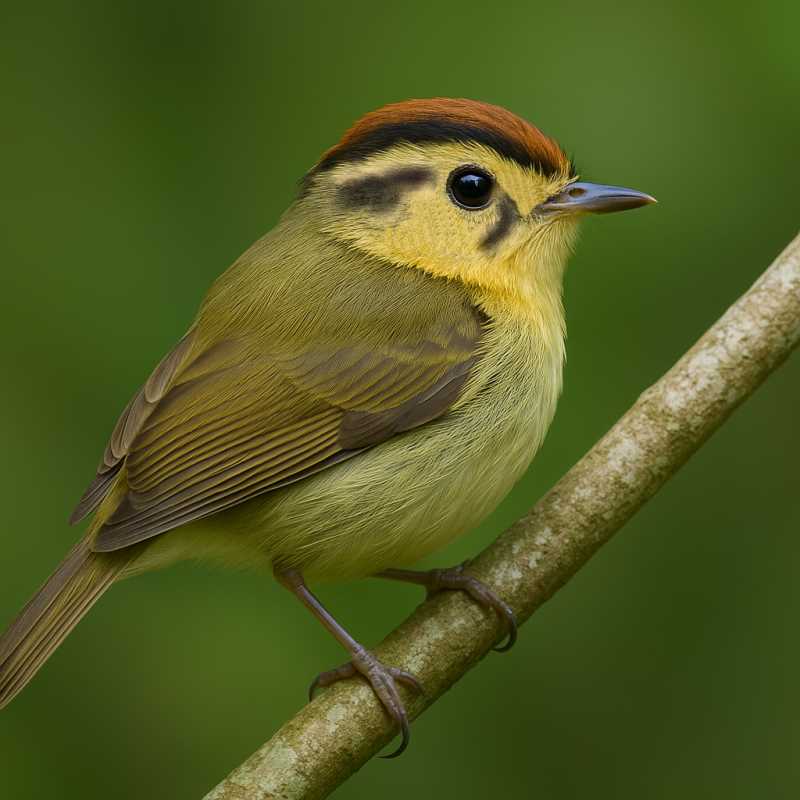
The Golden-crowned Spadebill belongs to the Tyrannidae family, a diverse group commonly known as tyrant flycatchers. The scientific name, Platyrinchus coronatus, is derived from its most distinguishing feature: a golden-yellow crown that contrasts with its otherwise muted olive-brown plumage. This crown, though not always visible, provides an unmistakable identification marker.
Measuring a mere 9 to 10 centimeters in length and weighing around 8 to 10 grams, the Golden-crowned Spadebill is a small bird with a broad, flat bill resembling a spade—hence its name. This bill is adapted for its insectivorous diet, allowing it to capture a variety of arthropods with precision.
Habitat and Distribution
The Golden-crowned Spadebill is predominantly found in lowland and foothill forests, ranging from Honduras to Bolivia and Brazil. Preferring the understory and mid-levels of dense, humid forests, it thrives in environments that offer abundant foliage and insect prey. Its range extends across several countries, including Costa Rica, Panama, Colombia, Venezuela, and Ecuador, among others.
These birds are typically sedentary, though some altitudinal movements might occur in response to seasonal changes in food availability. Their preference for undisturbed, primary forests makes them susceptible to habitat degradation, a significant threat to their populations.
Behavior and Ecology
Golden-crowned Spadebills are solitary or found in pairs, often seen flitting through the dense underbrush. Their flight is characterized by quick, darting movements as they maneuver skillfully through their habitat in pursuit of prey. They are known for their acrobatic foraging style, often hovering momentarily to glean insects from leaves and branches.
Their diet primarily consists of small insects and spiders, which they capture using their specialized bills. This insectivorous diet plays a critical role in controlling insect populations, thus maintaining the ecological balance in their forest habitats.
The breeding habits of the Golden-crowned Spadebill are less documented, but it is believed that they breed during the wet season when food resources are abundant. Nests are typically cup-shaped and constructed in low shrubs or trees, offering concealment from predators.
Conservation Status
According to the International Union for Conservation of Nature (IUCN), the Golden-crowned Spadebill is currently listed as a species of Least Concern. However, this status should not lead to complacency, as the continual loss of habitat poses a growing threat. Deforestation for agriculture, logging, and infrastructure development are primary concerns, leading to fragmentation and degradation of their natural habitats.
Conservation efforts are crucial in protecting the remaining tracts of primary forest that these birds depend on. Initiatives that focus on sustainable land-use practices, reforestation, and the establishment of protected areas are vital for ensuring the species’ long-term survival.
The Role of the Golden-crowned Spadebill in Ecosystems
Beyond its intrinsic beauty, the Golden-crowned Spadebill plays a pivotal role in the health of its ecosystem. By controlling insect populations, it helps in maintaining the balance of the forest environment. Moreover, as a part of the complex food web, it serves as prey for larger predators, contributing to the biodiversity that characterizes tropical forests.
Birdwatchers and ecotourists are often drawn to regions where the Golden-crowned Spadebill is found, highlighting the economic potential of conserving such species. Ecotourism can provide financial incentives to local communities to preserve natural habitats, fostering a harmonious coexistence between human development and wildlife conservation.
Conclusion
The Golden-crowned Spadebill, with its vibrant crown and dynamic behavior, is more than just a visual delight; it is a crucial component of its ecological community. As forests face increasing pressure from human activities, the need to protect such species becomes ever more critical. By understanding and valuing the role of the Golden-crowned Spadebill and its habitat, conservationists and policymakers can work together to ensure that this avian jewel continues to thrive in the neotropical forests for generations to come.
Related posts