Cape Shoveler: An In-Depth Look at Spatula smithii
The Cape Shoveler, scientifically known as *Spatula smithii*, is a fascinating species of dabbling duck that is native to Africa. Renowned for its distinctive spatula-shaped bill, this bird plays a crucial role in the ecosystems it inhabits, while also being of interest to ornithologists and birdwatchers alike.
Physical Characteristics
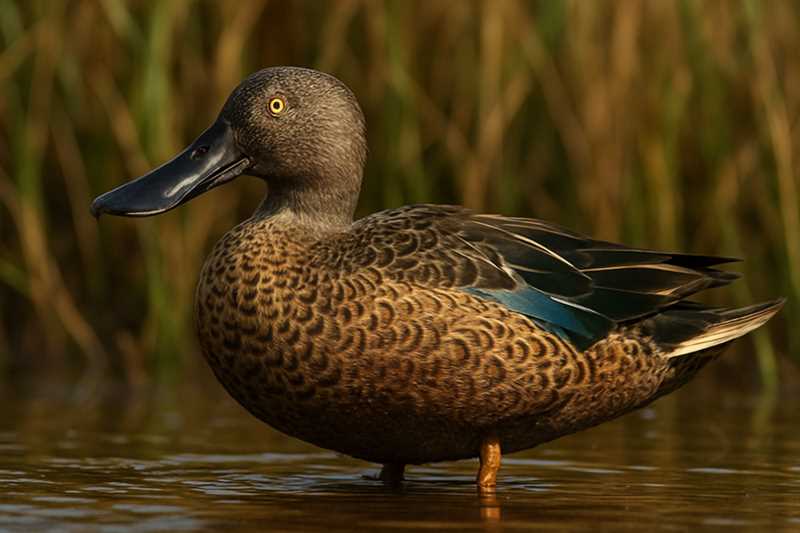
The Cape Shoveler is a medium-sized duck, with males and females exhibiting similar plumage patterns, making sex differentiation a bit challenging in the field. The adult male typically measures around 51–53 centimeters in length, with a wingspan ranging from 77 to 81 centimeters. Both sexes have a predominantly brown body with a slightly paler head and neck. The key distinguishing feature of this species is its large, wide bill, which is specially adapted for sifting food from the water.
Their iridescent green wing speculum, bordered by white, provides a striking contrast to their otherwise muted coloration. During flight, this wing pattern becomes particularly visible. The legs and feet of the Cape Shoveler are a vibrant orange, adding to its distinctive appearance.
Habitat and Distribution
The Cape Shoveler is predominantly found in the wetlands of southern Africa, with a range stretching from South Africa to Namibia, Botswana, Zimbabwe, and southern parts of Angola and Zambia. This species prefers shallow, freshwater habitats like marshes, lakes, and ponds, but it can also be found in brackish lagoons and estuaries. Its preference for areas with abundant aquatic vegetation makes it a common sight in protected wetlands and nature reserves.
Feeding Behavior
As a dabbling duck, the Cape Shoveler feeds mainly on the surface of the water or by tipping forward to reach underwater vegetation and invertebrates. Its wide, flat bill is lined with lamellae, or small comb-like structures, that allow it to efficiently filter small organisms and plant material from the water. The diet of the Cape Shoveler consists of aquatic insects, crustaceans, mollusks, and a variety of plant matter such as seeds and algae.
Breeding and Reproduction
The breeding season for the Cape Shoveler typically coincides with the rainy season, which varies depending on the region. In southern Africa, this is generally from July to December. During courtship, males display a series of elaborate behaviors, including head-bobbing and calling, to attract a mate. Once paired, the female selects a nesting site, often in dense vegetation near water.
The female is solely responsible for constructing the nest, which is usually a shallow depression lined with grass and down feathers. She lays a clutch of 6 to 12 eggs, which are incubated for about 25 to 27 days. After hatching, the ducklings are led to water by the female and are capable of feeding themselves, although they remain under her watchful eye for protection against predators.
Conservation Status
Currently, the Cape Shoveler is classified as Least Concern by the International Union for Conservation of Nature (IUCN). This is largely due to its wide distribution and stable population numbers. However, like many wetland-dependent species, it faces threats from habitat destruction, pollution, and climate change. The conservation of wetlands is crucial for maintaining healthy populations of this and other waterfowl species.
Efforts to protect vital wetland habitats, coupled with monitoring programs to track population trends, are essential for ensuring the long-term survival of the Cape Shoveler. Conservation organizations continue to advocate for sustainable land and water use practices that benefit both wildlife and human communities.
Importance of the Cape Shoveler
Beyond its ecological role, the Cape Shoveler holds cultural and economic significance in the regions it inhabits. It is a popular species among birdwatchers, contributing to ecotourism in southern Africa. The bird’s presence in healthy wetlands often indicates a well-functioning ecosystem, underscoring the importance of conservation efforts.
In summary, the Cape Shoveler is a remarkable species that serves as a vital component of its ecosystem. Its unique adaptations and behaviors offer valuable insights into the complex web of life within wetland habitats. Protecting this species and its environment is crucial not only for maintaining biodiversity but also for preserving the natural heritage of the regions it calls home.
As we continue to study and appreciate the Cape Shoveler, we gain a deeper understanding of the intricate balance of nature and the importance of conservation in our ever-changing world.
Related posts