Introduction
The Puerto Rican Nightjar, also known as the Puerto Rican Whip-poor-will or guabairo, is a small nocturnal bird endemic to Puerto Rico. Its accepted scientific name is Antrostomus noctitherus (Wetmore, 1919). Once thought to be extinct, the species was rediscovered in the Guánica Forest in 1961. It is now recognised as a vulnerable island endemic globally and remains legally protected as an endangered species under United States federal law.
Physical Description
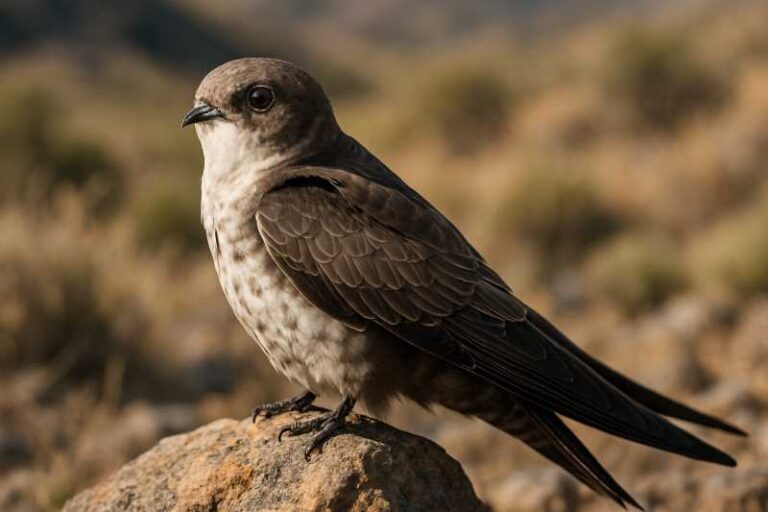
The Puerto Rican Nightjar is approximately 22–23 centimetres long and weighs about 39–41 grams. Its cryptic plumage is mottled grey, brown and black, providing effective camouflage against leaf litter, branches and the shaded forest floor.
The species has a broad head, large dark eyes, a short bill and prominent rictal bristles around the mouth, typical of nightjars. Adults show sexual dimorphism. Males have a more conspicuous white throat band and white markings on the outer tail feathers, which are most visible in flight. Females have buff-coloured throat and tail markings rather than bright white ones. Juveniles are generally less distinctly marked and have softer, browner plumage.
Range and Habitat
The Puerto Rican Nightjar is endemic to Puerto Rico and is not migratory. Its known distribution is concentrated in the south-western part of the island, including the Guánica Forest, Susúa State Forest and the Guayanilla–Peñuelas region. Additional suitable habitat has been identified on private land across parts of southern Puerto Rico.
It is associated mainly with dry coastal and lower-montane forests, particularly mature forest on limestone or karst soils. It also occurs in some subtropical moist forest at higher elevations. Preferred sites typically have a relatively closed canopy, abundant leaf litter and an open or moderately open understorey. In Guánica Forest, the species has been recorded from near sea level to approximately 230 metres, while populations in Susúa and nearby areas occur at somewhat higher elevations.
Habitat outside protected forests is especially important. Recent habitat modelling indicates that a substantial proportion of potentially suitable habitat occurs on privately owned land, where protection and management are more difficult to secure.
Behaviour and Diet
The Puerto Rican Nightjar is primarily nocturnal. It is most readily detected by its repeated, rapid whip-like call, often given from the forest understorey or from a low perch. During daylight, it may roost on the ground or along a branch, relying on its mottled plumage to remain concealed.
It feeds mainly on flying insects, including moths, beetles and other nocturnal arthropods. It makes short aerial sallies from low perches and may also take terrestrial insects from the ground. As with other nightjars, its large eyes and wide gape are adaptations for feeding in low light.
Breeding activity has been recorded from late February through early July, with the greatest activity generally occurring between February and May or April and June, depending on the study and location. The female lays one or two eggs directly on a layer of leaf litter rather than constructing a nest. The eggs are buffy brown with darker brown or purplish markings.
The species is a ground nester, so eggs and chicks are vulnerable to predators. Adults may perform distraction displays, including wing and tail movements, to draw predators away from the nest or young. Chicks develop quickly and are capable of flight at approximately two weeks of age.
Identification Tips
- Listen for a repeated series of sharp, whip-like notes after dusk or before dawn.
- Look for a small, stocky nightjar with heavily mottled grey-brown plumage resting on the ground, a low branch or an open forest track.
- In flight, a male may show conspicuous white markings on the outer tail feathers. These markings are smaller and buff-coloured in females.
- The species is more likely to be heard than seen, especially in dense dry forest.
- Do not rely on plumage alone. The combination of habitat, nocturnal behaviour, repeated whip-like calls and the bird’s restricted Puerto Rican range is usually more useful than colour pattern by itself.
The Antillean Nighthawk may occur in some of the same broad regions, but it is a different species and is generally more aerial in behaviour. Careful attention to the call and the bird’s low, ground-oriented habits is important when distinguishing the Puerto Rican Nightjar from other nightjars and nighthawks.
Conservation Status
The Puerto Rican Nightjar is classified as Vulnerable on the global IUCN Red List assessment used in recent bird status tables. In the United States, it remains listed as Endangered under the Endangered Species Act.
The principal threats are the loss, fragmentation and degradation of dry and lower-montane forest habitat. Development, agricultural expansion, road construction and other changes to private land can reduce suitable forest and disrupt habitat connections. Ground nests and young birds are also exposed to introduced predators, including feral cats, small Indian mongooses and rats, as well as native and other opportunistic predators.
Conservation measures include protecting and managing Guánica, Susúa and other state forests; securing habitat on private land; maintaining mature forest with suitable leaf litter and understorey structure; controlling invasive predators where practical; and improving population and habitat monitoring. Recent modelling has emphasised the importance of private land in the species’ remaining range, making cooperation with landowners an essential part of recovery planning.
Frequently Asked Questions
Where does the Puerto Rican Nightjar live?
It is found only on Puerto Rico, mainly in dry coastal and lower-montane forests of the south-west, including Guánica, Susúa and the Guayanilla–Peñuelas region.
Is the Puerto Rican Nightjar extinct?
No. The species was once believed to be extinct because it went unrecorded for many years, but living birds were rediscovered in 1961 in the Guánica Forest.
What does the Puerto Rican Nightjar eat?
It feeds mainly on insects caught in flight, especially moths, beetles and other nocturnal insects. It may also take insects from the ground.
When does the Puerto Rican Nightjar breed?
Breeding has been recorded from late February through early July, with activity often concentrated between February and June. The female lays one or two eggs directly on leaf litter on the forest floor.
How can the Puerto Rican Nightjar be identified?
The most reliable clues are its repeated whip-like call, mottled grey-brown plumage, nocturnal habits and association with dry forest containing abundant leaf litter. Males show white outer-tail markings in flight, while females have buff markings.
What is the conservation status of the Puerto Rican Nightjar?
It is globally classified as Vulnerable on recent IUCN Red List assessments and remains legally listed as Endangered under United States federal law. Habitat loss and introduced predators are important threats.
References
- International Ornithologists’ Union. 2025. IOC World Bird List, Version 15.2. International Ornithologists’ Union. Available at: https://www.worldbirdnames.org/new/ioc-lists/ (accessed 8 September 2026).
- International Union for Conservation of Nature. 2023. 2023-1 Red List Statistics Tables, Table 7: Species Changing IUCN Red List Status. IUCN Red List of Threatened Species. Available at: https://nc.iucnredlist.org/redlist/content/attachment_files/2023-1_RL_Table_7.pdf (accessed 8 September 2026).
- Vilella, F. J. and González, R. 2023. Multi-resolution habitat models of the Puerto Rican Nightjar Antrostomus noctitherus. Bird Conservation International, 33, e74, 1–10. https://doi.org/10.1017/S0959270923000278
- Vilella, F. J. 1989. The Reproductive Ecology and Population Biology of the Puerto Rican Nightjar Caprimulgus noctitherus. PhD dissertation, Louisiana State University and Agricultural and Mechanical College. https://doi.org/10.31390/gradschool_disstheses.4750
- Puerto Rico Breeding Bird Atlas. 2020. The Puerto Rico Breeding Bird Atlas, Puerto Rican Nightjar/Guabairo account. U.S. Department of Agriculture, Forest Service, International Institute of Tropical Forestry. Available at: https://www.srs.fs.usda.gov/pubs/gtr/gtr_iitf_053.pdf (accessed 8 September 2026).
- U.S. Geological Survey. 2023. Multi-resolution habitat models of the Puerto Rican Nightjar Antrostomus noctitherus. U.S. Geological Survey. Available at: https://www.usgs.gov/publications/multi-resolution-habitat-models-puerto-rican-nightjar-antrostomus-noctitherus (accessed 8 September 2026).
- U.S. Fish and Wildlife Service. n.d. Puerto Rican Nightjar Recovery Plan implementation activities. U.S. Fish and Wildlife Service. Available at: https://ecos.fws.gov/ecp0/reports/implementation-activity-status-ore-report?documentId=600272&entityId=111 (accessed 8 September 2026).
- BirdsCaribbean. 2022. Endemic Bird of the Day: Puerto Rican Nightjar. BirdsCaribbean. Available at: https://www.birdscaribbean.org/2022/06/from-the-nest-day-98/ (accessed 8 September 2026).
Related posts