The Banggai Scops Owl: Guardians of the Indonesian Canopy
The Banggai Scops Owl (Otus mendeni) is a captivating species of owl that has intrigued ornithologists and bird enthusiasts alike. Endemic to the Banggai Islands of Indonesia, this elusive bird is a remarkable example of nature’s intricacy and the rich biodiversity found in Southeast Asia. With its unique adaptations and behaviors, the Banggai Scops Owl serves as a vital indicator of the ecological health of its habitat.
A Glimpse into Its Natural Habitat
The Banggai Scops Owl inhabits the dense forests of the Banggai Archipelago, a chain of islands located off the eastern coast of Sulawesi. These islands are characterized by their lush tropical rainforests, which provide the perfect backdrop for the owl’s nocturnal activities. The dense canopy offers ample cover, while the understory teems with an abundance of prey, including insects, small rodents, and other invertebrates.
The owl’s habitat is a critical aspect of its survival. The lush environment not only provides food and shelter but also supports a delicate balance of flora and fauna. Unfortunately, this fragile ecosystem is threatened by deforestation, mining, and agricultural expansion, making the conservation of these forests imperative for the owl’s continued existence.
Physical Characteristics and Adaptations
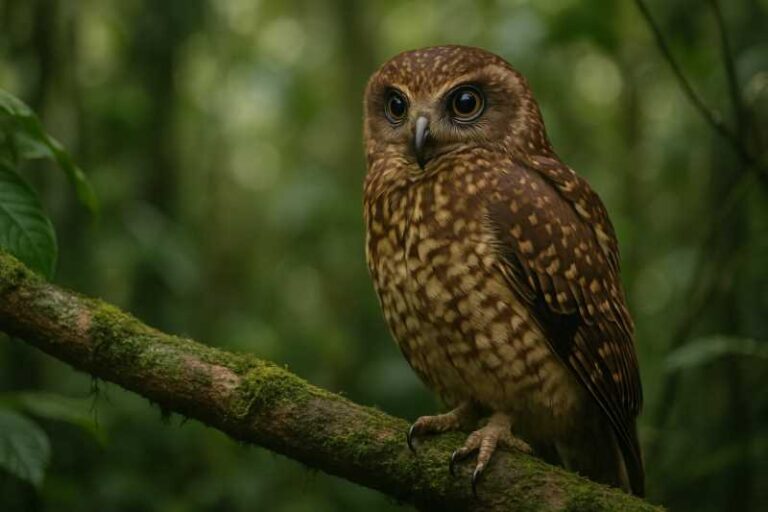
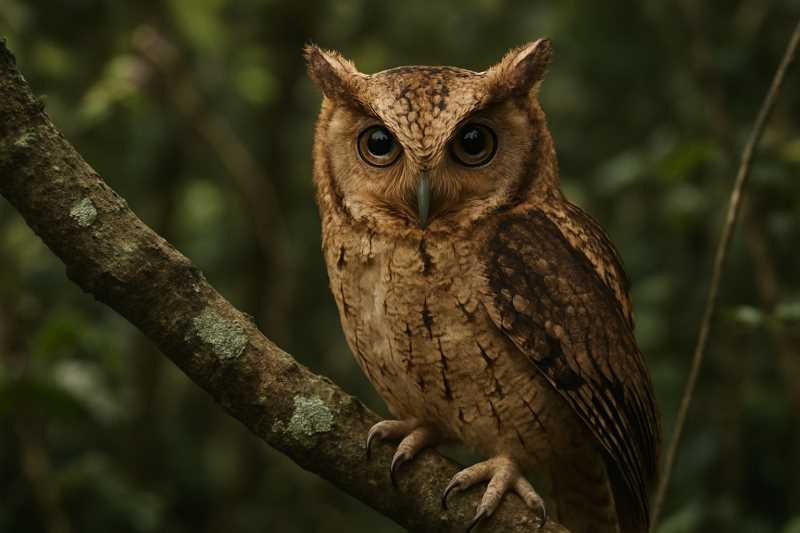
The Banggai Scops Owl is a small owl, measuring approximately 20 to 25 centimeters in length. It features a striking plumage with mottled brown and grey feathers that provide excellent camouflage against the forest backdrop. Its distinctive ear tufts, large eyes, and sharp talons are typical of scops owls, contributing to its adept hunting skills.
One of the most fascinating adaptations of the Banggai Scops Owl is its heightened sense of hearing. The asymmetrical placement of its ears allows it to pinpoint the exact location of its prey in the dark, a crucial advantage for a nocturnal hunter. Additionally, its silent flight, thanks to the unique structure of its feathers, enables it to approach prey undetected.
Reproduction and Lifespan
The reproductive behavior of the Banggai Scops Owl is still a subject of ongoing research, but it is known to breed during the dry season when food availability is at its peak. The female typically lays two to three eggs in a tree hollow or abandoned nest, which she incubates for about three to four weeks.
Once hatched, the owlets depend heavily on their parents for food and protection. The juveniles gradually learn to hunt and fend for themselves over a period of weeks, eventually reaching full independence. In the wild, the Banggai Scops Owl can live up to 10 years, though this is highly contingent upon environmental conditions and threats.
Conservation Status and Efforts
The Banggai Scops Owl is currently listed as “Vulnerable” on the IUCN Red List, primarily due to habitat loss and fragmentation. The rapid deforestation for timber, agriculture, and infrastructure development poses a significant threat to its survival. In addition, illegal wildlife trade further exacerbates the pressures on this species.
Conservation efforts are underway to protect the Banggai Scops Owl and its habitat. Initiatives include establishing protected areas, promoting sustainable land use practices, and conducting research to better understand the owl’s ecology and behavior. Local communities play a crucial role in these efforts, as their involvement and commitment to conservation can significantly enhance the effectiveness of these measures.
The Role of Ecotourism
Ecotourism has emerged as a promising avenue for promoting the conservation of the Banggai Scops Owl. By attracting birdwatchers and nature enthusiasts to the Banggai Islands, ecotourism provides a sustainable economic alternative to destructive practices. It fosters greater awareness and appreciation for the region’s unique biodiversity, encouraging local communities to conserve their natural heritage.
However, it is essential that ecotourism is managed responsibly to ensure minimal impact on the environment and the owl’s habitat. Proper guidelines and regulations must be implemented to balance tourism with conservation goals.
Conclusion
The Banggai Scops Owl is a remarkable species that embodies the beauty and complexity of Indonesia’s wildlife. Its survival is intricately linked to the preservation of its natural habitat and the broader ecosystem. As such, concerted efforts from conservationists, researchers, local communities, and policymakers are crucial to ensuring that this enigmatic owl continues to thrive in the wild. By working together, we can safeguard the future of the Banggai Scops Owl and the rich biodiversity of the Banggai Archipelago.
Related posts