Wallace’s Fruit Dove: A Jewel of the Indonesian Archipelago
Nestled within the lush forests of the Indonesian archipelago, Wallace’s Fruit Dove (Ptilinopus wallacii) stands as a testament to the region’s rich biodiversity. This exquisite species, named after the renowned British naturalist Alfred Russel Wallace, is not only a symbol of the vibrant ecosystems it inhabits but also a reminder of the delicate balance that sustains them.
Taxonomy and Nomenclature
Wallace’s Fruit Dove belongs to the Columbidae family, which encompasses pigeons and doves. The genus Ptilinopus, to which it belongs, is characterized by its vibrant plumage and frugivorous diet. Wallace’s Fruit Dove was first described scientifically in 1863, and its nomenclature pays homage to Wallace, who independently conceived the theory of evolution through natural selection alongside Charles Darwin.
Physical Description
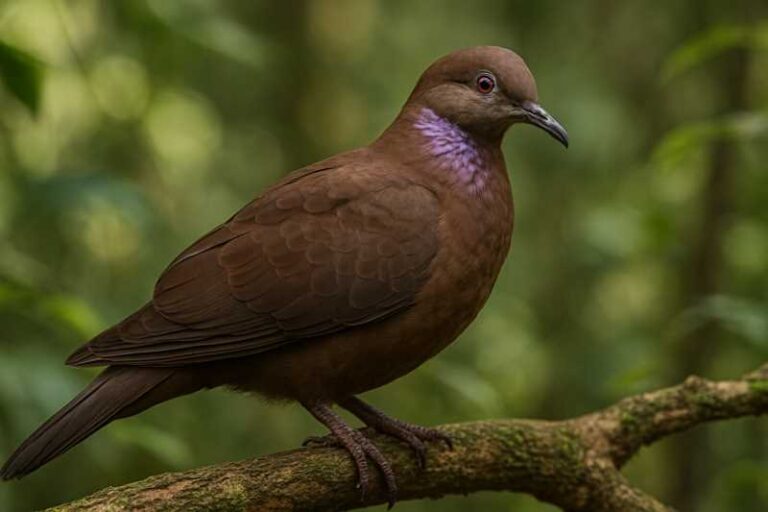
A medium-sized dove, Wallace’s Fruit Dove measures approximately 26 centimeters in length. Its plumage is a striking combination of emerald green and a subtle purplish hue, with a distinctive white throat and a broad band of orange on its breast. The iridescence of its feathers can vary based on the angle of light, lending the bird an almost magical appearance. Its eyes are a vibrant red, contrasting sharply with its green body, while its legs and feet are a pale yellow.
Habitat and Distribution
Wallace’s Fruit Dove is endemic to the lowland and montane forests of the Maluku Islands in Indonesia, particularly the islands of Buru and Seram. These regions are characterized by their humid tropical climate, dense forests, and an abundance of fruit-bearing trees, which provide both sustenance and shelter for the doves.
The species prefers undisturbed primary forests, although it can occasionally be spotted in secondary growth areas. Its reliance on fruiting trees makes it an integral component of the forest ecosystem, as it aids in seed dispersal, contributing to forest regeneration.
Behavior and Diet
True to its name, Wallace’s Fruit Dove primarily feeds on a variety of fruits and berries, with a particular fondness for figs. Its diet supports its role as a seed disperser, which is crucial for maintaining the biodiversity of its habitat. The bird’s feeding habits also align with its arboreal lifestyle; it spends much of its time in the forest canopy, rarely descending to the ground.
Wallace’s Fruit Dove is known for its soft, cooing calls, which are often heard at dawn and dusk. These calls play a significant role in communication between individuals, particularly during the breeding season. The species is monogamous, with pairs forming strong bonds. Nesting typically occurs in trees, where the female lays a single egg in a flimsy nest constructed from twigs and leaves.
Conservation Status
The International Union for Conservation of Nature (IUCN) currently classifies Wallace’s Fruit Dove as Near Threatened. The primary threats to its survival include habitat destruction due to logging, agricultural expansion, and human encroachment. Additionally, the illegal pet trade poses a significant risk, as the bird’s striking appearance makes it a target for collectors.
Conservation efforts are underway to protect the habitats of Wallace’s Fruit Dove. These include the establishment of protected areas and the promotion of sustainable land-use practices. Raising awareness about the species and its ecological importance is also critical to ensuring its long-term survival.
Conclusion
Wallace’s Fruit Dove is a remarkable species that exemplifies the beauty and complexity of Indonesia’s natural heritage. Its vibrant plumage and crucial ecological role underscore the importance of preserving the diverse ecosystems of the Maluku Islands. As we strive to protect this and other species, we recognize the interconnectedness of all life forms and the imperative to safeguard the natural world for future generations.
In honoring the legacy of Alfred Russel Wallace, who celebrated the wonders of biodiversity, we are reminded of our responsibility to cherish and protect the planet’s irreplaceable treasures, such as Wallace’s Fruit Dove.
Related posts