The Asian Openbill: A Unique Avian Resident of Wetlands
The Asian Openbill (Anastomus oscitans) is a distinctive and fascinating species of stork found predominantly in the wetlands of South and Southeast Asia. Known for its unique bill structure and its important ecological role, the Asian Openbill has captivated ornithologists and bird lovers alike. This article delves into the characteristics, habitat, behavior, and conservation status of this remarkable bird, offering insights into its life and significance in the ecosystem.
Physical Characteristics
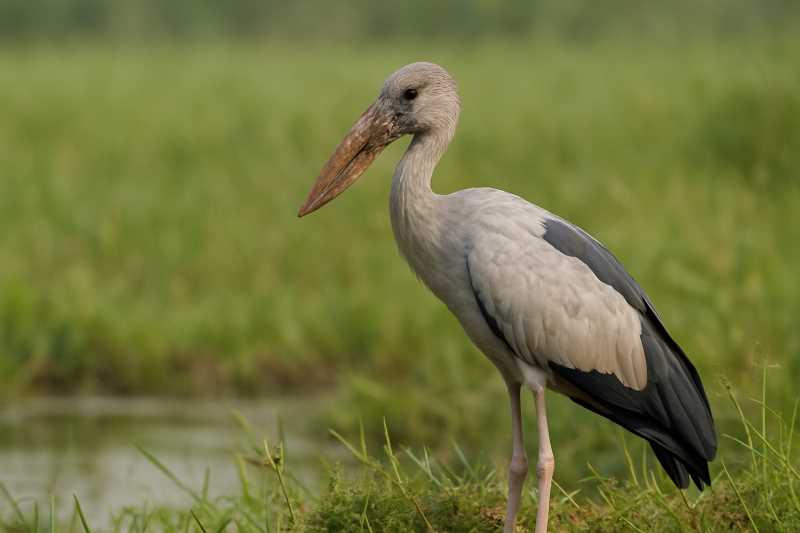
The Asian Openbill is a medium-sized stork, typically measuring about 68 to 81 centimeters in length with a wingspan ranging from 140 to 149 centimeters. Its most striking feature is its peculiar bill, which is slightly curved and open in the middle when closed. This gap is an adaptation that aids in the extraction of its primary food source, the apple snail, from their shells. The bird’s plumage is predominantly white with a tinge of gray or black on the wings and tail, which becomes more pronounced during the breeding season. The juveniles are browner in appearance, gradually acquiring the adult coloration as they mature.
Habitat and Distribution
The Asian Openbill is widely distributed across the Indian subcontinent, extending its range to parts of Southeast Asia, including Thailand, Cambodia, and Vietnam. It thrives in a variety of wetland habitats such as marshes, flooded fields, and riverbanks. These environments provide abundant resources, including the apple snails that form the core of its diet. During the breeding season, these storks are often found in large colonies, which can number in the hundreds, in areas with plenty of nesting trees and close proximity to feeding grounds.
Feeding Behavior
Anastomus oscitans is primarily carnivorous, with a diet centered around mollusks, particularly apple snails (Pomacea spp.). The unique design of its bill allows the bird to skillfully extract the snails from their shells, a process that involves inserting the lower mandible into the shell and twisting to remove the soft body. In addition to snails, the Asian Openbill feeds on a variety of aquatic invertebrates, small fish, and frogs, which it catches in shallow waters. This feeding strategy not only sustains the stork but also helps control the population of apple snails, which are considered pests in rice cultivation.
Breeding and Lifecycle
The breeding season for the Asian Openbill varies geographically but generally occurs during the monsoon months when food is abundant. These storks are known for their colonial nesting habits, often sharing nesting sites with other stork species. Nests are constructed in tall trees or shrubs, made from sticks and lined with leaves. The female typically lays 2 to 4 eggs, which both parents incubate for about 27 to 30 days. The chicks are altricial, requiring significant parental care, and fledge approximately 35 to 40 days after hatching.
Ecological Role and Conservation
The Asian Openbill plays a crucial ecological role in its habitat. By feeding on apple snails, it helps maintain the balance of the ecosystem and supports agriculture by controlling pest populations. Despite its ecological importance, the species is classified as Least Concern by the International Union for Conservation of Nature (IUCN), owing to its wide distribution and stable population trends. However, habitat destruction due to agricultural expansion, pollution, and climate change poses potential threats that could impact its populations in the future.
Conclusion
The Asian Openbill is a testament to the wonders of avian adaptation and ecological balance. Its unique bill, specialized feeding habits, and role within wetland ecosystems underscore the intricate connections that sustain biodiversity. As human activities continue to encroach on natural habitats, understanding and conserving species like the Asian Openbill becomes ever more critical. Through concerted conservation efforts and awareness, we can ensure that this remarkable bird continues to thrive in the wetlands of Asia, maintaining its vital role in the natural world.
This is one of the species covered in one of the books in our Kings Birds of the world series, Storks Of The World.

Related posts