The Half-collared Kingfisher: A Jewel of African Waterways
The Half-collared Kingfisher (Alcedo semitorquata) is a small but striking bird species that graces the waterways of sub-Saharan Africa. Renowned for its vivid plumage and elusive nature, this bird is a captivating subject for ornithologists and birdwatching enthusiasts alike. While not as widely recognized as some of its kingfisher relatives, the Half-collared Kingfisher’s distinct features and behaviors make it a fascinating creature worthy of closer examination.
Physical Characteristics
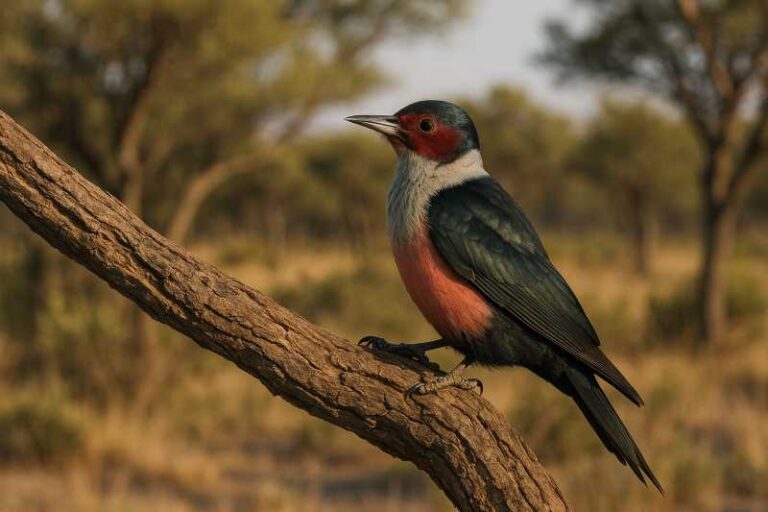
The Half-collared Kingfisher is a medium-sized bird, typically measuring between 16 to 18 centimeters in length. Its brilliant blue plumage is perhaps its most distinctive feature, glistening with an iridescent quality that captures the light beautifully. The upperparts are a vivid cobalt blue with a slight green tint, while the underparts are a contrasting white. True to its name, the bird sports an incomplete white collar around its neck, which is more pronounced in males than females.
The bird’s head is adorned with a short crest and a relatively large bill, which is black and perfectly adapted for catching prey. Its eyes are dark and alert, providing excellent vision for spotting prey beneath the water’s surface. The legs and feet are a bright orange-red, adding a splash of color to its otherwise blue and white palette.
Habitat and Distribution
The Half-collared Kingfisher is found predominantly along the rivers and streams of sub-Saharan Africa. Its range extends from the coastal regions of Angola and Namibia in the west, across to Ethiopia and Kenya in the east, and as far south as South Africa. The species thrives in habitats with clear, fast-flowing water, where it can often be spotted perched on branches overhanging the water.
These kingfishers favor dense, forested environments where the canopy provides ample cover and the water remains unpolluted. However, they can also be found in more open landscapes, provided the aquatic environment meets their needs. The presence of Half-collared Kingfishers is often an indicator of a healthy aquatic ecosystem, as they require clean water bodies to hunt effectively.
Diet and Hunting Behavior
As piscivores, Half-collared Kingfishers primarily feed on small fish, which they catch with remarkable precision. They are also known to consume aquatic insects and occasionally small crustaceans. The bird’s hunting technique is a testament to its agility and keen eyesight. Perched silently above the water, it waits patiently for the right moment to strike.
Once it spots a potential meal, the kingfisher dives swiftly into the water, using its sharp bill to snatch up its prey. After capturing a fish, it returns to its perch, where it will often beat the fish against the branch to subdue it before swallowing it headfirst. This behavior ensures that the fish’s fins do not impede the bird’s ability to swallow.
Reproduction and Lifespan
The breeding season for the Half-collared Kingfisher varies depending on its geographical location, but it typically corresponds with the rainy season when food is most abundant. During this time, males perform elaborate courtship displays to attract mates, including aerial displays and presenting females with gifts of food.
Once paired, the birds work together to excavate a tunnel nest in a riverbank. These nests can be up to a meter in length, providing a secure environment for the eggs and chicks. The female usually lays a clutch of 3 to 6 eggs, which both parents help incubate. After hatching, the chicks are fed primarily on small fish and invertebrates until they fledge.
The lifespan of a Half-collared Kingfisher in the wild is not extensively documented, though it is believed to be similar to other small kingfisher species, approximately 6 to 10 years.
Conservation Status
Currently, the Half-collared Kingfisher is classified as "Least Concern" by the International Union for Conservation of Nature (IUCN). However, it faces threats from habitat degradation and water pollution. Deforestation and the damming of rivers can lead to the loss of suitable habitats, while pollution affects the quality of water and the availability of prey.
Conservation efforts are crucial to ensuring the survival of this beautiful bird. Protecting their habitats by maintaining clean waterways and preserving forested areas will help sustain populations. Additionally, raising awareness about the ecological importance of these birds can foster community support for conservation initiatives.
Conclusion
The Half-collared Kingfisher is a true gem of African waterways, captivating all who are fortunate enough to observe it in its natural habitat. Its stunning appearance, specialized hunting techniques, and role as an indicator of ecological health make it a vital component of its ecosystem. By promoting conservation and education, we can ensure that future generations will continue to enjoy the presence of this remarkable bird in the wild.
Related posts