The Majestic Bearded Vulture: Nature’s Remarkable Recycler
The Bearded Vulture (Gypaetus barbatus), also known as the Lammergeier, is one of the most intriguing and visually striking birds of prey. This majestic raptor is renowned for its distinctive appearance, intelligent feeding habits, and crucial ecological role. In this article, we’ll delve into the fascinating world of the Bearded Vulture, exploring its habitat, behavior, and the conservation efforts aimed at preserving this remarkable species.
Appearance and Identification
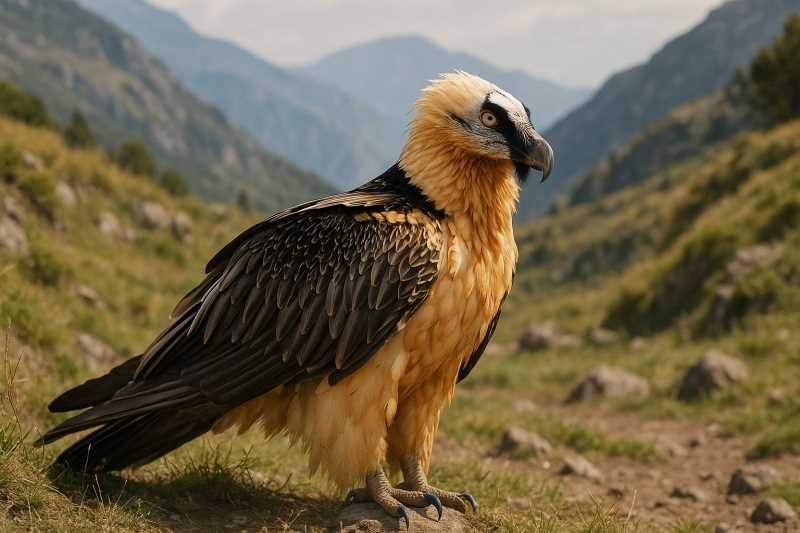
The Bearded Vulture is easily recognizable due to its unique appearance. It sports a wingspan of up to 2.8 meters, making it one of the largest birds of prey. Its plumage is predominantly dark, with a striking contrast of pale underparts and a rusty-orange hue on its head and neck, resulting from its habit of rubbing iron-rich soil onto its feathers. This bird derives its name from the distinctive black "beard" of feathers below its beak, a feature that sets it apart from other vulture species.
Habitat and Distribution
Bearded Vultures inhabit mountainous regions across southern Europe, Africa, and Asia. They prefer remote, rocky areas at altitudes ranging from 500 to 4,000 meters. These environments provide the perfect setting for their specialized feeding habits and nesting practices. The bird’s adaptability to various mountainous terrains is a testament to its resilience, although it faces challenges due to habitat loss and human interference.
Diet and Feeding Behavior
The Bearded Vulture’s diet is almost exclusively composed of bones, earning it the nickname "bone-eating vulture." This bird has evolved to consume bones, which are rich in calcium and other essential nutrients. Unlike other vultures that primarily feed on flesh, the Bearded Vulture has a unique method of obtaining food. It carries bones high into the air and drops them onto rocks below to break them into smaller, more manageable pieces. This behavior not only reflects the bird’s intelligence but also underscores its role in the ecosystem as a natural recycler, ensuring that nothing goes to waste.
Breeding and Lifespan
Bearded Vultures are monogamous and form long-term pair bonds. They typically build their nests on cliff ledges, using large sticks and lining them with softer materials. The breeding season varies depending on the region, but it generally occurs between December and March. Females lay one to two eggs, which both parents incubate for about 53 to 60 days. The chicks fledge after approximately four months, although they continue to rely on their parents for food for several months afterward. In the wild, Bearded Vultures can live up to 21 years, though some individuals in captivity have reached ages exceeding 40 years.
Conservation Status and Threats
The conservation status of the Bearded Vulture varies across its range. In Europe, it is classified as "Near Threatened" due to habitat degradation, poisoning, and illegal hunting. Conservation efforts are underway to protect the species, with several reintroduction programs in place. These initiatives aim to bolster populations in regions where the bird has become extinct, such as the Alps and the Pyrenees. In Africa and Asia, the species is more stable, but continuous monitoring and habitat protection are essential to ensure its survival.
Conservation Initiatives
Numerous organizations are dedicated to the conservation of the Bearded Vulture. These efforts include habitat restoration, public education campaigns, and research programs to better understand the bird’s ecology and behavior. Reintroduction programs have seen success in the Alps, where breeding pairs have been established, contributing to the species’ recovery in this iconic mountain range. Additionally, initiatives to mitigate threats such as poisoning and collision with power lines are crucial to ensuring the bird’s long-term survival.
The Bearded Vulture’s Ecological Impact
The ecological role of the Bearded Vulture is significant. By consuming bones and carrion, it helps to keep ecosystems clean and free from disease. This scavenging behavior makes it an essential component of the food web, aiding in nutrient cycling and supporting biodiversity. The bird’s presence also serves as an indicator of ecosystem health, as its survival depends on the availability of prey and suitable nesting sites.
Conclusion
The Bearded Vulture is an extraordinary bird that captivates with its beauty and ecological importance. As a symbol of high-altitude wilderness, it reminds us of the intricate connections within nature and the need for conservation efforts to preserve these links. By supporting initiatives aimed at protecting the Bearded Vulture and its habitat, we contribute to the preservation of biodiversity and the health of our planet’s ecosystems.
This is one of the species covered in our book Vultures and Condors Of The World which is part of our Kings Birds of the world series, and one of the Kings Guides.

Related posts