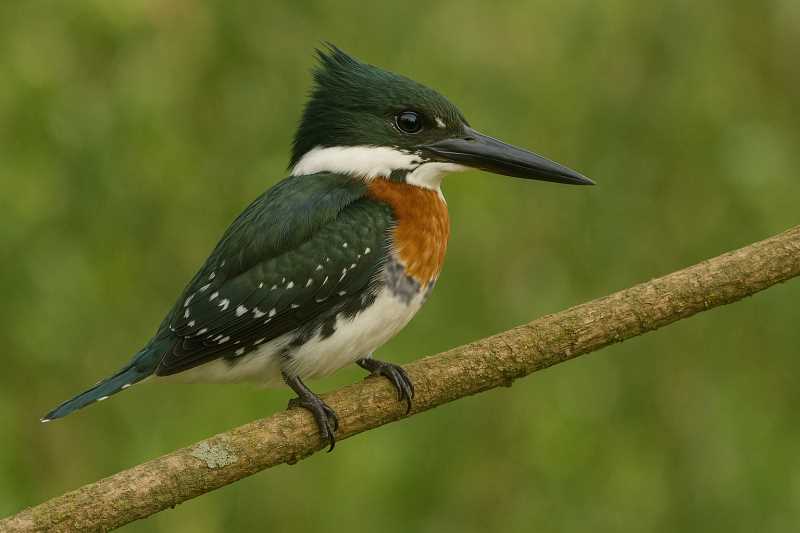
The Green Kingfisher (Chloroceryle americana) is a striking bird species that captivates birdwatchers and ornithologists alike with its vibrant plumage and distinctive behaviors. This small kingfisher is renowned for its iridescent green upperparts and contrasting white belly, creating a stark yet beautiful pattern that makes it easily recognizable along the waterways it inhabits. Found across a range of habitats in the Americas, the Green Kingfisher plays an important role in the ecological balance of its environment.
Habitat and Distribution
Green Kingfishers are primarily found in Central and South America, with their range extending from southern Texas in the United States down to central Argentina. They are typically associated with freshwater habitats, including streams, rivers, ponds, and marshes, where they can be seen perched quietly on low branches overhanging the water. Their preference for slow-moving or still water bodies provides them access to abundant prey, making these areas ideal for feeding and nesting.
While they are adaptable and can be found in a variety of habitats, including tropical forests, mangroves, and scrublands, Green Kingfishers are most commonly observed in areas with dense vegetation. This provides them with ample cover from predators and an abundance of nesting sites.
Physical Description
The Green Kingfisher is a compact bird, measuring about 19-20 centimeters (7.5-8 inches) in length. Males and females can be distinguished by their coloration; males have a rufous band across the chest, while females have white underparts with green spotting on the sides. Both sexes share the metallic green upperparts, a white throat, and a distinctive green cap.
Their stout, dagger-like bills are perfectly adapted for their piscivorous diet, allowing them to spear fish with precision. In flight, their short wings beat rapidly, and they display a dynamic and agile flying style well-suited to their environment.
Behavior and Diet
Green Kingfishers are solitary hunters, known for their patient and stealthy approach to capturing prey. They often perch quietly, scanning the water below for movement. Once they spot a potential meal, they dive swiftly and gracefully, plunging into the water to catch small fish, their primary diet. In addition to fish, they may also consume aquatic insects and crustaceans.
Their hunting technique is a testament to their adaptability and skill, as they must account for the refraction of light in water to accurately gauge the position of their prey. This requires both keen eyesight and exceptional coordination.
Breeding and Nesting
The breeding season for Green Kingfishers typically occurs during the rainy season, when food is most abundant. Mated pairs engage in courtship displays that include mutual feeding and synchronized flight patterns. They nest in burrows that they excavate in riverbanks or other vertical mud walls. These burrows can be up to a meter long and are typically located above the high water mark to prevent flooding.
The female lays a clutch of 3-6 white eggs, which both parents incubate. After hatching, both parents are actively involved in feeding and caring for the chicks, ensuring a high survival rate for the young.
Conservation Status
Currently, the Green Kingfisher is listed as Least Concern by the International Union for Conservation of Nature (IUCN), indicating that it is not at immediate risk of population decline. However, like many avian species, it faces threats from habitat destruction and environmental pollution. Conservation efforts aimed at preserving wetland habitats and ensuring clean waterways are crucial to maintaining healthy populations of this and other kingfisher species.
Conclusion
The Green Kingfisher is a remarkable bird that embodies the beauty and complexity of avian life. Its presence in a given ecosystem is an indicator of environmental health, underscoring the importance of preserving natural habitats. Bird enthusiasts and conservationists alike recognize the significance of protecting such species, ensuring that future generations can continue to marvel at the vibrant and agile Green Kingfisher.
As we continue to study and appreciate these birds, it is essential to foster awareness and support for conservation initiatives that protect the delicate balance of ecosystems they depend on. The Green Kingfisher not only enriches our biodiversity but also serves as a reminder of the intricate connections within our natural world.
Related posts