The Hawaiian Goose: A Testament to Resilience and Conservation
The Hawaiian Goose, or Nene (Branta sandvicensis), is not only the state bird of Hawaii but also a remarkable symbol of conservation success. With its unique evolutionary journey and critical role in Hawaii’s ecosystem, the Nene offers insights into the complex interplay between species conservation and habitat preservation.
Evolutionary Journey and Physical Characteristics
The Hawaiian Goose is an extraordinary example of adaptive evolution. Descended from the Canada Goose, the Nene made its way to the Hawaiian Islands approximately 500,000 years ago. Over time, it evolved distinct characteristics to adapt to its new environment. Unlike its ancestors, the Nene has shorter wings and stronger legs, adaptations that have enabled it to thrive on the rugged volcanic terrain of Hawaii’s islands. This physical evolution underscores the bird’s unique adaptation to a flight-reduced lifestyle, relying more on terrestrial locomotion.
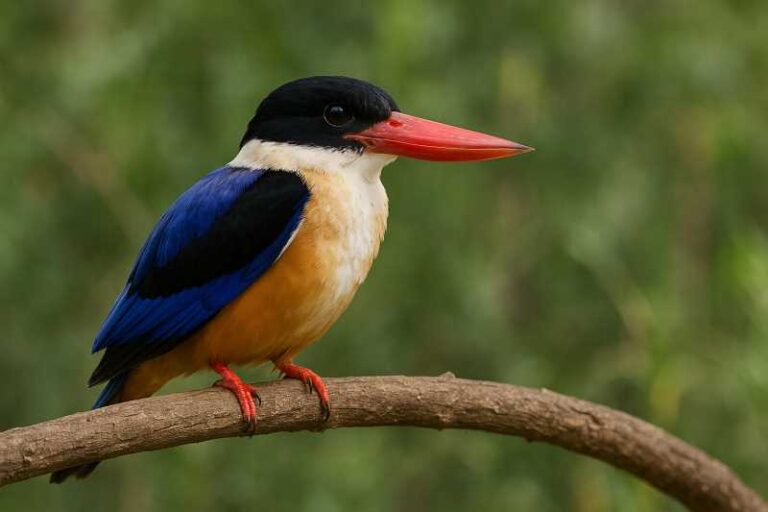
In terms of appearance, the Nene is easily recognizable by its striking plumage. It sports a buff-colored neck with dark furrows and a black head. The back and wings feature a pattern of grey-brown feathers, providing a perfect camouflage against the island’s landscape. The Nene’s webbed feet, which are less pronounced than those of other geese, are better suited for walking on lava rocks and uneven ground.
Habitat and Diet
The Hawaiian Goose primarily inhabits the islands of Hawaii, Maui, and Kauai. Its natural habitats range from coastal dunes to high-altitude volcanic slopes. The adaptability of the Nene is evident in its varied diet, which includes native berries, seeds, and grasses. The goose plays a vital role in seed dispersal, contributing to the health and regeneration of its native ecosystems.
Conservation Challenges and Successes
The story of the Nene is one of near extinction and subsequent recovery, thanks to dedicated conservation efforts. By the mid-20th century, the Hawaiian Goose population had plummeted to fewer than 30 individuals. The decline was primarily due to habitat loss, introduced predators such as mongooses and feral cats, and human activities.
Recognizing the dire situation, conservationists initiated an intensive recovery program. Captive breeding programs played a pivotal role, with the release of thousands of Nene back into the wild. Legal protection and habitat restoration efforts further bolstered the population. As a result, the Nene population has rebounded to over 3,000 individuals today.
Despite this success, the Nene remains classified as vulnerable by the International Union for Conservation of Nature (IUCN). Continuous efforts are required to manage threats such as climate change, habitat encroachment, and the introduction of new predators. Conservationists stress the importance of maintaining natural habitats and promoting awareness to ensure the Nene’s long-term survival.
Cultural and Ecological Significance
The Hawaiian Goose holds a special place in Hawaiian culture and ecology. It is revered as a symbol of resilience and is featured in various Hawaiian legends and traditions. The Nene’s survival story is often seen as a reflection of the broader efforts to preserve Hawaii’s unique biodiversity.
Ecologically, the Nene plays a pivotal role in its habitat. As a seed disperser, it contributes to the propagation of native plants, which in turn supports other wildlife. The presence of the Nene is an indicator of the health of the ecosystem, making its conservation vital for maintaining the ecological balance of the islands.
In conclusion, the Hawaiian Goose is more than just a bird; it is a testament to the power of conservation and the delicate balance of ecosystems. Its journey from the brink of extinction to a thriving population serves as an inspiration for ongoing and future conservation efforts. By understanding and supporting the Nene, we honor not only a species but also the rich natural heritage of Hawaii.
Related posts