The Yellow-chevroned Parakeet: An Insight into the Avian Jewel
The Yellow-chevroned Parakeet (Brotogeris chiriri) is a small, vibrant member of the Psittacidae family, known for its striking plumage and engaging behavior. Native to the tropical forests and savannas of South America, particularly Brazil, these birds have increasingly become a notable presence in urban areas worldwide due to both natural range expansion and the pet trade. This article delves into their natural history, behavior, and conservation status, offering a comprehensive overview of this captivating species.
Native Habitat and Distribution
Originally, the Yellow-chevroned Parakeet inhabited the lush forests and open woodlands across Brazil, Bolivia, and parts of Argentina. These environments provide the parakeet with abundant food sources and nesting opportunities. However, over recent decades, they have adapted remarkably well to urban environments, establishing feral populations in cities across the Americas, including Los Angeles and Miami. Their ability to thrive in diverse settings highlights their adaptability and resourcefulness.
Physical Characteristics
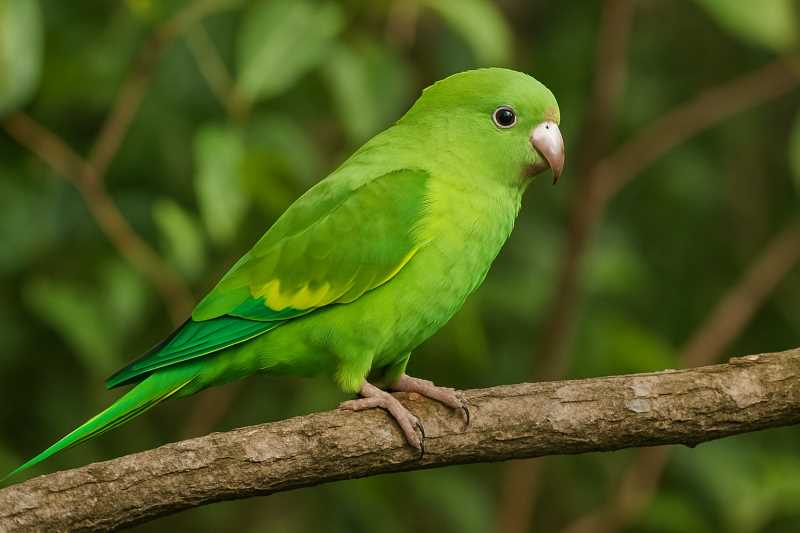
The Yellow-chevroned Parakeet is a small parrot, measuring about 20 to 25 centimeters in length, with a wingspan of approximately 30 centimeters. As their name suggests, the most distinctive feature of these birds is the bright yellow patch or "chevron" on the underside of their wings, visible during flight. Their overall plumage is predominantly green, providing excellent camouflage in their natural habitat. They possess a short tail, a sturdy, hooked beak, and characteristic dark eyes that exude curiosity and intelligence.
Diet and Feeding Habits
These parakeets are primarily frugivorous, meaning their diet mainly consists of fruits, seeds, and flowers. They play a pivotal role in their ecosystem as seed dispersers, contributing to the regeneration of tropical forests. In urban areas, their diet has expanded to include a variety of readily available food sources, such as birdseed from feeders and agricultural crops. Their adaptability in diet is another factor contributing to their successful urban colonization.
Social Structure and Behavior
Yellow-chevroned Parakeets are highly social birds, typically found in flocks ranging from small family groups to large gatherings of several hundred individuals. Their social nature is evident in their constant vocalizations, which include a series of high-pitched, sharp calls used to communicate with one another. These calls are not only a means of maintaining flock cohesion but also serve as a deterrent to potential predators.
During the breeding season, which varies depending on geographical location, these parakeets form monogamous pairs. Nesting is usually done in tree cavities, but in urban areas, they have been known to adapt to nesting in man-made structures. The female typically lays three to five eggs, with both parents sharing the responsibilities of incubation and feeding the chicks.
Conservation Status and Threats
Currently, the Yellow-chevroned Parakeet is classified as Least Concern by the International Union for Conservation of Nature (IUCN). Their wide distribution and ability to adapt to urban environments have buffered them against some of the threats faced by other parrot species. However, habitat destruction and illegal trapping for the pet trade remain concerns, especially in their native range. Conservation efforts focus on protecting natural habitats and regulating trade practices to ensure their long-term survival.
Human Interaction and Cultural Significance
In addition to their ecological role, Yellow-chevroned Parakeets are popular in aviculture due to their vibrant appearance and lively behavior. They are known for being intelligent and capable of mimicking sounds, making them appealing companions. However, potential owners should be aware of the commitment required to care for these active and social birds, which thrive with significant interaction and stimulation.
In conclusion, the Yellow-chevroned Parakeet is a remarkable example of avian adaptability and resilience. Their presence in both natural and urban settings underscores the importance of understanding and preserving bird species that contribute to our world’s biodiversity. By fostering awareness and conservation efforts, we can ensure that these stunning birds continue to grace our skies for generations to come.
Related posts