The Olive Sparrow: A Subtle Jewel of the Avian World
In the diverse tapestry of birdlife that inhabits the Americas, the Olive Sparrow (Arremonops rufivirgatus) often flies under the radar of even the most avid birdwatchers. Known for its unassuming yet elegant appearance, this small songbird is a testament to the understated beauty found in nature’s quieter corners.
Habitat and Distribution
The Olive Sparrow is native to the subtropical and tropical regions of North America, predominantly found in southern Texas, USA, and extending into northeastern Mexico. Preferring scrubby habitats, these birds thrive in areas with dense underbrush and thorny thickets, which provide both protection and abundant foraging opportunities. The Olive Sparrow’s preference for such environments explains its relative obscurity, as these habitats are often overlooked in favor of more open or forested areas by casual observers.
Physical Characteristics
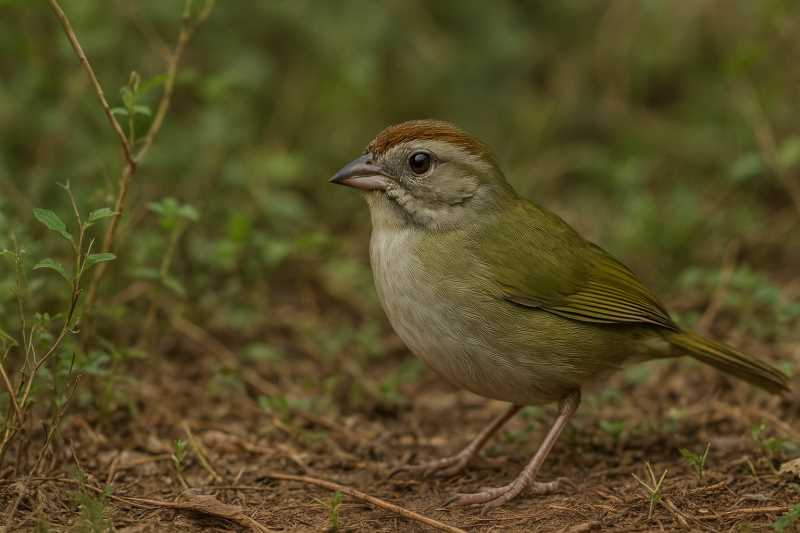
Measuring approximately 15 centimeters in length, the Olive Sparrow is characterized by its olive-green back and wings, from which it derives its name. Its underparts are a soft gray, while the head features subtle yet distinctive markings—a gray crown with a reddish-brown streak running through it. This streak, or rufous crown stripe, is a key identifying feature, albeit one that requires a discerning eye to spot.
Unlike many of their more flamboyant avian cousins, Olive Sparrows eschew bright plumage in favor of a color palette that blends seamlessly with their environment. This camouflage not only aids in predator avoidance but also underscores a lifestyle that favors discretion over display.
Behavioral Traits
Olive Sparrows are ground foragers, often seen hopping across the forest floor in search of seeds, insects, and fruits. Their diet is diverse, adapting to seasonal availability, which allows them to thrive in their niche habitats. They are known for their characteristic feeding behavior, where they use their strong bills to turn over leaves and debris, uncovering hidden morsels.
Despite their shy demeanor, Olive Sparrows are social creatures, often found in pairs or small family groups. Their calls, while not particularly loud or varied, consist of a series of soft chips and trills that serve to maintain contact between individuals. These vocalizations, though subtle, play a crucial role in their social structure and territorial interactions.
Reproduction and Lifespan
The breeding season for Olive Sparrows generally spans from March to August. During this time, they construct compact, cup-shaped nests close to the ground, cleverly concealed within thick foliage. The female typically lays two to four eggs per clutch, which she incubates for about two weeks. After hatching, both parents are involved in feeding and caring for the young, which fledge approximately ten days post-hatching.
Their relatively short lifespan, averaging around three to five years in the wild, is offset by a reproductive strategy that emphasizes multiple breeding attempts within a single season. This approach helps maintain stable population levels, even in the face of environmental challenges.
Conservation Status
Currently, the Olive Sparrow is classified as a species of Least Concern by the International Union for Conservation of Nature (IUCN). This status is largely due to its wide range and stable population numbers. However, habitat destruction and fragmentation pose ongoing threats. Conservation efforts aimed at preserving scrubland habitats are crucial for the continued well-being of this species.
Appreciating the Olive Sparrow
While the Olive Sparrow may not capture the headlines or draw crowds of birdwatchers, its presence is a vital part of the ecosystems it inhabits. Understanding and appreciating such species enhances our overall appreciation of biodiversity and the intricate web of life that sustains it. For those with a keen eye and a patient disposition, observing the Olive Sparrow can be a rewarding experience, offering a glimpse into the subtle beauty of nature often overshadowed by more conspicuous fauna.
In a world where conservation efforts frequently focus on the most charismatic species, the Olive Sparrow serves as a reminder of the importance of safeguarding all creatures, great and small. Each plays a role in the ecological balance, and preserving their habitats ensures the richness of life continues for generations to come.
Related posts