Bell’s Sparrow: A Closer Look at the Desert Specialist
Bell’s Sparrow (Artemisiospiza belli) is a small, unassuming bird that thrives in the arid environments of the American Southwest. Known for its adaptability and resilience, this sparrow is a testament to the intricate balance of ecosystems and the specialized niches that various species occupy. Often overshadowed by its more flamboyant avian relatives, Bell’s Sparrow plays a crucial role in its habitat, making its study and conservation important for maintaining ecological harmony.
Habitat and Distribution
Primarily found in California and extending into Baja California, Bell’s Sparrow inhabits a range of arid scrublands, including sagebrush and chamise-dominated habitats. These landscapes, often characterized by their dry, sandy soils and sparse vegetation, provide the perfect backdrop for the sparrow’s life cycle. The bird’s range extends into the Mojave, Sonoran, and Great Basin deserts, where its presence is an indicator of the health of these fragile ecosystems.
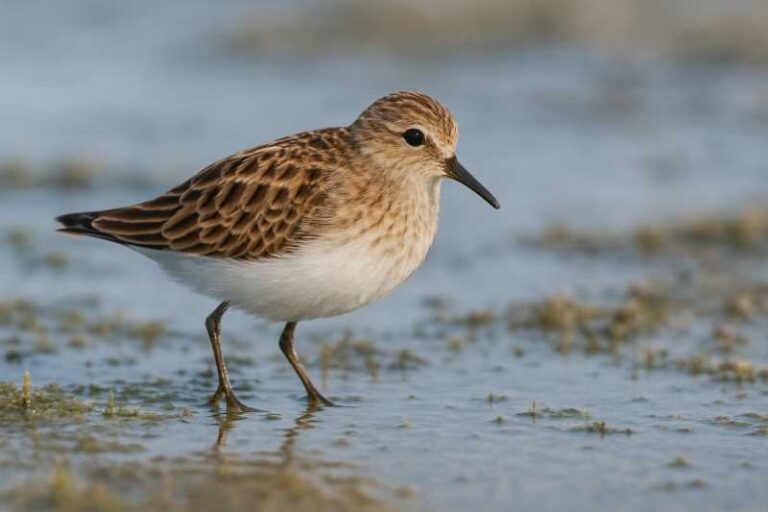
The sparrow is well-adapted to its environment, exhibiting behaviors and physical traits that allow it to thrive where many other species might not. For instance, its drab plumage provides excellent camouflage against the sandy and scrubby backdrop, while its diet, primarily consisting of seeds and insects, is well-suited to the resources available in its habitat.
Physical Characteristics
Bell’s Sparrow is often confused with the similar-looking Sagebrush Sparrow (Artemisiospiza nevadensis), but subtle differences set them apart. Bell’s Sparrow is typically smaller, with a more pronounced grayish-brown plumage and a distinctive white eye-ring. The bird’s underparts are pale, with a hint of streaking on the breast, contributing to its understated yet elegant appearance.
The sparrow’s song, a complex series of trills and buzzes, serves as both a territorial marker and a mating call. Males are known for their vocal prowess, often perching conspicuously to broadcast their presence to potential mates and rivals alike.
Behavior and Ecology
As a resident species, Bell’s Sparrow does not migrate, instead exhibiting seasonal movements within its range to exploit different resources as they become available. This adaptability is crucial for survival in the variable desert environment, where food and water availability can fluctuate dramatically.
The sparrow’s breeding season typically occurs from March to July, with males establishing territories and attracting females through song and display. Nests are built low to the ground, often in dense shrubs that provide protection from predators and harsh weather conditions. The female lays a clutch of three to four eggs, which she incubates for about 11 to 14 days. Both parents participate in feeding the fledglings, which leave the nest approximately 10 days after hatching.
Conservation Status and Challenges
While Bell’s Sparrow is currently classified as a species of least concern by the International Union for Conservation of Nature (IUCN), it faces several threats that could impact its population in the future. Habitat loss due to urban development, agricultural expansion, and climate change pose significant challenges to the sparrow’s survival.
Conservation efforts are focused on protecting the sparrow’s habitat from further degradation. This includes promoting sustainable land-use practices and restoring native vegetation. Public awareness and education are also crucial in fostering a conservation ethic that values the preservation of desert ecosystems and the species that inhabit them.
Conclusion
Bell’s Sparrow is a remarkable example of adaptation and survival in a challenging environment. Its presence is a reminder of the delicate balance within desert ecosystems and the importance of conserving these unique habitats. By understanding and protecting Bell’s Sparrow, we contribute to the broader effort of preserving biodiversity and maintaining ecological integrity in some of the planet’s most extreme landscapes.
Related posts