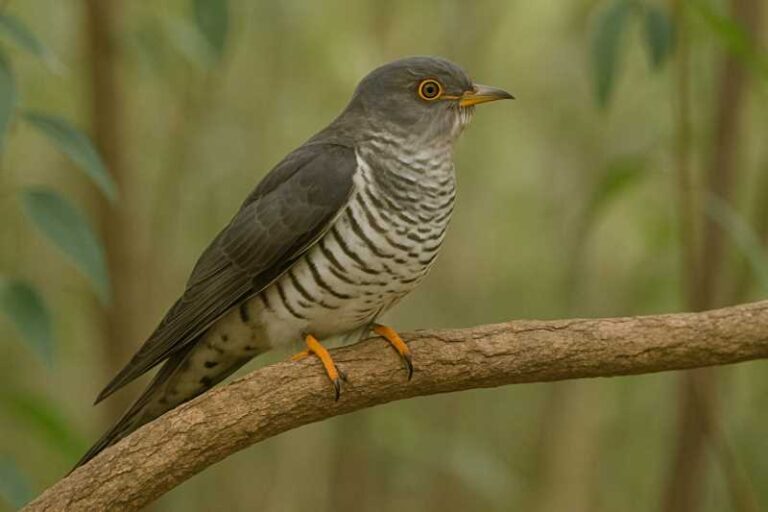
The Ladder-backed Woodpecker (Dryobates scalaris) is a striking and adaptable bird species, thriving in the arid and semi-arid landscapes of the southwestern United States and Mexico. Recognized by the distinctive black-and-white horizontal barring on its back—reminiscent of a ladder—this small woodpecker is a quintessential species of deserts, scrublands, and thorn forests. Despite its diminutive size, the Ladder-backed Woodpecker plays a crucial role in its ecosystem as both an insect controller and a cavity creator for other wildlife.
Identification
Measuring approximately 6.5 to 7 inches (16–18 cm) in length, the Ladder-backed Woodpecker is relatively small compared to other woodpecker species. Its plumage is mostly black and white, with fine horizontal stripes across the back and wings, giving rise to its common name. The underparts are pale, often marked with faint streaks or spotting on the flanks and sides. A clear white stripe runs from the base of the bill through the eye and down the neck, separating the bold black markings on the face.
Sexual dimorphism is evident in the crown: males exhibit a vivid red patch on the back of the head, while females lack this feature. Juvenile males may display a more muted, orangish-red crown as they mature. The bill is chisel-shaped and proportionally long, ideal for probing wood and bark for insects.
Habitat and Distribution
The Ladder-backed Woodpecker primarily inhabits dry regions across the southwestern U.S., including Texas, Arizona, New Mexico, southern California, and extending south through much of Mexico. Unlike many woodpeckers that prefer forests or wooded wetlands, this species favors desert scrub, mesquite thickets, pinyon-juniper woodlands, and cactus-rich environments. It can also be found in urban parks and yards that retain native vegetation.
Its preference for dry environments often brings it into close proximity with cacti such as cholla and saguaro, as well as low-growing acacias and mesquites. This adaptability has allowed the species to maintain stable populations even in the face of some habitat degradation.
Behavior and Diet
The Ladder-backed Woodpecker is a non-migratory, resident bird throughout its range, exhibiting territorial behavior year-round. It is typically solitary or found in pairs, especially during the breeding season. This woodpecker forages by climbing trunks and branches in a jerky, methodical manner, gleaning insects from bark crevices and occasionally hammering to extract prey.
Its diet is composed primarily of insects such as ants, beetles, and caterpillars, but it will also consume cactus fruits, seeds, and sap, especially in harsher months when insect prey is scarce. Occasionally, it visits feeders for suet, especially in areas near human habitation.
Vocalizations include a high-pitched, rattling “pik” or “keek” call, often repeated in short bursts. Its drumming is relatively soft and short compared to larger woodpeckers, used primarily for communication rather than excavation.
Breeding and Nesting
Breeding typically begins in early spring, though timing can vary by region. Pairs excavate a nest cavity in dead trees, snags, or even large cacti like saguaros. The male typically does most of the excavation, though both parents share nesting duties once eggs are laid.
A typical clutch consists of 3 to 5 white eggs, which are incubated for around 12 days. Both parents feed the chicks, which fledge approximately three weeks after hatching. These cavity nests not only serve the woodpeckers but often provide shelter for other birds, reptiles, or mammals once abandoned, enhancing the Ladder-backed Woodpecker’s ecological value.
Conservation Status
The Ladder-backed Woodpecker is currently classified as a species of Least Concern by the IUCN. Its wide distribution and adaptability to various dry habitats contribute to a stable population trend. However, ongoing threats such as habitat loss due to agriculture, urban development, and invasive plant species can locally impact populations. Conservation efforts aimed at preserving desert ecosystems and maintaining dead trees for nesting are beneficial to this species and many others.
Observation Tips
Birdwatchers can spot Ladder-backed Woodpeckers by scanning tree trunks and branches for their characteristic climbing movements and listening for their high-pitched calls. Early mornings are often the best time to observe them as they forage. In areas with suet feeders or flowering cacti, they may be drawn out into view.
Patience and a keen eye are key to identifying these small but charismatic woodpeckers. Their adaptability and beauty make them a rewarding species to observe in the wild.
Related posts