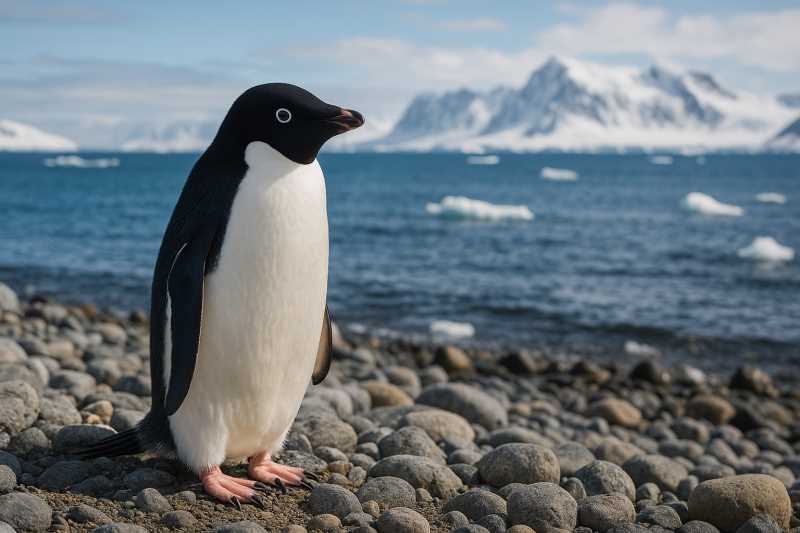
The Adélie Penguin (Pygoscelis adeliae) is one of the most iconic and charismatic residents of Antarctica. With its tuxedo-like plumage, white eye ring, and endearing waddle, this small yet determined seabird has captured the fascination of scientists, filmmakers, and wildlife enthusiasts alike. As a species that thrives in one of the harshest climates on Earth, the Adélie Penguin is a symbol of adaptation, resilience, and the fragile beauty of polar ecosystems.
Physical Characteristics
Adélie Penguins are medium-sized among the world’s 18 penguin species. Adults typically stand about 70 cm (27.5 in) tall and weigh between 3.5 and 6 kg (7.7 to 13.2 lbs). Their most distinguishing features include a classic black-and-white color pattern, a short red-tinted bill often partly obscured by feathers, and the prominent white ring encircling each eye. These visual traits not only distinguish them from other penguins but also serve as effective camouflage while swimming — their black back blends into the dark ocean when viewed from above, while their white belly matches the bright surface when viewed from below.
Habitat and Distribution
Adélie Penguins are strictly Antarctic, breeding exclusively on the rocky, ice-free shores of the continent and surrounding islands. During the non-breeding season, they migrate northward, often traveling thousands of kilometers in ice-free waters to forage. Colonies are found along most of Antarctica’s coast, with large populations concentrated in East Antarctica and the Ross Sea region.
Their habitat selection is highly dependent on proximity to open water for feeding and access to stable ground for nesting. In recent years, climate change has begun to influence the distribution of suitable habitat, particularly as melting ice affects their access to prey and nesting grounds.
Diet and Foraging Behavior
These birds are efficient and agile hunters, relying predominantly on krill, small fish, and squid. Krill, in particular, forms a major part of their diet, especially during the breeding season when food needs are highest. Adélie Penguins can dive to depths of up to 175 meters (574 feet), although they usually forage in shallower waters. They use their flipper-like wings to propel themselves underwater with incredible speed and agility, often hunting in coordinated groups.
Breeding and Lifecycle
Breeding season begins in October, when thousands of Adélies return to their nesting sites from the open ocean. These colonies can range from a few hundred to hundreds of thousands of pairs. Monogamous pairs form or reunite each season, and both sexes share responsibilities, from nest building to chick rearing.
Nests are constructed from small stones, which serve to elevate the eggs above melting snow and ice. Each pair lays two eggs, typically in November, with both parents taking turns incubating them for about 32 to 34 days. Once the chicks hatch, they are guarded and fed by their parents until they fledge at around 7 to 9 weeks of age.
Conservation Status and Threats
While Adélie Penguins are currently classified as Least Concern by the IUCN, their populations are highly sensitive to environmental change. Some colonies are growing, particularly in the Ross Sea, while others, especially those on the Antarctic Peninsula, are declining. These changes are largely driven by shifting sea ice patterns and fluctuations in krill abundance — both of which are influenced by global warming.
Other threats include increased predation by skuas and leopard seals, human disturbance from tourism and research activities, and the broader impacts of commercial fishing in the Southern Ocean, which competes for the same food sources.
Role in Ecosystem and Research
Adélie Penguins are considered an indicator species, meaning their health reflects broader ecosystem changes in Antarctica. Scientists monitor their populations closely to assess the impacts of climate change and human activity. They are also a keystone species in the Antarctic food web, serving as both predator and prey.
Because they breed in large, easily accessible colonies and have predictable behaviors, Adélies have become a central focus in Antarctic wildlife studies. Long-term monitoring projects have provided valuable insights into penguin biology, climate science, and oceanography.
Conclusion
The Adélie Penguin is far more than a symbol of polar wilderness — it is a resilient survivor, a vital part of the Antarctic ecosystem, and a sentinel of environmental change. Protecting their fragile habitat through climate action and sustainable marine policies is essential to ensuring that these remarkable birds continue to thrive at the bottom of the world.
This is one of the species covered in our book Penguins Of The World which is part of our Kings Birds of the world series, and one of the Kings Guides.

Related posts