Introduction
Owston’s Palm Civet (Chrotogale owstoni) is a unique and captivating mammal species native to Southeast Asia. With its striking appearance and intriguing behaviors, this civet has piqued the interest of scientists, conservationists, and animal enthusiasts alike. Known for its elusive nature and specific habitat preferences, Owston’s Palm Civet plays a crucial role in its ecosystem. However, it faces numerous threats that have led to its status as a vulnerable species.
In this comprehensive article, we will explore various aspects of Owston’s Palm Civet, from its physical characteristics to its conservation status. We aim to provide a thorough understanding of this species, its ecological significance, and the efforts needed to ensure its survival.
Physical Description
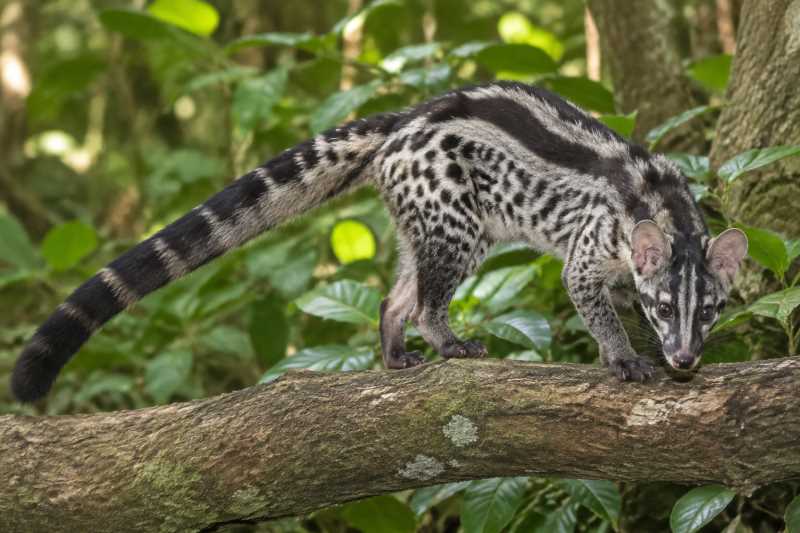
Owston’s Palm Civet is a medium-sized carnivorous mammal belonging to the family Viverridae. It is renowned for its distinctive appearance, characterized by a long, slender body and a striking pattern of spots and stripes. The civet’s fur is typically a pale yellowish-brown, adorned with bold black stripes that run along its back and spots on its sides.
The civet’s head is relatively small compared to its body, with a pointed snout and large, expressive eyes that are well-adapted for nocturnal activity. Its ears are short and rounded, aiding its acute sense of hearing. The tail is long and bushy, providing balance as it navigates through its arboreal habitat.
Adult Owston’s Palm Civets typically weigh between 3 to 5 kilograms (6.6 to 11 pounds) and measure about 57 to 72 centimeters (22 to 28 inches) in body length, with an additional tail length of 36 to 48 centimeters (14 to 19 inches). Sexual dimorphism is not prominent in this species, with males and females appearing similar in size and coloration.
Range and Habitat
Owston’s Palm Civet is endemic to Southeast Asia, with its range primarily concentrated in the forests of Vietnam, Laos, and southern China. It prefers subtropical and tropical moist forests, where dense vegetation provides ample cover and abundant food resources.
The species is often found in lowland and montane forests, thriving in areas with a rich diversity of flora and fauna. Owston’s Palm Civet is an arboreal creature, spending much of its time in the trees where it can hunt for food and evade predators.
Due to deforestation and habitat conversion for agriculture and urban development, the civet’s natural habitat is increasingly fragmented. This habitat loss poses a significant threat to its survival, as it relies heavily on forested areas for shelter and sustenance.
Behavior and Diet
Owston’s Palm Civet is a solitary and nocturnal animal, with most of its activities occurring at night. It is an agile climber, using its sharp claws and flexible body to maneuver through the trees in search of food.
The civet’s diet is primarily carnivorous, consisting of small mammals, birds, insects, and other invertebrates. However, it also exhibits omnivorous tendencies, occasionally consuming fruits and plant matter. This dietary flexibility allows it to adapt to varying food availability in its environment.
Owston’s Palm Civet is known for its elusive nature, often remaining hidden from human observation. It communicates through vocalizations, scent markings, and body language to establish territory and attract mates.
Breeding in Owston’s Palm Civet typically occurs once a year, with a gestation period of around two months. Females give birth to litters of one to four young, which are weaned after three to four months. The young civets mature rapidly and become independent shortly after weaning.
Identification Tips (Field Recognition Cues)
Identifying Owston’s Palm Civet in the wild can be challenging due to its elusive behavior and nocturnal habits. However, certain field recognition cues can aid in its identification:
- Distinctive Markings: Look for the unique pattern of black stripes and spots on a pale yellowish-brown coat.
- Tail Features: The long, bushy tail with consistent coloration is a key identifier.
- Head Shape: Note the pointed snout and large eyes indicative of nocturnal adaptation.
- Habitat: Focus on dense forested areas where the species is known to reside.
- Activity Time: Nighttime is the best period to observe this species due to its nocturnal nature.
Conservation Status (With Threats and Protections)
Owston’s Palm Civet is listed as a Vulnerable species on the IUCN Red List due to several factors threatening its survival. The primary threats include:
- Habitat Loss: Deforestation for agriculture, logging, and urban development has led to significant habitat fragmentation.
- Poaching: The civet is hunted for its fur and body parts, often used in traditional medicine and as exotic pets.
- Human-Wildlife Conflict: As human populations expand, conflicts over land and resources increase, further endangering the civet.
Conservation efforts are crucial to protect this species from further decline. Initiatives include:
- Protected Areas: Establishing and maintaining protected forest reserves to safeguard critical habitats.
- Anti-Poaching Measures: Implementing strict laws and enforcement to combat illegal hunting and trade.
- Research and Monitoring: Conducting studies to better understand the species’ ecology and adapt conservation strategies accordingly.
- Community Engagement: Educating local communities on the importance of biodiversity and sustainable practices to reduce human impact.
Frequently Asked Questions
What does Owston’s Palm Civet eat?
Owston’s Palm Civet primarily feeds on small mammals, birds, and insects, but it also consumes fruits and plant matter, showcasing its omnivorous diet.
Where can Owston’s Palm Civet be found?
This species is found in the subtropical and tropical forests of Vietnam, Laos, and southern China, favoring dense forested environments.
How can I identify Owston’s Palm Civet in the wild?
Look for a medium-sized mammal with distinctive black stripes and spots on a yellowish-brown coat, a bushy tail, and a pointed snout.
What are the main threats to Owston’s Palm Civet?
The main threats include habitat loss due to deforestation, poaching for fur and traditional medicine, and human-wildlife conflict.
How can we help conserve Owston’s Palm Civet?
Supporting protected areas, enforcing anti-poaching laws, conducting research, and engaging local communities are key conservation strategies.
Related posts