Introduction
The Sumatran Mountain Squirrel, scientifically known as Sundasciurus altitudinis, is a lesser-known but fascinating member of the Sciuridae family. This small mammal is endemic to the mountainous regions of Sumatra, Indonesia. As an integral part of the forest ecosystem, the Sumatran Mountain Squirrel plays a crucial role in seed dispersal and forest regeneration. Despite its ecological importance, this species remains understudied, with limited information available on its behavior, population dynamics, and conservation status.
Physical Description
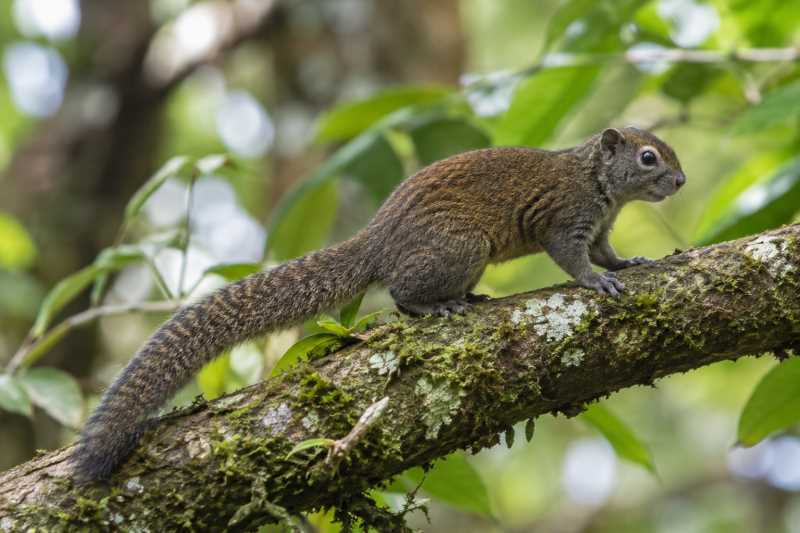
The Sumatran Mountain Squirrel is a small to medium-sized rodent, typically measuring between 15 to 20 centimeters in body length, with an equally long bushy tail that aids in balance and agility. Its fur is generally dense and soft, exhibiting a mix of gray and brown hues that help it blend into the forest understory. The squirrel’s underparts are usually lighter, often displaying a creamy or pale orange coloration. One of the distinctive features of the Sumatran Mountain Squirrel is its large, expressive eyes, which are well-adapted for scanning its arboreal surroundings.
Range and Habitat
Sundasciurus altitudinis is exclusively found in the montane forests of Sumatra, Indonesia. These forests are characterized by dense vegetation and high biodiversity, providing an ideal habitat for the species. The squirrel predominantly resides at altitudes ranging from 1,000 to 3,000 meters above sea level, where the climate is cooler and the environment is lush with mosses, ferns, and a variety of trees. The Sumatran Mountain Squirrel is highly arboreal, spending most of its life in the canopy, where it finds both food and protection from predators.
Behavior and Diet
The Sumatran Mountain Squirrel is primarily diurnal, meaning it is active during the day. It exhibits solitary behavior, except during the breeding season when males and females come together to mate. The squirrel is highly agile, capable of making impressive leaps between branches, which it uses to navigate the forest canopy efficiently. Its diet is omnivorous, consisting mainly of fruits, seeds, and nuts, but it may also consume insects and small invertebrates. This varied diet allows it to thrive in its mountainous habitat, where food availability can fluctuate with the seasons.
Identification Tips (Field Recognition Cues)
Identifying the Sumatran Mountain Squirrel in the wild can be challenging due to its elusive nature and the dense forest environments it inhabits. However, some key identification tips include:
- Fur Coloration: Look for the characteristic gray-brown fur with lighter underparts.
- Tail: Observe the bushy tail used for balance and communication.
- Size: Note the body length, which is typically between 15-20 cm, with a similar tail length.
- Behavior: Watch for agile movements and diurnal activity patterns.
- Vocalizations: Listen for the distinct chirping or chattering sounds often made by these squirrels.
Conservation Status (With Threats and Protections)
The Sumatran Mountain Squirrel is currently listed as ‘Data Deficient’ by the International Union for Conservation of Nature (IUCN), primarily due to the lack of comprehensive studies on its population and distribution. The primary threats facing this species include habitat loss due to deforestation for agriculture and logging. Climate change also poses a significant risk by altering the montane ecosystems where these squirrels reside. Conservation efforts are crucial to protect the remaining habitats of the Sumatran Mountain Squirrel. National parks and protected areas in Sumatra offer some level of protection, but more research and targeted conservation actions are necessary to ensure the species’ survival.
Frequently Asked Questions
How does the Sumatran Mountain Squirrel contribute to its ecosystem?
The Sumatran Mountain Squirrel plays a vital role in seed dispersal, which aids in forest regeneration and maintaining biodiversity. By consuming and redistributing seeds, these squirrels help ensure the growth of new plants and trees in their habitat.
What threats does the Sumatran Mountain Squirrel face?
The primary threats to the Sumatran Mountain Squirrel include habitat loss due to deforestation, agriculture, and logging. Climate change also poses a threat by altering the montane ecosystems they inhabit, affecting food availability and habitat conditions.
How can we help in the conservation of Sumatran Mountain Squirrels?
Supporting conservation organizations working in Sumatra, promoting sustainable forestry practices, and raising awareness about the importance of montane forests are vital steps in helping protect the Sumatran Mountain Squirrel. Additionally, advocating for the expansion of protected areas can provide safe havens for these animals.
Where can the Sumatran Mountain Squirrel be found?
This species is endemic to the montane forests of Sumatra, Indonesia, typically residing at altitudes between 1,000 and 3,000 meters above sea level, where the environment is rich in biodiversity and suitable for their arboreal lifestyle.
What is the diet of the Sumatran Mountain Squirrel?
The Sumatran Mountain Squirrel has an omnivorous diet, primarily feeding on fruits, seeds, and nuts, but it also consumes insects and small invertebrates. This diverse diet allows it to adapt to seasonal changes in food availability.
Related posts