Introduction
Uta Hick’s Bearded Saki (Chiropotes utahicki) is a remarkable primate species belonging to the family Pitheciidae. This species is a part of the neotropical primate community and is known for its distinctive facial hair, which gives it the name "bearded saki." Native to the rainforests of South America, Chiropotes utahicki is an intriguing subject of study for primatologists and wildlife enthusiasts alike due to its unique behaviors, habitat preferences, and conservation concerns.
Physical Description
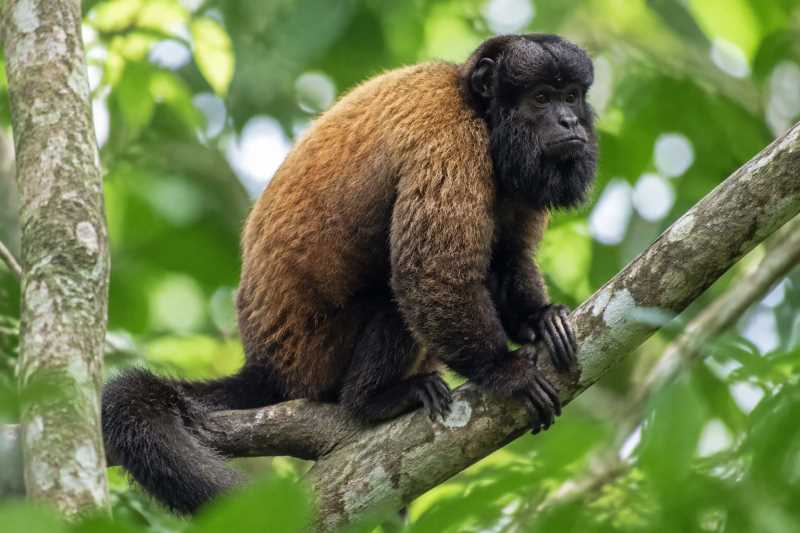
Uta Hick’s Bearded Saki is a medium-sized primate characterized by its robust build and distinctive facial features. Adult males and females exhibit sexual dimorphism, with males generally being larger than females. The most striking feature of this species is its thick, bushy beard, which is typically black and serves as a key identification marker.
The fur of Chiropotes utahicki is dense and varies in color from dark brown to black, with lighter tones on the chest and limbs. The tail is long and bushy, aiding in balance and mobility through the trees. Their limbs are powerful, adapted for an arboreal lifestyle, allowing them to leap between branches with agility.
Their facial structure is marked by a protruding jaw and large, expressive eyes that offer excellent vision, crucial for spotting predators and navigating through dense foliage. The average body length for this species ranges from 30 to 50 cm, with tails extending an additional 35 to 45 cm. Adult males can weigh between 3 to 5 kg, while females are slightly lighter, weighing around 2.5 to 4 kg.
Range and Habitat
Uta Hick’s Bearded Saki is endemic to the northern regions of South America, primarily found in the Amazon rainforest. Its range includes parts of Brazil, particularly in the states of Pará and Amazonas, where dense, undisturbed forests provide the ideal environment for their survival.
This species thrives in primary forests, where the rich biodiversity supports their dietary and ecological needs. They prefer tall, continuous canopy forests, which offer ample food resources and protection from ground-based predators. Occasionally, they can be found in secondary forests, although they tend to avoid heavily logged or fragmented areas due to the reduced availability of food and increased vulnerability to predators.
Behavior and Diet
Uta Hick’s Bearded Saki is a diurnal primate, active during the day and resting at night. They are social animals, often forming groups ranging from 10 to 30 individuals. These groups, known as troops, are typically led by a dominant male and composed of several females and their offspring.
Their diet is primarily frugivorous, consisting of fruits, seeds, and nuts that they skillfully extract using their strong jaws. They have also been observed consuming leaves, flowers, and small insects, particularly during the dry season when fruit is less abundant. This dietary flexibility is crucial for their survival in the fluctuating rainforest environment.
Social interactions within the troop are complex, with grooming playing a vital role in maintaining social bonds. Vocalizations are used to communicate, with distinct calls for alerting others of potential threats, coordinating group movements, and establishing territory.
Identification Tips (Field Recognition Cues)
Identifying Uta Hick’s Bearded Saki in the wild can be facilitated by observing several key characteristics:
- Distinctive Beard: Look for the prominent, bushy black beard that stands out against their dark fur.
- Robust Build: Note their sturdy bodies and relatively large size compared to other saki species.
- Agile Movement: Observe their swift and agile movements through the canopy, often leaping between branches.
- Vocalizations: Listen for their unique calls, which are used to communicate within the group.
- Tail: The long, bushy tail is another distinctive feature that aids in balance and is visible even from a distance.
Conservation Status (With Threats and Protections)
Uta Hick’s Bearded Saki is currently classified as "Vulnerable" on the IUCN Red List. The primary threats to their survival include habitat destruction due to logging, agricultural expansion, and infrastructure development. These activities lead to forest fragmentation, which not only reduces available habitat but also isolates populations, making them more susceptible to genetic bottlenecks and inbreeding.
Hunting and capture for the illegal pet trade also pose significant threats. Despite legal protections in some areas, enforcement is often lacking, and these primates continue to be targeted.
Conservation efforts are crucial for the survival of Chiropotes utahicki. Initiatives include the establishment of protected areas within their range, promoting sustainable land-use practices, and increasing public awareness about the importance of preserving rainforest ecosystems. Research and monitoring programs are also vital to understanding their ecology and informing conservation strategies.
Frequently Asked Questions
What is the primary diet of Uta Hick’s Bearded Saki?
Uta Hick’s Bearded Saki primarily feeds on fruits, seeds, and nuts, supplemented by leaves, flowers, and small insects, especially during times when fruit is scarce.
How do Uta Hick’s Bearded Sakis communicate?
They use a variety of vocalizations to communicate within their groups, including calls to alert others of danger, coordinate movements, and establish territory.
Where can Uta Hick’s Bearded Saki be found?
This species is native to the northern regions of South America, particularly in the Amazon rainforest of Brazil, within the states of Pará and Amazonas.
What are the main threats to Uta Hick’s Bearded Saki?
The primary threats include habitat destruction due to logging and agriculture, forest fragmentation, and illegal hunting and capture for the pet trade.
How can Uta Hick’s Bearded Saki be identified in the wild?
Key identification features include their prominent black beards, robust build, agile movement through the canopy, unique vocalizations, and long bushy tails.
Related posts