Introduction
The Neblina Uacari, scientifically known as Cacajao hosomi, is a striking species of primates belonging to the Pitheciidae family. This fascinating mammal is endemic to the Amazon rainforest, capturing the interest of researchers and wildlife enthusiasts alike with its unique physical characteristics and intriguing behaviors. Discovered relatively recently, the Neblina Uacari represents a critical component of the biodiversity in one of the planet’s most vital ecosystems. In this article, we will explore the Neblina Uacari’s physical description, habitat, behavior, and conservation status, providing a comprehensive overview of this remarkable species.
Physical Description
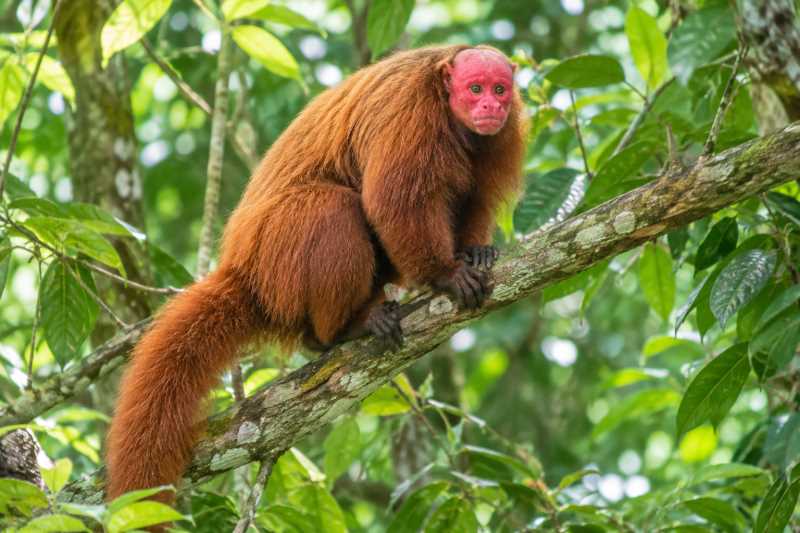
The Neblina Uacari is easily identifiable by its distinct appearance, most notably its bare, red face, which contrasts sharply with its dense, shaggy coat. The species has adapted to life in the dense canopies of the Amazon, possessing strong limbs and a prehensile tail that aids in navigating the treetops. Adult Neblina Uacaris typically weigh between 2.5 to 3.5 kilograms and measure around 45 to 50 centimeters in body length, with a tail that adds an additional 15 to 20 centimeters.
Their fur varies from pale brown to red, providing effective camouflage amidst the foliage. The red hue of their facial skin is a result of increased blood flow, and it is believed to play a role in social signaling and mate selection.
Range and Habitat
The Neblina Uacari is found in the upper Amazon basin, with its range primarily concentrated in the northwest region of Brazil, as well as parts of southern Venezuela and eastern Colombia. This species thrives in the seasonally flooded forests and terra firme forests of the Amazon, often inhabiting areas that are difficult to access, which has contributed to the limited data available about their population dynamics.
These primates are arboreal, spending most of their lives in the upper canopy layers of the forest. They are highly adapted to this environment, using their agility and strong limbs to traverse the forest in search of food and shelter.
Behavior and Diet
The Neblina Uacari exhibits a complex social structure, typically living in small groups that can range from 5 to 30 individuals. These groups are characterized by a dynamic hierarchy, with alpha males and females playing crucial roles in decision-making and resource allocation.
In terms of diet, Neblina Uacaris are frugivorous but have a diverse diet that includes seeds, nuts, and occasional insects. Their strong jaws are well-suited to cracking hard shells, allowing them access to a variety of food sources not available to other species. Seasonal changes in fruit availability often dictate their movement patterns and social interactions.
Identification Tips (Field Recognition Cues)
Identifying the Neblina Uacari in the wild can be a rewarding experience. Here are some key identification tips:
- Face and Fur: Look for the distinctive red, bare face and shaggy, pale brown to red fur.
- Size and Build: Note the medium size and robust build, with a body length of 45 to 50 centimeters.
- Behavior: Observe their social behavior; they are often seen in groups and are highly active in the early morning and late afternoon.
- Movement: Watch for agile movement through the forest canopy, facilitated by their strong limbs and prehensile tail.
Conservation Status (with Threats and Protections)
The Neblina Uacari is currently classified as Vulnerable according to the International Union for Conservation of Nature (IUCN). The primary threats to its survival include habitat destruction due to logging and agricultural expansion, as well as hunting pressures in certain regions.
Conservation efforts are underway to protect this species and its habitat. Protected areas within the Amazon, such as national parks and reserves, play a pivotal role in preserving the Neblina Uacari’s environment. Additionally, initiatives aimed at sustainable forest management and community-based conservation are crucial in mitigating the impact of human activities.
Frequently Asked Questions
1. What does the Neblina Uacari eat?
The Neblina Uacari primarily feeds on fruits, seeds, and nuts, but they also consume insects. Their strong jaws enable them to access a wide variety of food sources, which is crucial for their survival in the diverse ecosystem of the Amazon.
2. Where can I see a Neblina Uacari in the wild?
To observe a Neblina Uacari in its natural habitat, you would need to visit the upper Amazon basin, specifically in northwest Brazil, southern Venezuela, or eastern Colombia. They inhabit the dense, seasonally flooded forests of these regions.
3. How do Neblina Uacaris communicate?
Neblina Uacaris communicate using a range of vocalizations, facial expressions, and physical gestures. The red coloration of their face is also thought to play a role in social signaling, particularly during mating seasons.
4. What are the main threats to the Neblina Uacari?
The main threats to the Neblina Uacari include habitat loss due to deforestation, agricultural expansion, and hunting. Conservation efforts focus on habitat protection and sustainable forest management to mitigate these threats.
5. How does the Neblina Uacari contribute to its ecosystem?
As a frugivorous species, the Neblina Uacari plays a significant role in seed dispersal, which is critical for maintaining the health and diversity of the Amazon rainforest ecosystem. Their presence also indicates a healthy, intact forest environment.
Related posts