Introduction
The White-thighed Colobus (Colobus vellerosus) is a captivating primate species known for its striking appearance and intriguing behaviors. Found primarily in the tropical forests of West Africa, this arboreal monkey plays a vital role in its ecosystem. This article delves into the unique characteristics, habitat, and conservation status of the White-thighed Colobus, providing a comprehensive overview for enthusiasts and researchers alike.
Physical Description
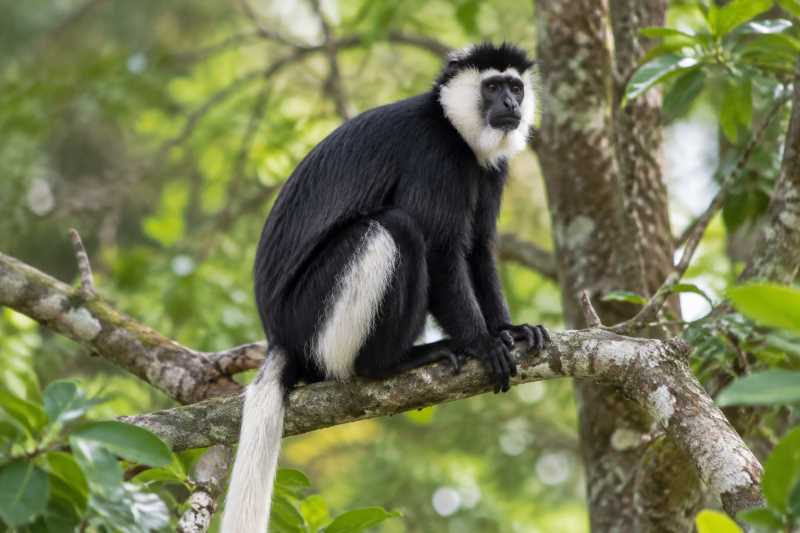
The White-thighed Colobus is a medium-sized primate, distinguished by its black and white fur. The species is named for the distinctive white patches on its thighs, which contrast sharply with the rest of its glossy black coat. Adult males can weigh between 9 to 15 kilograms, while females are slightly smaller, weighing around 7 to 10 kilograms. Their long, bushy tails, which can measure up to 80 centimeters, aid in balance as they navigate the treetops. The face of the White-thighed Colobus is framed by a mane of white hair, giving it a distinctive and striking appearance.
Range and Habitat
Colobus vellerosus inhabits the tropical forests of West Africa, with populations found in countries such as Ghana, Côte d’Ivoire, and Burkina Faso. These primates prefer dense forest canopies, where they can easily find food and avoid predators. Their habitat ranges from lowland rainforests to montane forests, often in protected areas where human impact is minimized. Unfortunately, their habitat is increasingly threatened by deforestation and agricultural expansion.
Behavior and Diet
The White-thighed Colobus is primarily arboreal, spending most of its life in the treetops. They live in social groups typically composed of one dominant male, several females, and their offspring. These groups are known for their complex social structures, with intricate grooming rituals that reinforce bonds between individuals.
Their diet consists mainly of leaves, which they digest with the help of a specialized stomach, similar to that of a cow. This adaptation allows them to extract nutrients efficiently from their fibrous diet. In addition to leaves, they also consume fruits, seeds, and flowers, which provide essential nutrients and variety.
Identification Tips (Field Recognition Cues)
Identifying the White-thighed Colobus in the field involves observing several key characteristics:
- Coloration: Look for the stark contrast between the black body and the white thigh patches.
- Tail: The long, bushy tail is a distinguishing feature that aids in balance and identification.
- Facial Features: The white facial mane surrounding a dark face is unique to this species.
- Movement: Observe their graceful, agile movements through the treetops, which are characteristic of colobus monkeys.
Conservation Status (with Threats and Protections)
The White-thighed Colobus is currently listed as Vulnerable on the IUCN Red List. The primary threats to their survival include habitat loss due to deforestation, hunting for bushmeat, and the illegal pet trade. Conservation efforts focus on habitat protection and the establishment of wildlife corridors to connect fragmented forest areas.
Numerous conservation organizations are working to protect the White-thighed Colobus by promoting sustainable land use practices and increasing awareness about the species’ plight. Protected areas such as national parks and reserves play a crucial role in conserving their habitat and populations.
Frequently Asked Questions
How can I help protect the White-thighed Colobus?
Supporting conservation organizations that focus on habitat preservation and sustainable practices is a great way to contribute. Reducing your carbon footprint and spreading awareness about the species can also make a significant impact.
What is the lifespan of a White-thighed Colobus?
In the wild, White-thighed Colobus monkeys can live up to 20 years. In captivity, with optimal care, they may live slightly longer.
Are White-thighed Colobus monkeys endangered?
While not currently classified as endangered, the White-thighed Colobus is considered Vulnerable due to habitat loss and hunting pressures.
What role do White-thighed Colobus monkeys play in their ecosystem?
As folivores, they play a crucial role in seed dispersal and maintaining forest health. Their feeding habits help control plant growth and promote biodiversity.
Can White-thighed Colobus monkeys be kept as pets?
It is illegal and unethical to keep White-thighed Colobus monkeys as pets. They are wild animals with specific needs that cannot be met in a domestic setting.
Related posts