The White-browed Ground Tyrant: An Avian Marvel of the Andes
The White-browed Ground Tyrant (Muscisaxicola albilora) is a fascinating bird species that graces the high-altitude regions of South America. Known for its distinctive white eyebrow, this bird is a member of the tyrant flycatcher family, Tyrannidae, and is typically found in the Andean regions of Peru, Bolivia, Chile, and Argentina. This article delves into the life and habits of the White-browed Ground Tyrant, exploring its habitat, behavior, and the conservation challenges it faces.
A Distinctive Appearance
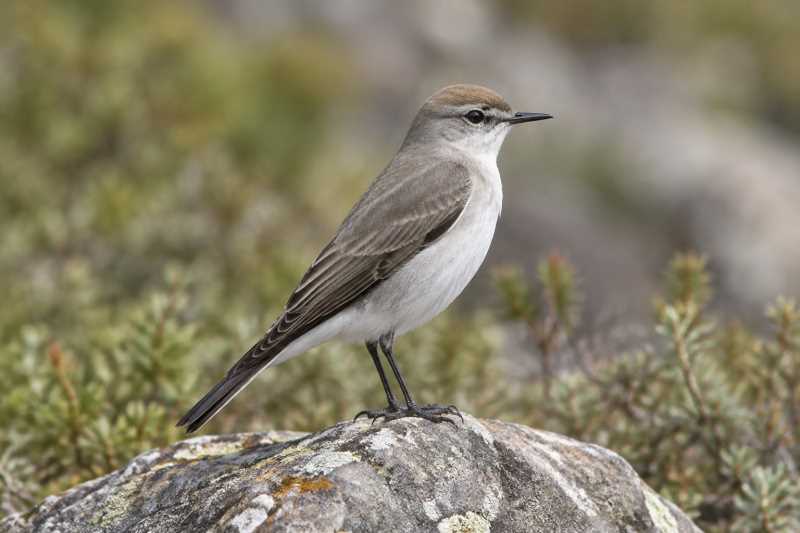
The White-browed Ground Tyrant is a small passerine bird, approximately 14-15 cm in length. Its most striking feature is the prominent white eyebrow that contrasts with its otherwise grayish-brown plumage. The underparts are lighter, with a pale throat and belly that can sometimes have a slightly buff tinge. Its wings and tail are dark with subtle white edging, which becomes more visible in flight. The bird’s slender build, combined with its long legs, makes it well-adapted to its terrestrial lifestyle.
Habitat and Distribution
This ground tyrant is primarily found in open, rocky areas at elevations ranging from 2,500 to 5,000 meters. Its habitat includes puna grasslands, high-altitude shrublands, and areas with sparse vegetation. The bird’s distribution is closely tied to the Andean mountain chain, where it can exploit the unique ecological niches available at different elevations.
The White-browed Ground Tyrant is known to be a partial migrant, with some populations moving to lower altitudes during the harsher winter months. This altitudinal migration allows it to exploit different food resources and maintain its energy requirements throughout the year.
Behavior and Diet
As its name suggests, the White-browed Ground Tyrant spends much of its time on the ground, where it forages for insects and other small invertebrates. It is an active hunter, often seen running or hopping along the ground in search of prey. The bird uses its keen eyesight to spot insects, which it catches with swift pecks of its sharp bill.
During the breeding season, which typically occurs from November to February, the White-browed Ground Tyrant becomes more territorial. Males are known to perform aerial displays to attract mates and defend their nesting territories. The nest itself is usually a cup-shaped structure made of grass and other plant materials, placed in a sheltered location on the ground or among rocks.
Conservation Status and Threats
Currently, the White-browed Ground Tyrant is listed as a species of Least Concern by the International Union for Conservation of Nature (IUCN). However, like many high-altitude species, it faces potential threats from habitat loss and climate change. The expansion of agriculture and mining activities in the Andes poses a significant risk to its natural habitat. Additionally, climate change could alter the availability of resources in its high-altitude home, forcing the bird to adapt to new conditions or face potential population declines.
Conservation efforts in the region are crucial to ensuring the survival of the White-browed Ground Tyrant and other Andean species. Protecting key habitats, implementing sustainable land-use practices, and monitoring climate change impacts are essential strategies for preserving this unique bird and its ecosystem.
The Importance of the White-browed Ground Tyrant
The White-browed Ground Tyrant is not only a fascinating species for birdwatchers and ornithologists but also an important indicator of the health of Andean ecosystems. As a top insectivore in its habitat, it plays a crucial role in controlling insect populations, thus maintaining ecological balance. Furthermore, studying this bird can provide valuable insights into the broader effects of environmental changes on high-altitude biodiversity.
In conclusion, the White-browed Ground Tyrant is a remarkable bird that embodies the resilience and adaptability required to thrive in one of the world’s most challenging environments. By understanding and conserving this species, we contribute to the protection of the rich biodiversity of the Andes and the ecological processes that sustain it.
References
- Fjeldså, J., & Krabbe, N. (1990). Birds of the High Andes. Zoological Museum, University of Copenhagen.
- Ridgely, R. S., & Tudor, G. (1994). The Birds of South America: Volume II, The Suboscine Passerines. University of Texas Press.
- BirdLife International. (2021). Species factsheet: Muscisaxicola albilora. Retrieved from BirdLife International website.
Related posts